
Explore Rome with a private guide. Walk through the ancient Colosseum and Roman Forum, admire masterpieces in the Vatican Museums, and enjoy authentic Italian life in charming piazzas and trattorias. Personalized tours reveal hidden gems, timeless stories, and unforgettable moments in the Eternal City.
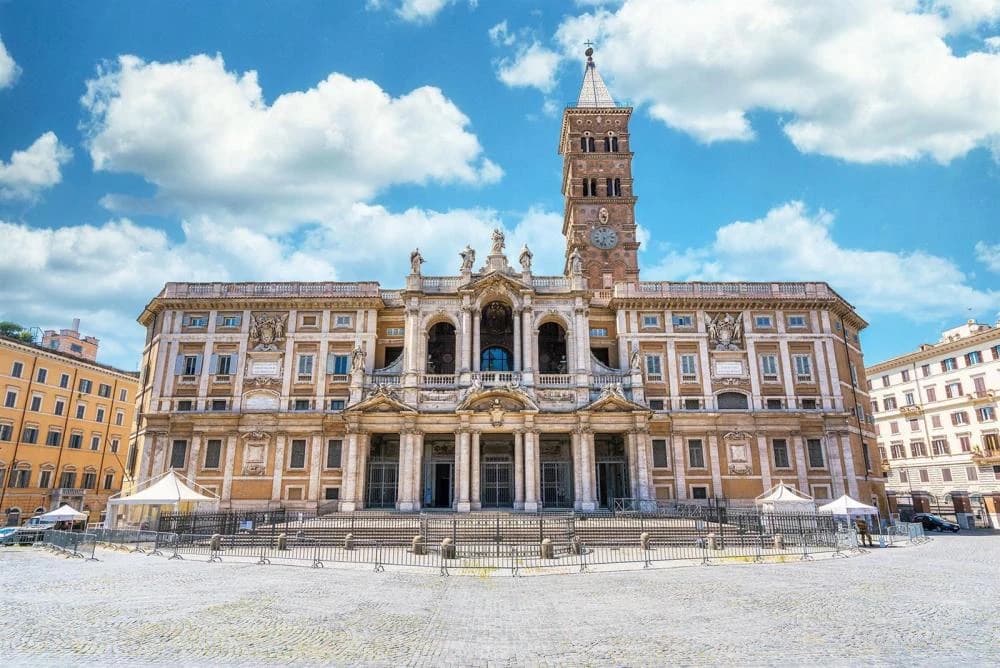
Santa Maria Maggiore is one of the four Papal Basilicas in Rome and one of the most significant Rome churches that was built in 432 by order of pope Sixtus III on Esquiline Hill, one of the historic seven hills of Rome. Many of the mosaics in the basilica date back to the early days of the basilica and the large marble columns of the basilica are even older and probably came from an ancient Roman building. Unique in this church is the golden, coffered ceiling, commissioned by Pope Alexander VI and built with the first of the gold Columbus brought back from America. The patriarchal basilica contains the funerary monuments of Pope Clement IX, Paul V and Nicolas IV. A number of other famous Catholics are buried here as well, including the saint Jerome and the artist Gian Lorenzo Bernini.
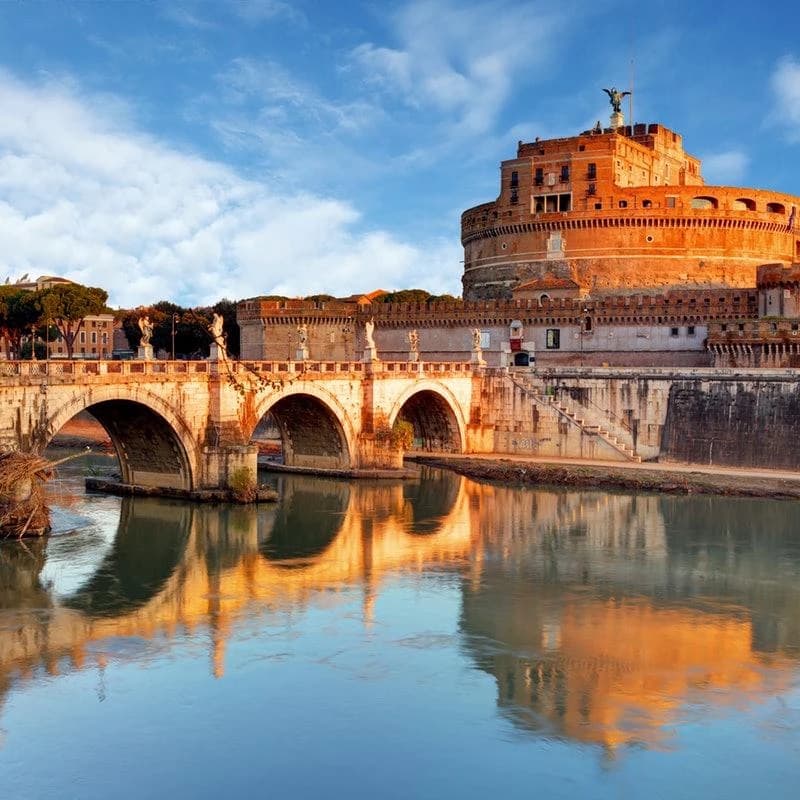
The Castel Sant’Angelo was built in the 2nd century as a mausoleum by order of emperor Hadrian. The mausoleum did not become associated with the name of archangel Michael until 590, when Pope Gregory I saw archangel Michael sheathe his sword on top of the mausoleum during a plague to signal the end of the epidemic. Later pope Pius II built a chapel at the site where the archangel was said to have appeared. The remarkable bronze statue of archangel Michael was made in 1753 by Peter Anton von Verschaffelt. The Castle of the Holy Angel in Rome also owes a lot of its fame to the film adaptation of Dan Brown's Angels & Demons, where the castle served as a hideout for the Illuminati.
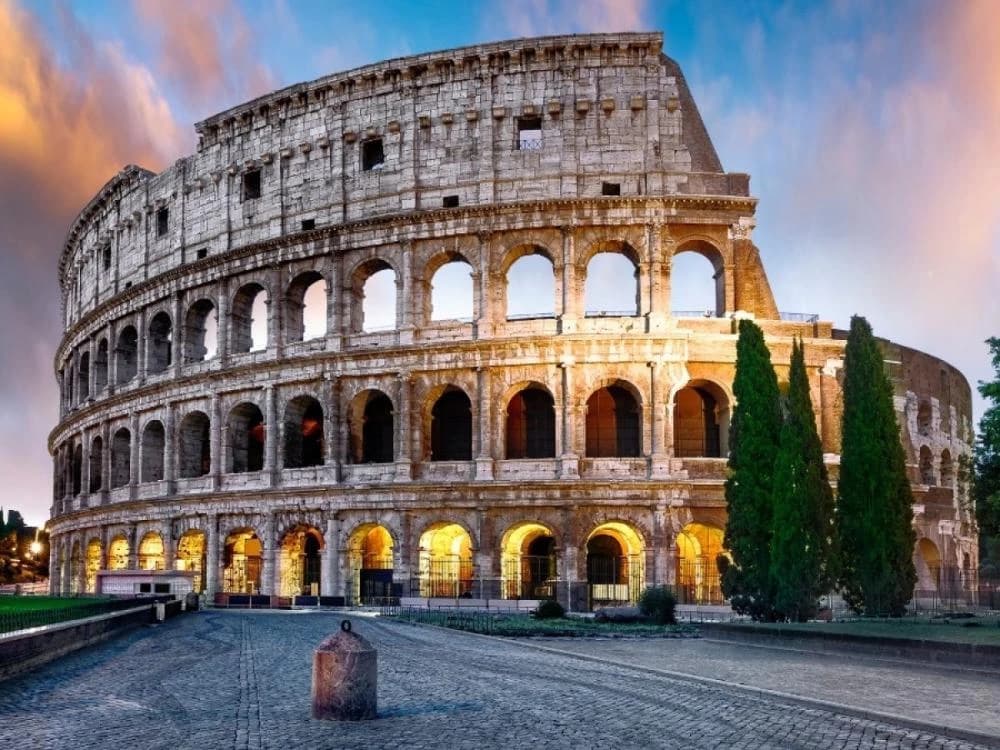
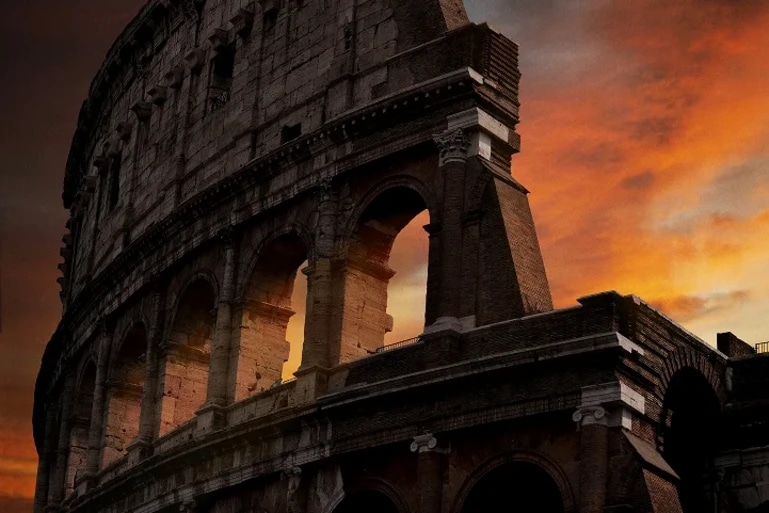
Located just east of the Roman Forum, the massive stone amphitheater known as the Colosseum was commissioned around A.D. 70-72 by Emperor Vespasian of the Flavian dynasty as a gift to the Roman people. In A.D. 80, Vespasian’s son Titus opened the Colosseum—officially known as the Flavian Amphitheater—with 100 days of games, including gladiatorial combats and wild animal fights. After four centuries of active use, the magnificent arena fell into neglect, and up until the 18th century it was used as a source of building materials. Though two-thirds of the original Colosseum has been destroyed over time, the amphitheater remains a popular tourist destination, as well as an iconic symbol of Rome and its long, tumultuous history.
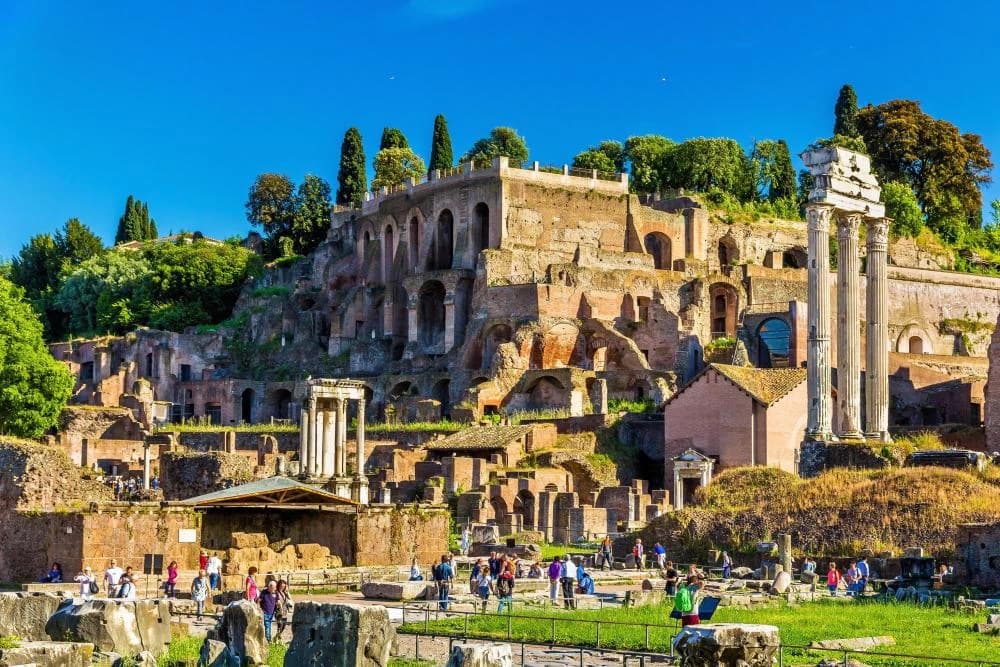
Located 40 meters above the Roman Forum, the Palatine Hill is the most central of the seven hills of Rome and forms one of the oldest parts of the city. Legend holds that it was here in 753 B.C. that Romulus, after killing his brother, Remus, built a defensive wall, set up a system of government and started the settlement that would grow to become the greatest power of the ancient Western World. Of course, he named the city after himself. Today, the Palatine Hill is part of the main archaeological area of ancient Rome and is adjacent to the Colosseum and the Roman, where you can see hundreds of ruins of the imposing buildings that were created for high Roman society in ancient times.
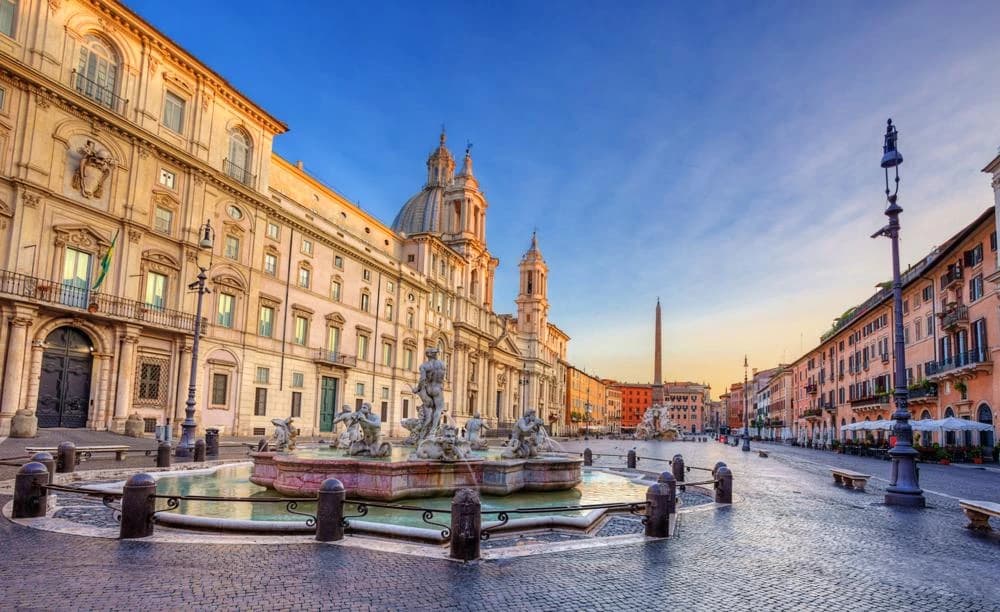
Rome’s Baroque Piazza Navona, also called the Square of the Fountains, is one of the city’s most emblematic places. The piazza owes its elliptical shape to the stadium built in this space by Emperor Domitian in 86 AD for sporting competitions and gladiatorial contests. In the 17th century Pope Innocent X commissioned the construction of the church Sant’Agnese in Agone, a palace, and he commissioned Bernini to build the fountain called ‘The Fountain of the Four Rivers’. The 16-meter high obelisk of the fountain originally came from the Circus of Maxentius located on the Via Appia. In addition to this fountain, the square also has two smaller fountains by Giacomo della Porta, an apprentice of Michelangelo. They are called the Fontana del Moro (the Fountain of the Moor) and the Fontana del Nettuno (Fountain of Neptune)
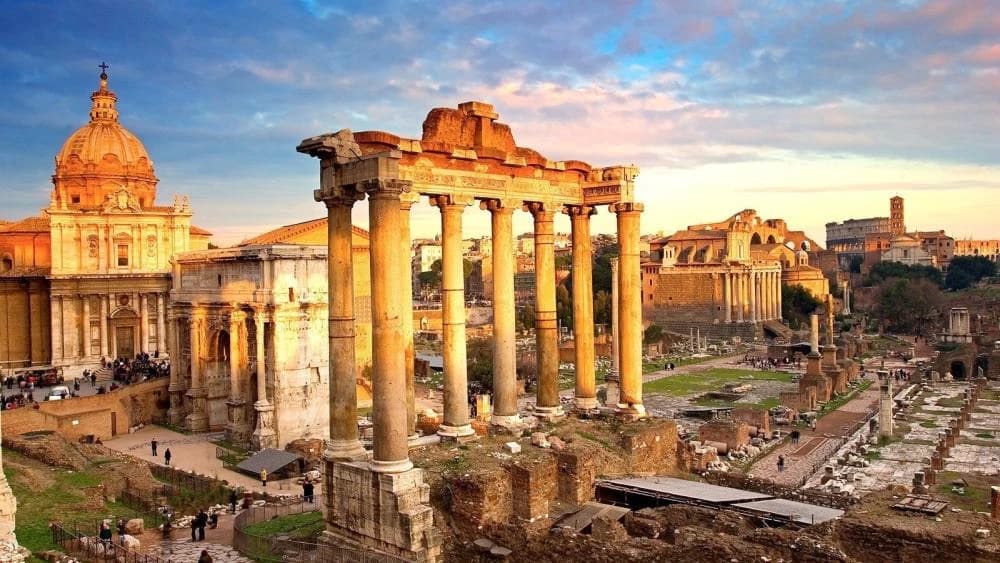
It was not until the 19th century that excavations of the center of the Roman empire at the base of the Capitol finally began. During the reign of emperor Augustus (27 BCE – 14 CE), ancient Rome was already home to over a million Romans, and the Forum Romanum was the political, legal and religious center of the Roman Empire. Historians believe people first began publicly meeting in the open-air Forum around 500 B.C., when the Roman Republic was founded. According to a widely accepted legend, ancient Rome was founded by brothers Romulus and Remus in 753 B.C. After a rising conflict, Romulus killed Remus, became king and named Rome after himself. The traditional story also credits Romulus with starting an alliance with his rival, Titus Tatius, and making the site of the Roman Forum a neutral meeting zone. The Forum today is a sprawling ruin of architectural fragments and includes the Arches of Septimius Severus and Titus, the Temple of Antoninus Pius and Faustina and the Temple of Saturn.
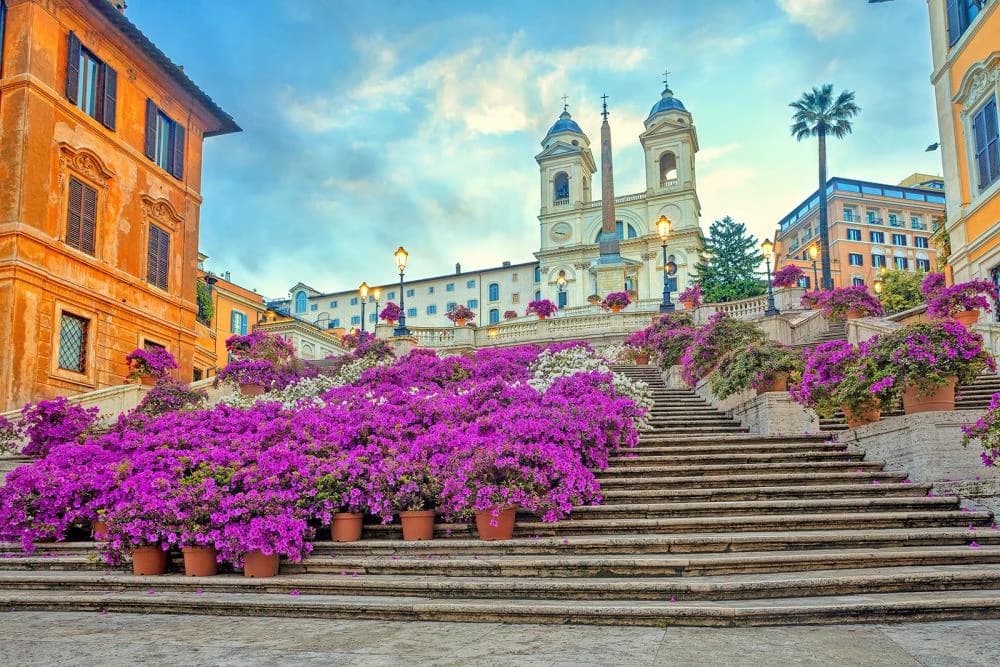
A truly monumental stairway of 135 steps was built in 1723-1725 by a design of the rather little known architect Francesco de Sanctis thanks to the funding of French diplomat, Etienne Gueffier. It was built in order to link the Trinità dei Monti church that was under the patronage of the king of France with the Spanish embassy to the Holy See at the base. The stairs take their name from Piazza di Spagna (Spanish square), the plaza at their base and one of Rome's most typical squares. On this Piazza di Spagna, you can also find a fountain by Pietro Bernini (father of the famous Gian Lorenzo Bernini), called ‘Fontana della Barcaccia’. This literally means ‘Fountain of the ugly boat’.This does not refer to the sculpture being ugly, but to the story that the river Tiber flooded in 1598 and stranded the ugly little boat on this spot. That was Bernini's inspiration.
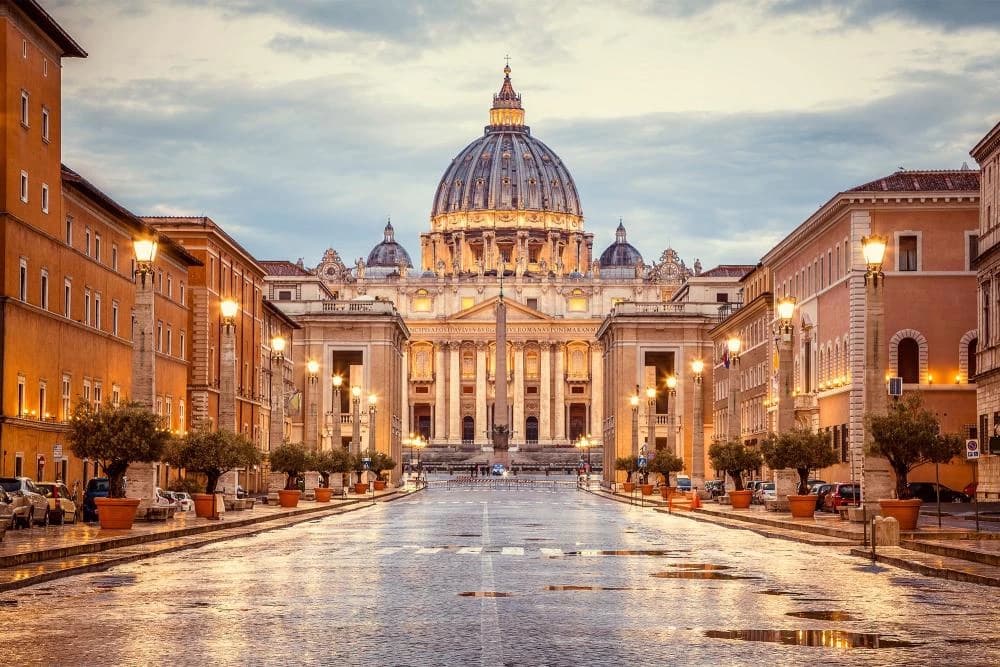
St. Peter’s Basilica, one of the holiest temples for Christendom, was built between 1506 and 1626 on the site of a church dating from the time of emperor Constantine the Great (324). According to tradition, this church stands on the site where Saint Peter, the apostle who is considered the first pope, was crucified and buried. One of the most impressive aspects of the Basilica are its dimensions – 136 meters high and 186x123 meters wide. Inside, visitors will find extremely impressive pieces of art, including St. Peter’s Baldachin, a large bronze baldachin designed by Bernini, The Pietà, a sculpture by Michelangelo and the statue of St Peter on his throne.
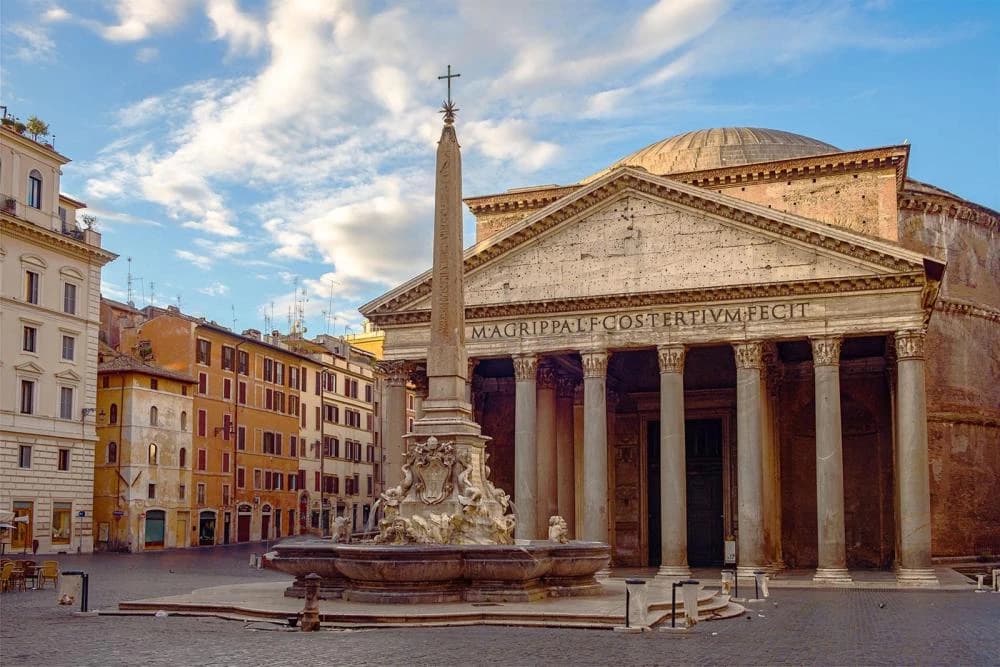
The Pantheon is one of the most recognisable Roman buildings and the best-preserved monument of Roman antiquity. The rectangular facade hides an enormous dome with a diameter greater than the one of the St. Peter's Basilica. The name Pantheon comes from Greek and means ‘devoted to all gods’. The construction of the Pantheon was done in the time of Hadrian, in 126 AD. It receives the name of Agrippa for having been built where previously, in the year 27 AD, was the Pantheon of Agrippa destroyed by a fire in 80 AD. In 609 the building was donated to Pope Boniface IVwho transformed it into a church and dedicated it to the Virgin and all the Christian martyrs, and since then, it has become the burial place of Italian kings (Victor Emmanuel II is in the second niche on the right) and other famous Italians, including the painter Raphael.
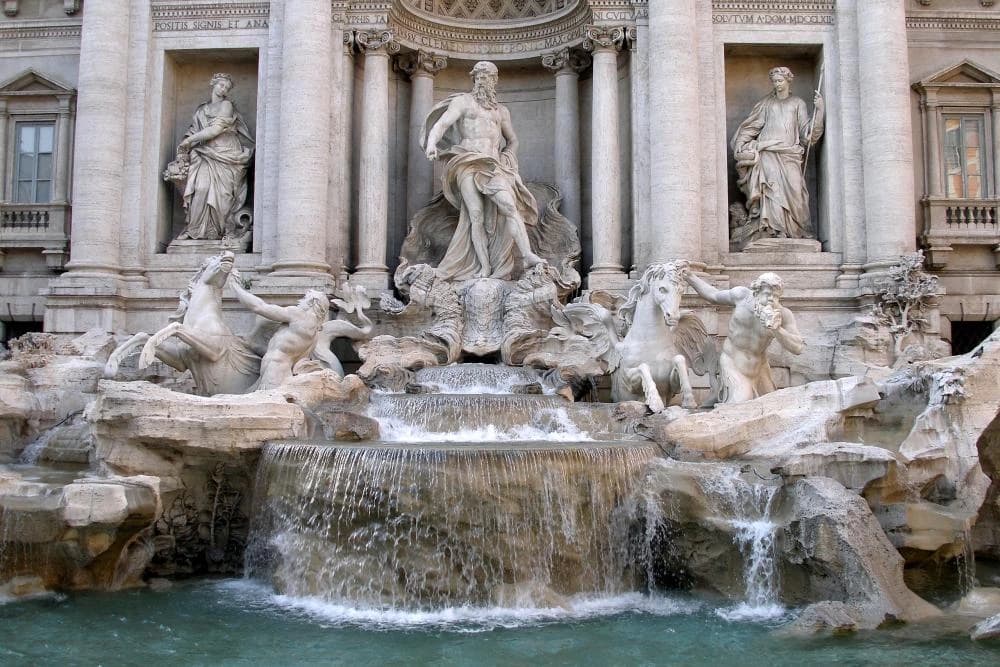
One of the city's most popular tourist attractions, this 17th-century masterpiece has been immortalized in films until it is almost a required visit. Throwing a coin into the Trevi Fountain is a tradition that is supposed to assure your return to Rome. The fountain on the Piazza di Trevi square was initially designed by Bernini for Pope Clemens XII. However, it was not built until 50 years later after a (less expensive) redesign by the architect Nicola Salvi. Construction lasted from 1732 to 1762. The almost 30-meter high Trevi Fountain was built against the back of the Palazzo Poli building. It depicts the sea god Oceanus (Neptune), with horses, tritons, and shells. The water swirls around the figures and the artificial rocks, and collects in a large basin, always filled with coins.
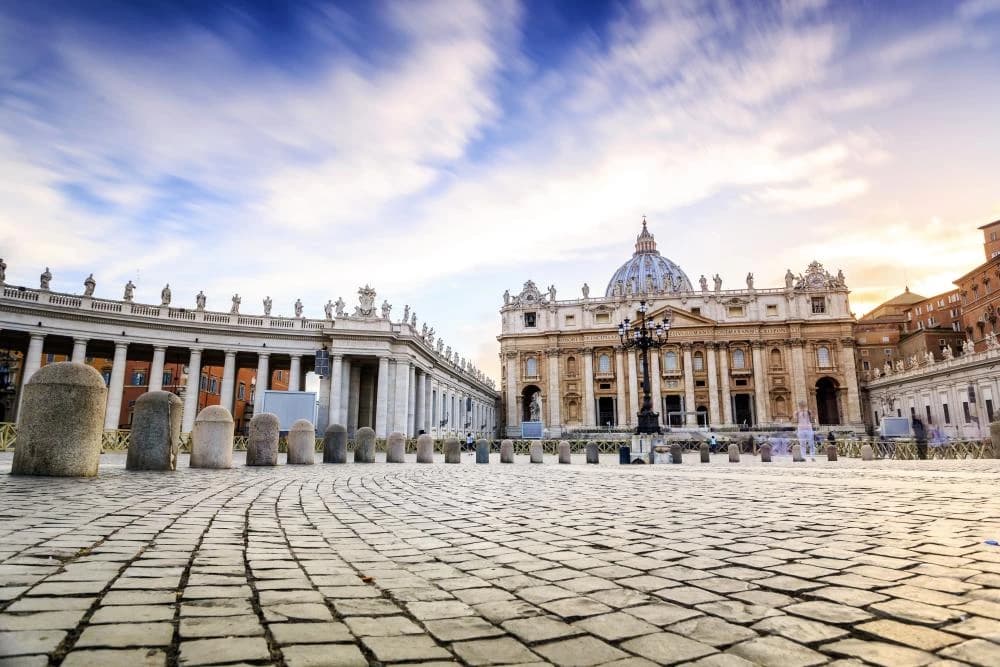
The 26 different museums of the Vatican are housed in a complex of multiple Apostolic palaces, and are by far the most popular museum destination in Rome, in part because of the famous Sistine Chapel. The origins of these museums go back to 1503, the year in which the recently named Pope Julius II donated his private collection. Since that moment private families and other popes have enlarged the collection of the museums to the point where it has become one of the largest in the world. Attractions of the museums include the spiral staircase, the Raphael Rooms and the exquisitely decorated Sistine Chapel. Michelangelo painted the chapel ceiling between 1508 and 1512 and today the ceiling, and especially The Last Judgment, are widely believed to be Michelangelo’s crowning achievements in painting.
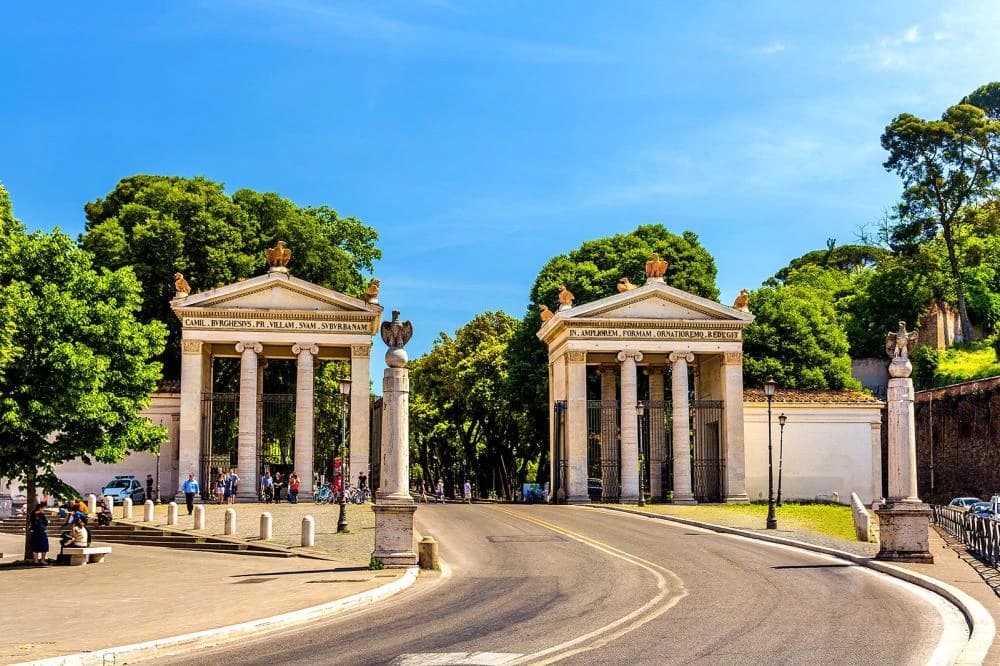
Villa Borghese of Rome is one of the largest urban parks in Europe. The State acquired the gardens from the Borghese family in 1901 and opened them to the public on 12 July 1903. The estate had its first existence in 1580 as a small vineyard of the Borghese family. In 1605, Cardinal Scipione Borghese, nephew of Pope Paul V and patron of Bernini, began turning this previous chateau into the most extensive gardens built in Rome since antiquity on the hill of Piniciano. Over the years, the Borghese family bought surrounding lands to expand their estate. In 1633, the Villa Borghese Pinciana was built to house the art collections of the Borghese family. Today the Galleria Borghese contains one of the largest private art collections in the world, particularly from the Renaissance, including the statues ‘Apollo and Daphne’ by Bernini and paintings by Caravaggio, Rubens, Leonardo da Vinci and Sanzio Raphael.
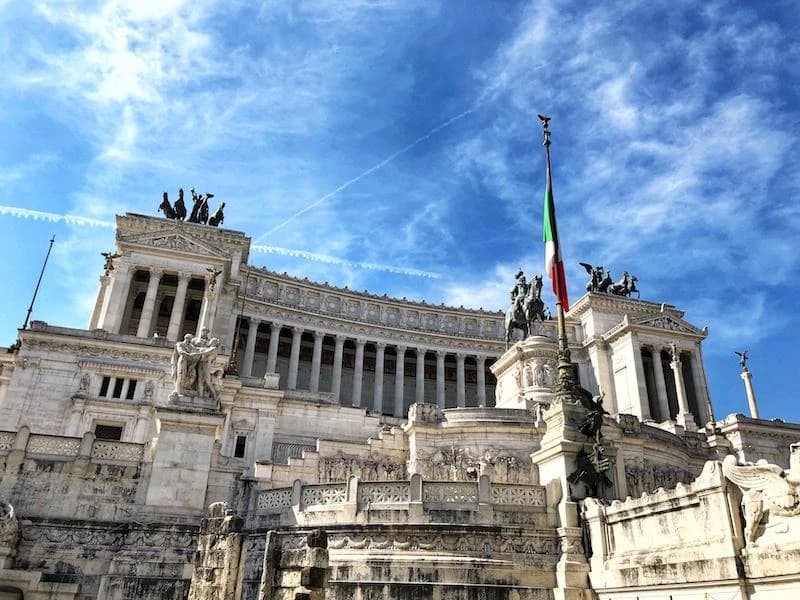
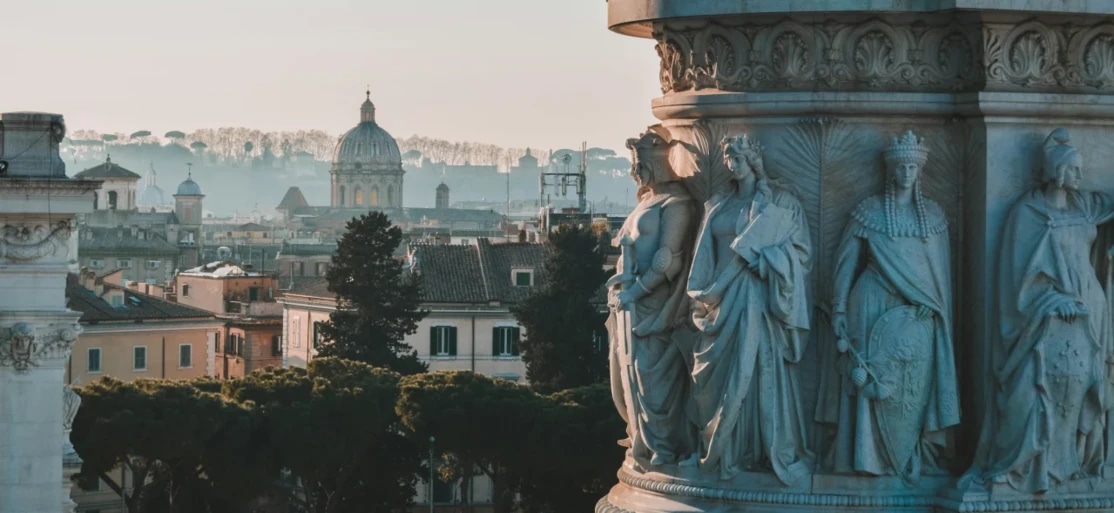
Next to the Piazza Venezia square there is the remarkable white monument honoring Italy's first king Vittorio Emanuele II. The monument commemorates the unification of Italy in 1861 and the first king of Italy, Victor Emmanuel II. Although this monument was built in his honour, he is not buried there. Instead, he is buried in the Pantheon. The impressive building was built between 1895 and 1911 on top of Palatine Hill and was designed by Giuseppe Sacconi. The Altare della Patria contains a lot of white marble from the region of Brescia. Because of how large it is (135 meters wide and 70 meters high) the building was also given several nicknames, ranging from the wedding cake, the dentures, to the typewriter.
 local
localLanguages:
 English
Profile verified
 pro
proLanguages:
 RomânăEnglish
Profile verified
 pro
proLanguages:
 PortuguêsEnglish
Profile verified
 pro
proLanguages:
PortuguêsEnglishProfile verified
 pro
proLanguages:
EnglishProfile verified
 local
localLanguages:
EnglishProfile verified
 pro
proLanguages:
English العربية
Profile verified
 pro
proLanguages:
English Español
Profile verified
 local
localLanguages:
EspañolProfile verified
 local
localLanguages:
EnglishEspañolProfile verified
 pro
proLanguages:
PortuguêsProfile verified
 local
localLanguages:
English Italiano
Profile verified
 local
localLanguages:
EnglishProfile verified
 pro
proLanguages:
EnglishItalianoProfile verified
 pro
proLanguages:
EspañolItalianoProfile verified
Find private local guides worldwide. Connect with real people, real stories — not just scripted tours



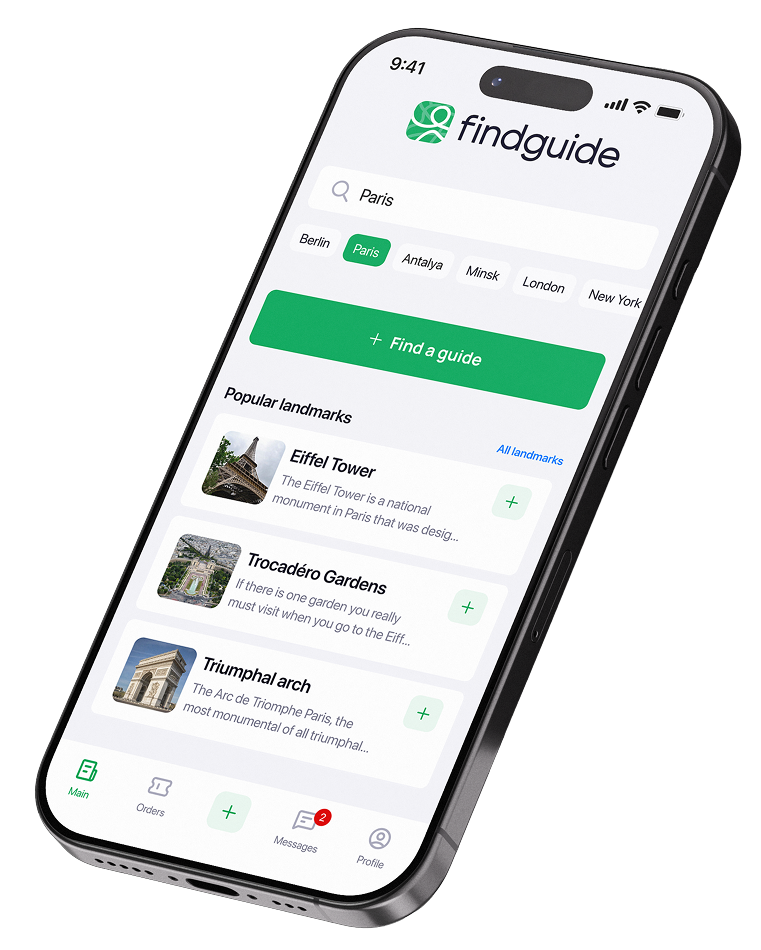

Find a personal guide in just 1 minute and create your dream itinerary!
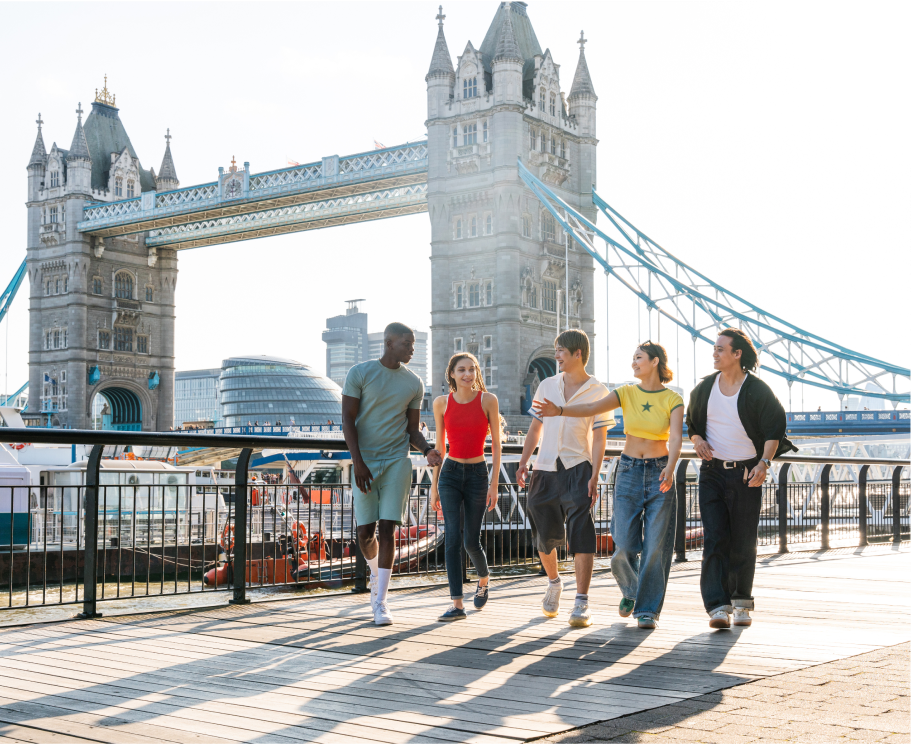

FindGuide is a platform for finding private and local guides around the world. You can choose a guide in advance who will show you the city from a local perspective, not just the standard tourist route.
Enter the city or country you're interested in into the search bar, choose a guide you like, and send them a request. All bookings are made directly on the platform.
We offer walking, food, historical, driving, private, and family tours in more than 100 destinations.
Yes, all guides go through moderation and verification. You can read reviews from other travelers, check the guide’s rating, and view their profile with photos and experience descriptions.
Tour prices vary depending on the destination, duration, and format. You see the cost upfront — no hidden fees.
Yes, the app is completely free for tourists. You can place your tour requests for local guides and access expert travel content totally free of charge.


