
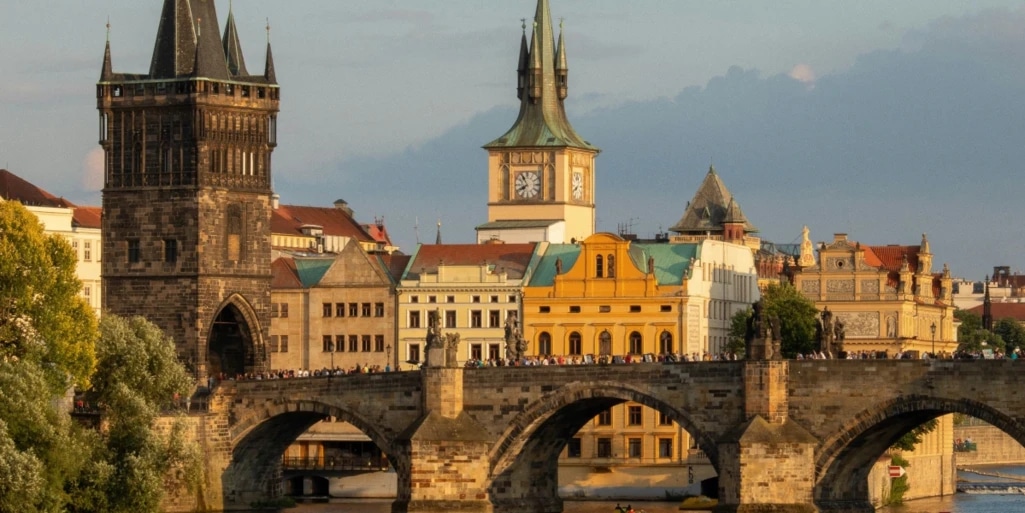
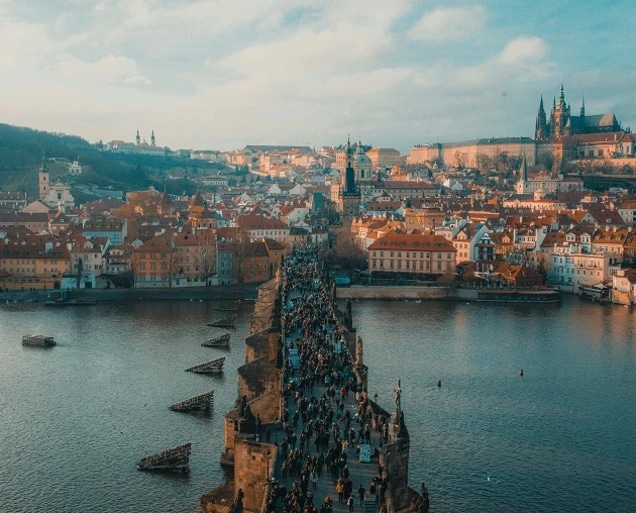
Explore the best things to do in Prague with a professional guide. From Charles Bridge, Prague Castle, Old Town Square, and Astronomical Clock to hidden alleys and cozy cafés, enjoy a fully personalized Prague tour combining history, culture, and local gems
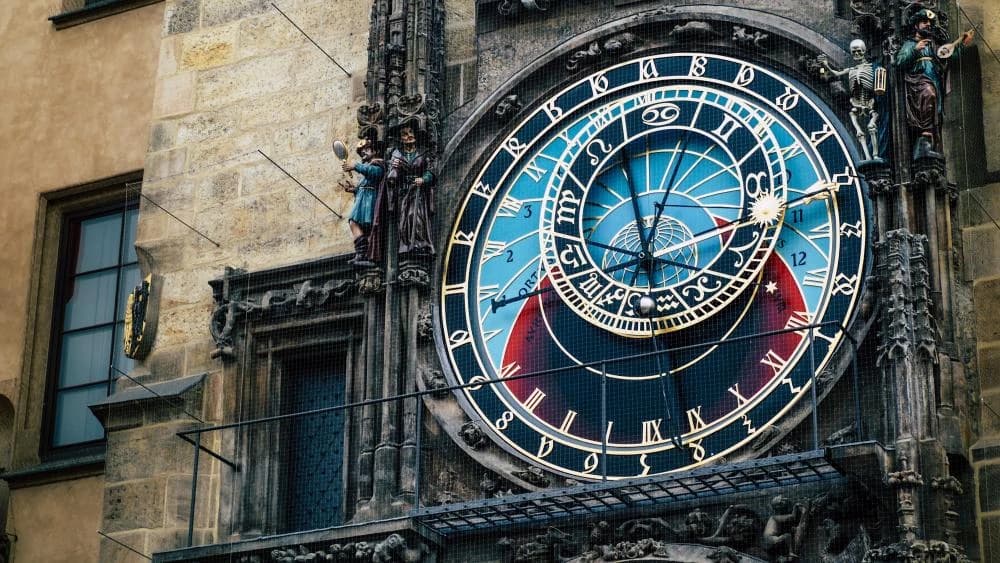
The Prague Astronomical Clock is a famous clock located on the south wall of the Town Hall and is one of Prague's main tourist attractions.It is made up of three principal parts. The newest part of the clock, dating from 1865, is a Calendar Dial painted by Josef Mánes. It represents the months of the year. The Dial also has medallions with all the zodiac signs and the Prague Old Town symbol in the center. The Calendar Dial has four small sculptures that don’t move: a Philosopher, an Angel, an Astronomer and a Chronicler. The top part of the clock is what is called the Astronomical Dial. It represents the Universe or at least the maker’s perception of it when it was built during the Middle Ages. The dial includes a Zodiacal ring that shows the location of the Sun and the two clock hands are designed with a Sun and a Moon each. The three dials that can be seen all show different times. The largest dial shows the Ancient Czech Time, the second-largest shows the Central European Time and the smallest circle shows Unequal Time (Babylonian Hours). The most striking aspects of the clock are the moving 12 Apostles sculptures carved out of wood. They are located in the upper windows of the Astronomical Clock and appear every time the clock strikes the hour.
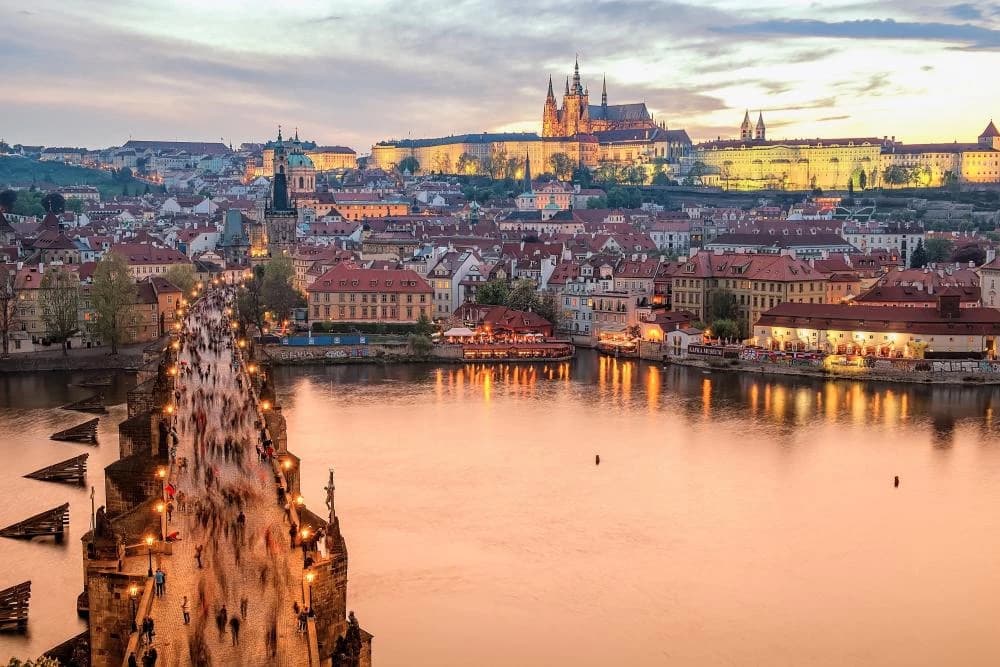
Charles Bridge is the oldest bridge still standing over the Vltava river in Prague and the second oldest bridge in the Czech Republic. Charles IV had it built in 1357, after the previous bridge had been destroyed by floods in 1342. The construction of the bridge was led by Peter Parler, the famous German-Czech architect, and it took almost half a century to finish it (It was completed in 1402). The bridge, formerly known as “Stone” or “Prague”, has only been called “Charles Bridge” since 1870. The bridge is 515 m long and 10 meters wide, and used to have four lanes for horse-drawn carriages. Nowadays, it is only accessible to pedestrians. Along the Charles Bridge in Prague you'll find 30 statues on both sides of the bridge and the first statue added in 1683 was of the saint of Bohemia, John of Nepomuk. Jan Nepomucký, in Czech, was thrown into the river in 1393 by orders of King Wenceslas IV and was canonized in 1729. It is believed that those who place their left hand at the base of the statue and make a wish, will have it granted.
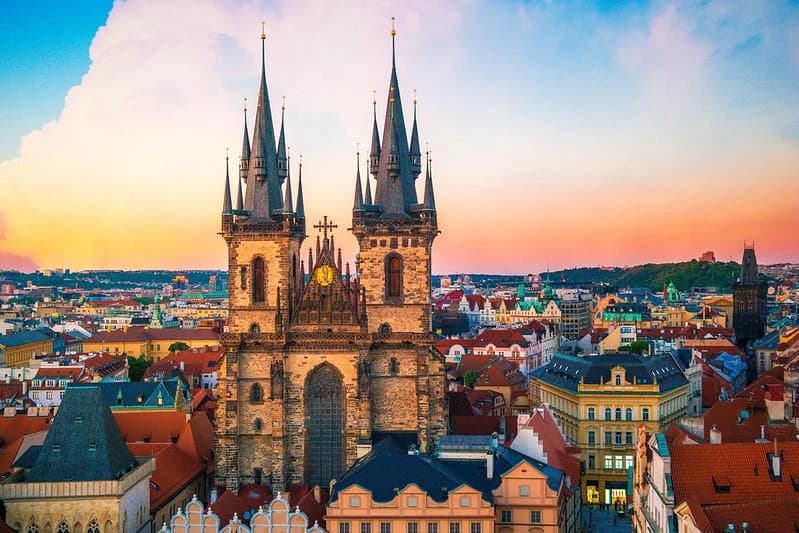
Tyn Church or The Church of Our Lady Before Tyn, dominates one side of the Old Town Square. The twin towers of this powerful looking Gothic church (with a Baroque interior) can be seen from all over Prague. While its origins date back much further, the present high-Gothic structure was founded in 1385 as the main Old Town church. The church is endowed with an extensive gallery of Gothic, Renaissance and early Baroque works, most notable of which are the altar paintings by Karel Skreta. The tomb of the famous astronomer Tycho Braha can also be seen. The towers are around 80m high. But stand in the Old Town Square, and it becomes evident they are not symmetrical. One, Adam, is larger than the other, Eve. This representation of the masculine and feminine sides of the world is characteristic of Gothic architecture of the period. Legend has it that the Tyn Church towers gave Walt Disney the inspiration for the Sleeping Beauty Castle. The organ at Tyn Church dates from 1673 and is the oldest in Prague. Tyn Church has regular Roman Catholic church services. It also occasionally hosts classical concerts, during which the organ is played by expert musicians.
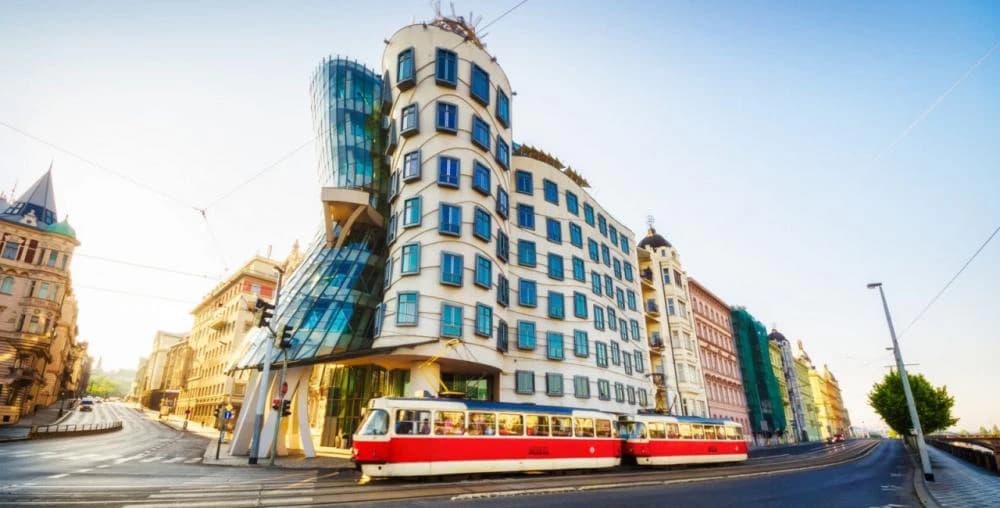
The Dancing House is one of Prague’s most recognizable buildings. Its central pillars represent dancing partners, giving the building a unique sense of movement. Dancing House is set in a fine location by the Vltava River in Prague. Its design is unique, and especially striking in the city center because it is a modern building surrounded by historic architecture. The Dancing House is a famous deconstructivist architectural building located on the Rašín Embankment in Prague, Czech Republic. The construction was completed in 1992 and finished in 1996. The building was designed by Canadian-American architect Frank Gehry and Croatian-Czech architect Vlado Milunić. The building has an unusual undulating shape that is said to resemble a pair of dancers, earning it the nickname Fred and Ginger (after the famous dancers Fred Astaire and Ginger Rogers). The building has nine above-ground floors but the top floor of Dancing House is the only part of the building open to the public, and is home to one of the city's leading restaurants: the Ginger & Fred Restaurant.
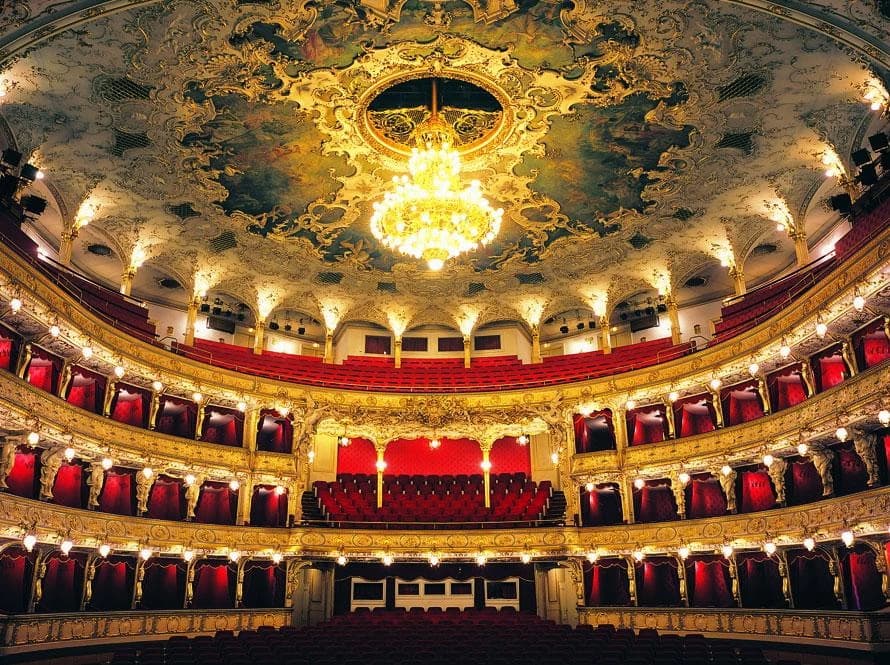
The Estates Theater in Prague, opened in 1783, is the oldest theater in Prague, and the city's finest neo-classical building. Indeed, it is one of the most beautiful historical theaters in the whole of Europe. The Estates Theater will be forever linked with Wolfgang Amadeus Mozart, the musical genius whose life and works had such an impact on the city of Prague. Mozart stayed and worked in Prague on a couple of occasions, crafting operas which would subsequently appear at the Estates Theater. In 1786, although the world premiere of the Marriage of Figaro had been in Vienna, it was in Prague at the Estates Theater that it triumphed. Indeed it was such a success with Bohemian audiences that Mozart was then commissioned to work on Don Giovanni in the city. In 1787, Mozart personally conducted the world premiere of Don Giovanni at the Estates Theater. In the present day, there is often a run of Don Giovanni in the month of August in recognition of this special event. The main season at the Estates Theater meanwhile runs from September to June, when various operas are staged, most of them by Mozart, but sometimes the works of other composers feature too.
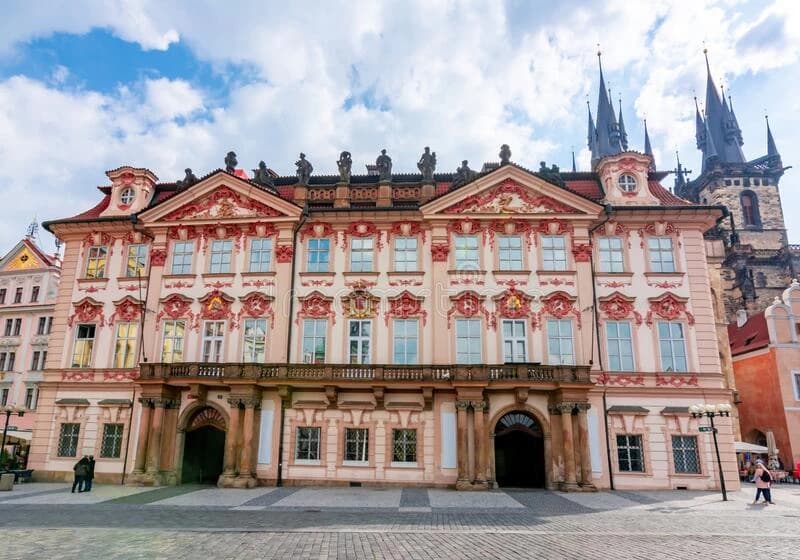
A pink-and-white Rococo manor in the middle of Old Town Square, Kinsky Palace — is one of Prague’s most famous buildings. Once the home of a noble count, the ornate structure is linked to a pair of prized Czech writers. The official name of the Kinsky Palace Prague is the Goltz Kinsky Palace. Since 1949, The Prague Kinsky Palace has been operated by the National Gallery. It is now known as the Kinsky Palace national gallery. Occult enthusiasts may want to watch themselves when around Kinsky Palace, though. Legend has it that the Palace builders made a Faustian bargain to get the job done, and now the site is haunted. History buffs should check out the balcony. It’s where Klement Gottwald announced the beginning of the communist era in 1948, which lasted 42 years. Though the House of Kinsky owned the Goltz Kinsky Palace in Prague through World War II, the family leased sections to merchants and organizations. Hermann Kafka operated a hat shop on the ground floor, and Franz — Herman’s son and now-celebrated author — went to secondary school in the palace between 1893 and 1901. During the Interwar period, even the Republic of Poland’s legation occupied a wing. In 1945, the government took possession of the property and made it a museum, which it remains today.
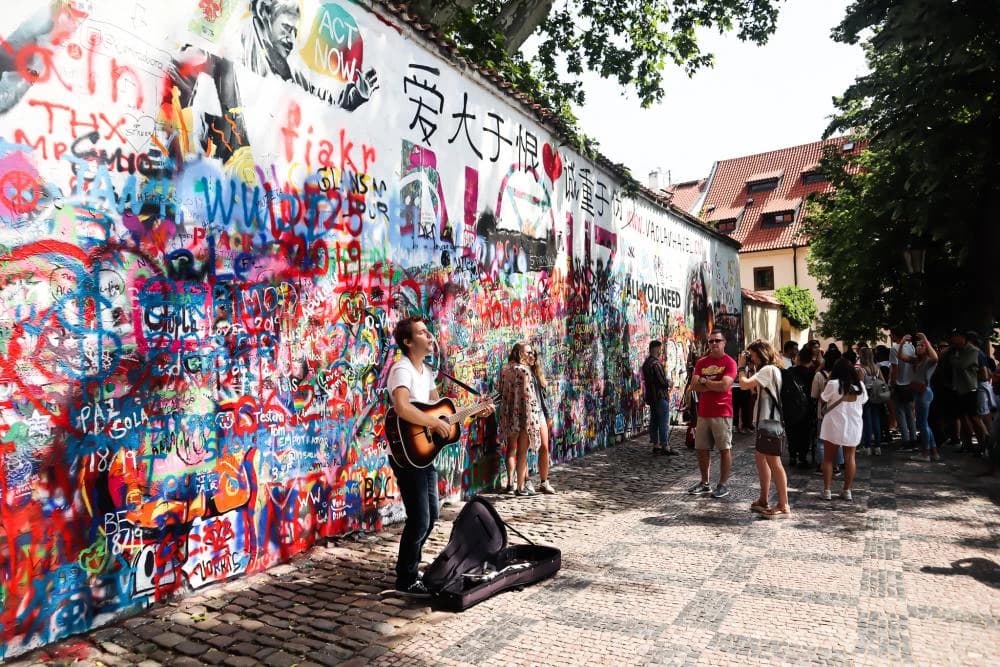
The John Lennon Wall is a real tourist magnet not far from Charles Bridge that attracts tourists from all over the world. The wall was originally known as the ‘Crying Wall’, where people would come and pour out their frustrations with government and authority. During the Communism era, western pop songs such as the ones sung by The Beatles were actually banned – and people would even be imprisoned for playing them. The music spearheaded by John Lennon represented freedom and it captured the imagination of Prague’s youth. So, the name for the wall arose after John Lennon’s death in 1980, when people came in their droves here to mourn his death and celebrate all that he stood for. The widow of John Lennon, Yoko Ono even visited the wall in 2003. This particular wall isn’t owned by John Lennon’s family or the Czech government as some reports may lead you to think, but it is in fact owned by the Knights of the Maltese Cross. Some say that this wall is Prague’s equivalent of the Berlin Wall, in terms of its significance. With inspiring lyrics and positive messages plastered all over it, the wall undoubtedly symbolizes freedom, free speech, peace and resistance against Communism.
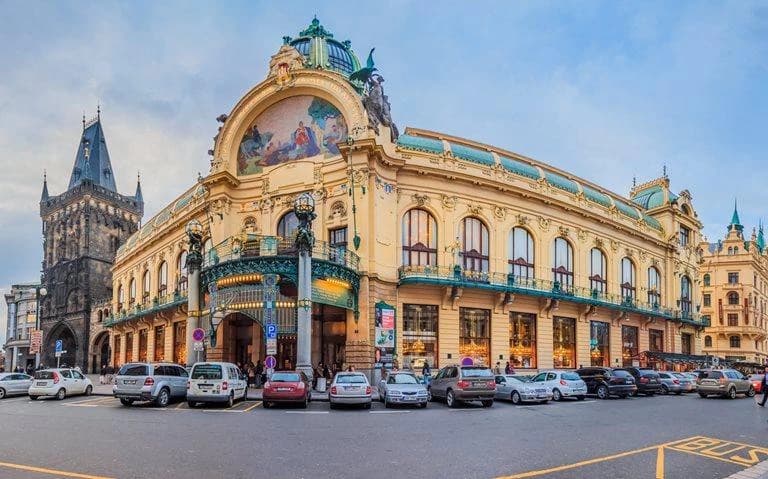
Municipal House Prague is one of the most stunning Art Nouveau buildings in the city. Finished in 1912, Municipal House is located on the Republic Square next to the Powder Tower. You can see a large fresco above the main entrance of the Municipal House that portrays Lady Prague sitting on the throne with the Czech capital in the background. Inside, a huge marble staircase leads to the glorious Smetana Concert Hall. This architectural masterpiece is constructed of carved white stone and gold, and illuminated by hundreds of lights. Frescos by Karel Spillar adorn the walls. Classical concerts in the Smetana Hall boast the largest orchestras to play the city. Indeed, the Municipal House is home to the Czech National Symphony Orchestra. The building was built in 1912 on the site of the former Royal Court Palace, where the Old Town gives way to the New Town. On January 6th, 1918, a so-called Three Kings Declaration was signed in the Municipal House. That declaration proclaimed the state sovereignty, and on October 28th same year, the Independence of the Czechoslovakian Republic was announced on the balcony of the Municipal House. To this day, the square that the balcony overlooks is called Republic Square.
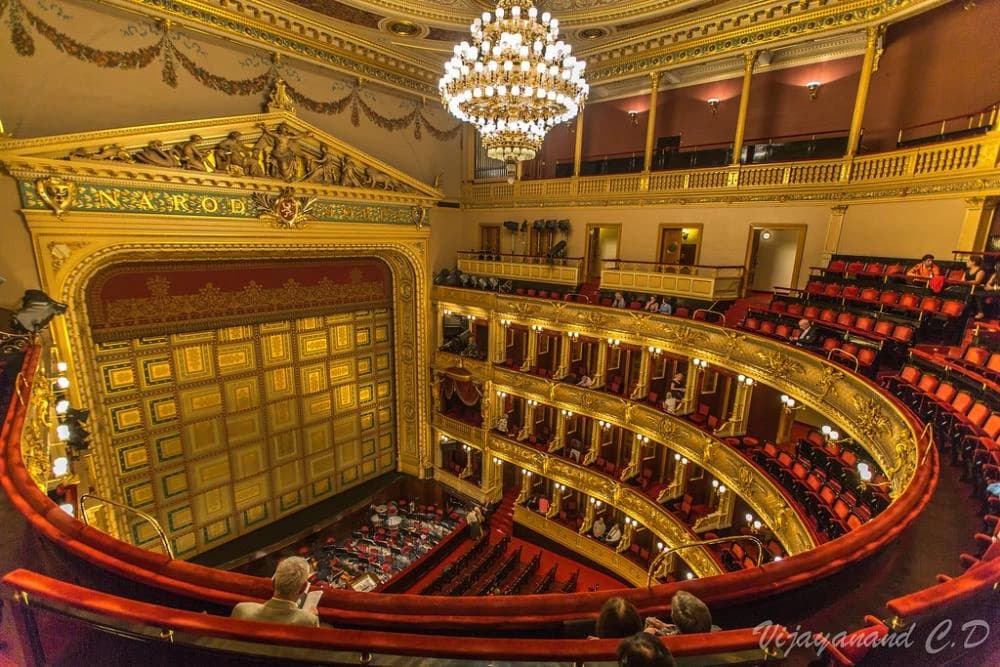
The National Theater in Prague, a stunning neo-Renaissance building dating from 1868-83, is one of the three opera houses in Prague. And for Czech people, the National Theater is probably the most important cultural institution in the country. The theater sits majestically alongside the Vltava River, from where it is instantly recognisable on sunny days by its golden roof gleaming in the sunshine. Since inception, the National Theater has been a symbol of the Czech National Revival. It has played a significant role in the development of the Czech language, Czech music and the country's dramatic arts. The construction of the National Theater was largely funded by private donations. But shockingly, on the 12th August 1891, just days before the official opening, the whole building was gutted by fire. Within 6 weeks enough money had been raised to rebuild it. And just two years later, in 1883, it opened with a performance of Libuse by the famous Czech composer Bedřich Smetana. The rich, artistic tradition continues at the National Theater today, with a fine repertoire of opera and ballet, and Czech drama.
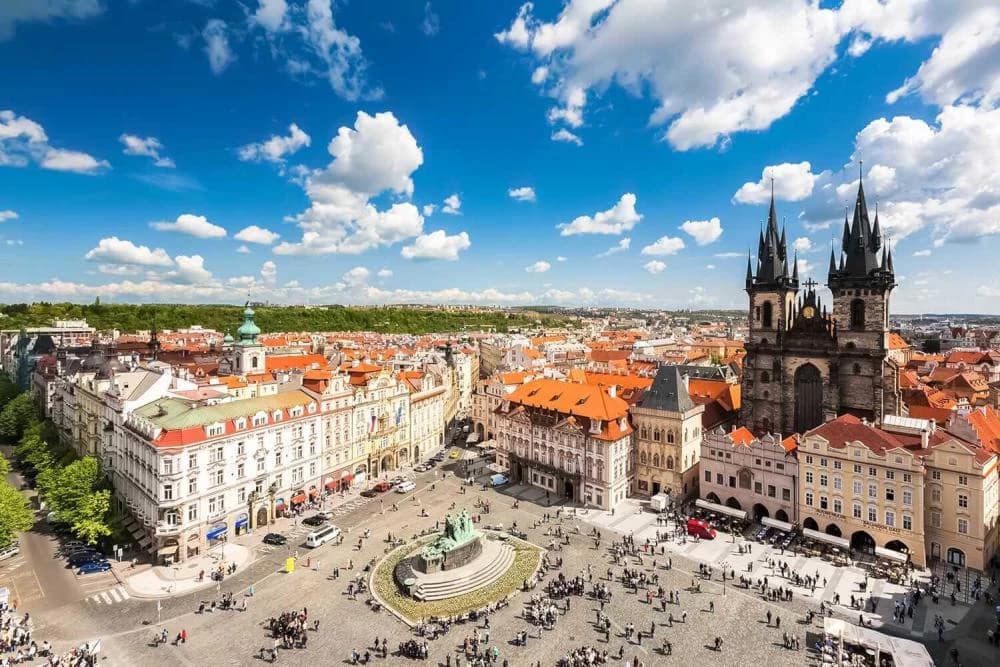
The Old Town Square is a remarkable venue where the history of Bohemian lands has often been written. In the 11th century, there was a marketplace, which grew gradually in significance until it became the most important in the country. The square used to be called “Big Square'' or “Old Marketplace”. Located between Wenceslas Square and Charles Bridge and covering an area of over 9 thousand square meters, the Old Town Square is bordered by many interesting historical buildings and is definitely one of the top “must-see” places to visit when you travel to the Czech Republic.The Square houses numerous buildings that are worth visiting such as the Church of Our Lady before Týn, St Nicholas Church and Old Town Hall. The Old Town Hall is one of the most impressive buildings in Prague. On its southern wall is located the Prague Astronomical Clock. The building, used until the eighteenth century as a Town Hall, stands out thanks to its Gothic tower which stands 60 meters tall and from which visitors can get a bird’s-eye view of the historic center.
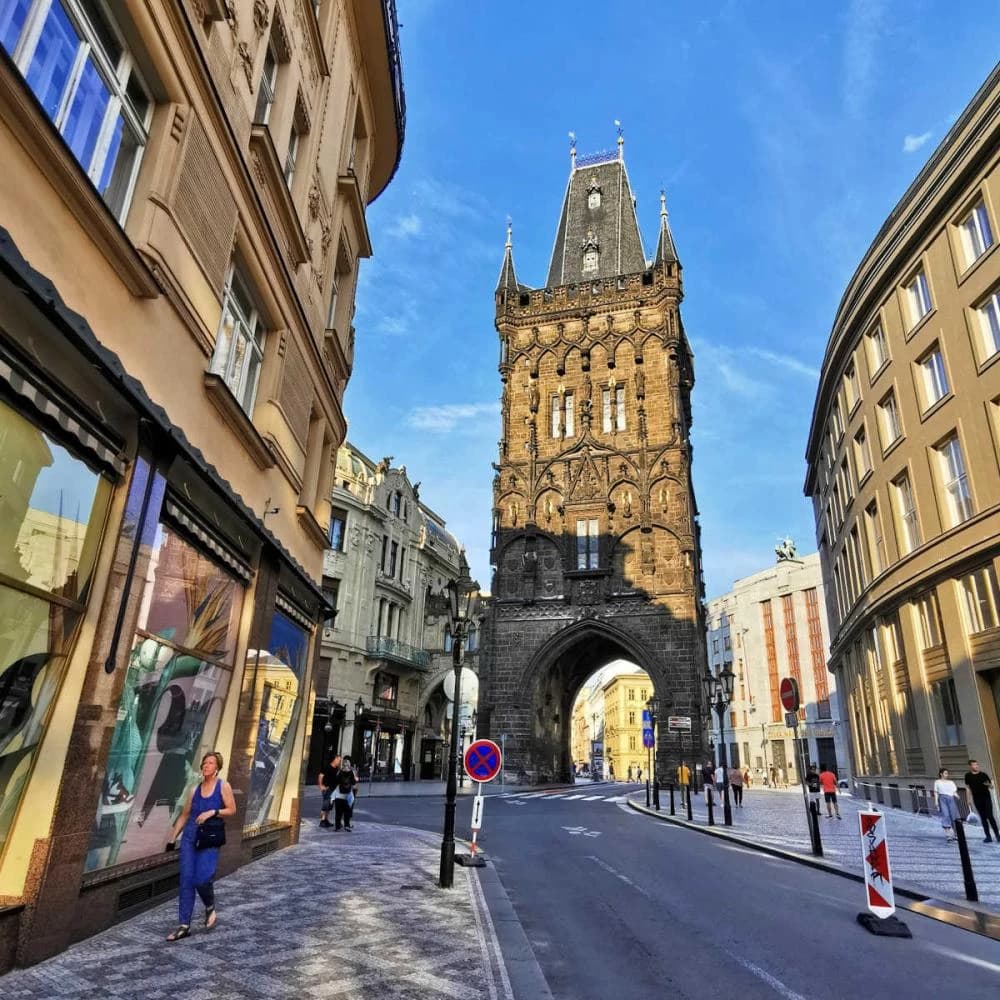
The Powder Tower, also known as Powder Gate , is a dark Gothic tower which serves as a gateway to the Medieval Royal Route, and is currently one of the most iconic buildings of Prague. In terms of art history, the Powder Tower belongs to the late Gothic period. It is a significant historical building, which as a gate tower still provides access to Prague’s Old Town. The Powder Tower is 65 meters high. At a height of 44 meters there is a viewing platform, from which the tourist has a beautiful view over Prague. All coronation processions of Czech kings passed through the gate of the Powder Tower. This is where they entered the Old Town of Prague. Zeltnergasse begins directly at the Powder Tower. It represents the beginning of the historical Royal Route and leads from the former royal court to Prague Castle. This city gate was built in 1475 as one of the thirteen gates of the fortified wall of the Old Town. In 1541 it was burnt to the ground, but was reconstructed shortly afterwards. Two hundred years later, during the seventeenth century, the tower was used to store gunpowder, giving its name to the building.
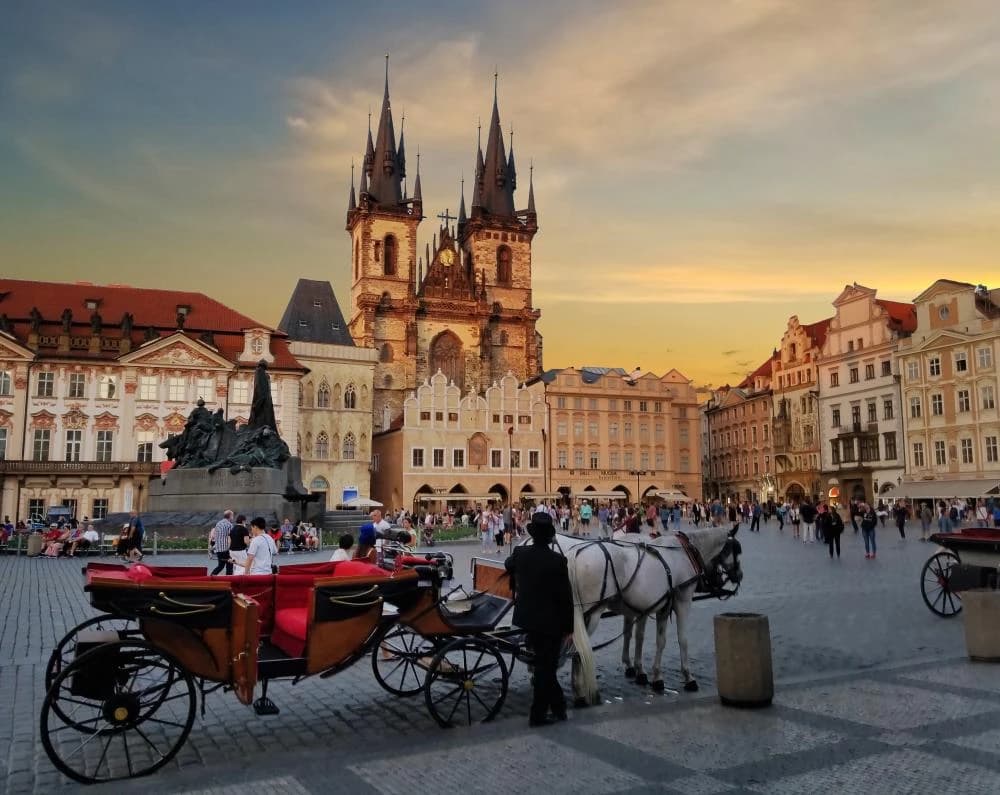
A symbol of Czech statehood, Prague Castle (Pražský hrad) is one of the most significant historic monuments in Prague. It is also the official residence of the President of the Czech Republic. The castle is listed on the UNESCO World Heritage site, and according to the Guinness of Records, it is the largest castle complex in the world. Prague Castle is a complex of historic palaces, ecclesiastical and residential buildings, and gardens. It was founded by Bořivoj, the first Czech prince of the Premyslid Dynasty. Construction began in the 9th century and continued into the early 20th century. The foundation of the city of Prague dates back to the construction of this castle. Thanks to its strategic location, it immediately became the center of the region and the chosen residence of the Bohemian monarchs. After the fall of the Austro-Hungarian empire in 1918, the castle became the presidential seat of the first president of Czechoslovakia, Tomáš Garrigue Masaryk, and since then it has become the official residence of the presidents of the Czech Republic.
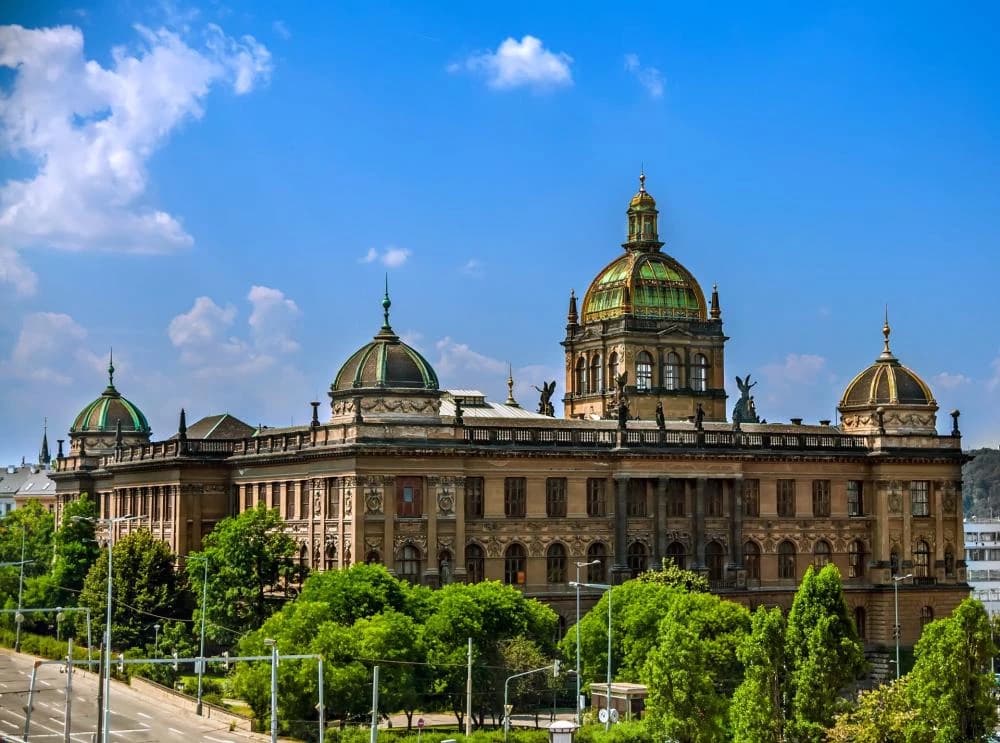
Located in one of the most famous buildings in the city, the Prague National Museum (official name Národní Muzeum) is the most important in the Czech capital. The main building of the Czech National Museum, a magnificent Neo-Renaissance monument from the 19th century, is located at the top of Wenceslas Square. It has been closed since July 2011 for massive and essential reconstruction works, but in the meantime, there’s no need to despair. The National Museum focuses on many science and collection fields and it manages its collections in a number of buildings not only in Prague but also elsewhere in the Czech Republic. It was founded in 1818 under the name of “Patriotic museum of Bohemia”. Nowadays, the National Museum contains millions of museum items. Its collections include Czech and foreign material testimonies to the development of nature and history. Within the frame of a uniquely large number of long-term and temporary exhibitions, one can learn, among other things, about geology, paleontology, zoology, anthropology, and prehistory.
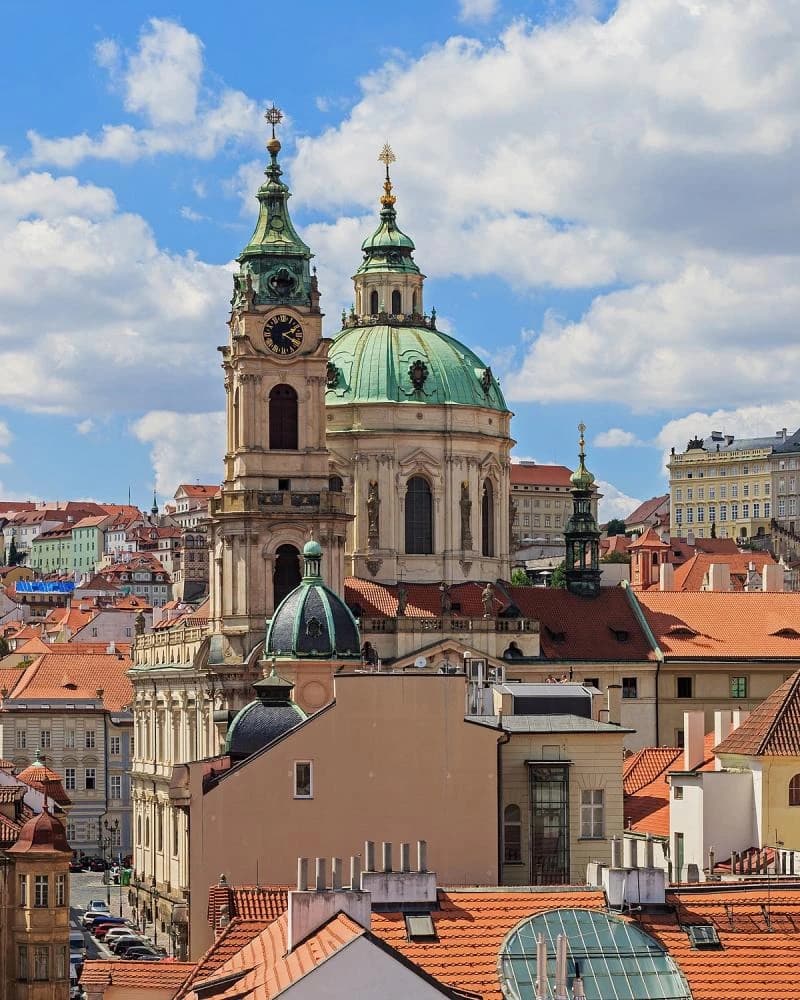
St Nicholas Church in Malá Strana (not to be confused with the one in Staré Město) is the most beautiful and famous Baroque church in Prague. Saint Vitus Cathedral is considered the most impressive Gothic style church, while St Nicholas is a Baroque masterpiece. The initial plans of the church were made in 1673 by the Jesuits. The Chapel of St Barbara was built first so that mass could be celebrated as soon as possible. It was finished in 1711. The rest of the construction was completed in 1752. In the square where the church is located is the Plague Column with a statue of the Holy Trinity. It was built in 1715 by one of the most important Baroque architects of the time in Bohemia, Aliprandi. St Nicholas Church houses numerous artworks, from the frescos on the ceiling and dome to the sculptures that adorn the walls. The church was designed by K. Dientzenhofer and three generations of his family (father, son and son in law) worked on the church during the following century. From the top, standing 213 ft (65 m)-tall, the whole neighborhood of Malá Strana is visible. During the communist regime, it was used to spy on the foreign embassies.
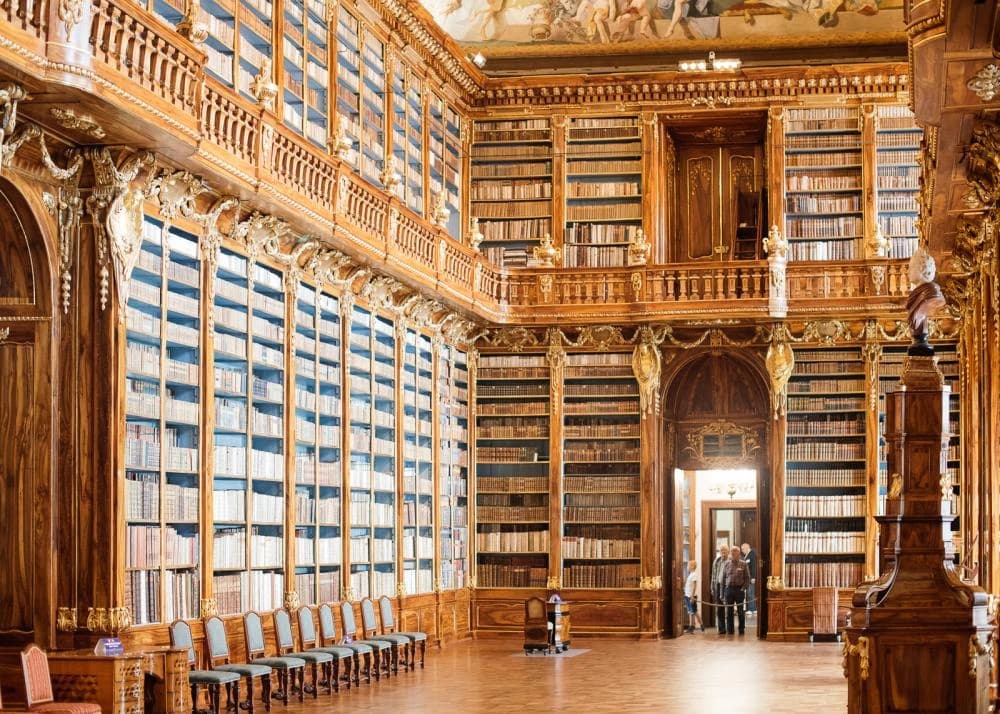
The Strahov Monastery is the oldest Premonstratensian monastery in Bohemia and one of the most important architectural landmarks in the Czech Republic. The Strahov Monastery was founded in 1143 but Its Baroque-style architecture is from the seventeenth century. Inside the monastery is the Basilica of Assumption of Our Lady. Near the main altar is a sarcophagus with the founder of the Premonstratensians and Archbishop of Magdeburg, Saint Norbert. Moreover, the temple holds an organ built in 1774, which was played by Mozart when he visited Strahov. Visitors can only access the Basilica during mass. Most of the rooms in the Strahov Monastery are used for exhibitions and unfortunately cannot be visited. The only two halls that are always open to the public are the Library and art gallery. The Strahov Library has two rooms which are, in a way, similar to the Baroque library of the Clementinum, the Theological Hall and Philosophical Hall. In both, visitors will find thousands of books, Medieval manuscripts, illustrations and astronomical and terrestrial globes. The monastery also houses a small zoological exhibition with a collection of stuffed animals.
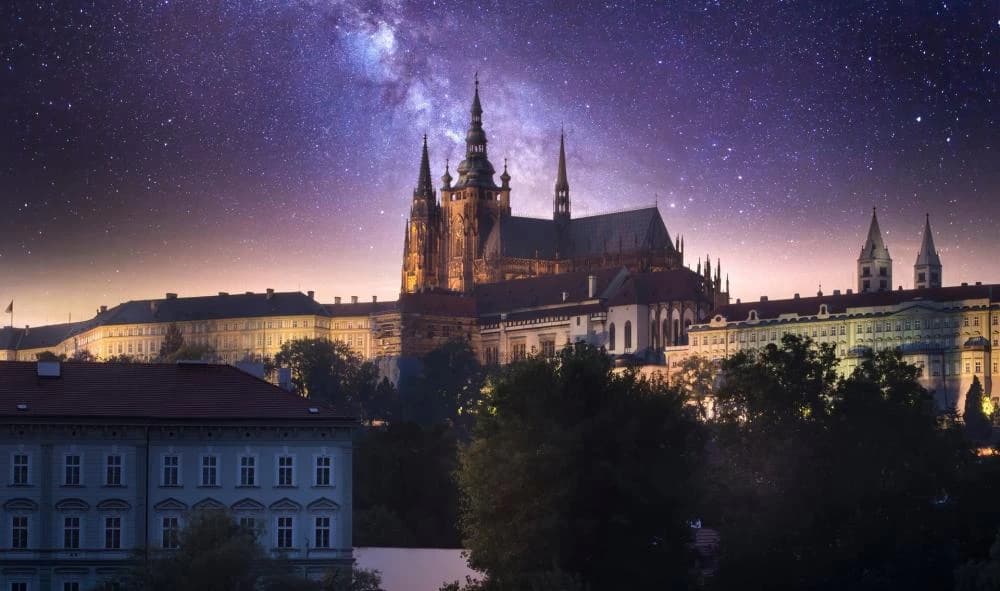
St. Vitus Cathedral,located in the Prague Castle, is the largest and the most important temple in Prague. Apart from religious services, coronations of Czech kings and queens also took place here. The cathedral is a place of burial of several patron saints, sovereigns, noblemen and archbishops. This Gothic cathedral, the spiritual symbol of the Czech state, was founded in 1344 on the site of the original Romanesque rotunda. The construction took nearly 600 years and was finally completed in 1929. St. Wenceslas Chapel with the tomb of St Wenceslas is a cult center of St. Vitus Cathedral. The facing of the walls, consisting of precious stones, and the wall paintings of the Passion Cycle are parts of the original 14th-century decoration of the chapel. The door in the south-western corner of the chapel leads to the Crown Chamber in which the Bohemian Coronation Jewels are kept. If you want to enjoy the best views of Prague and don’t mind climbing 287 steps, then we recommend reaching the Great South Tower’s observation deck, which stands90 m high. Visitors will have a stunning view of Charles Bridge, Staré Město and Malá Strana.
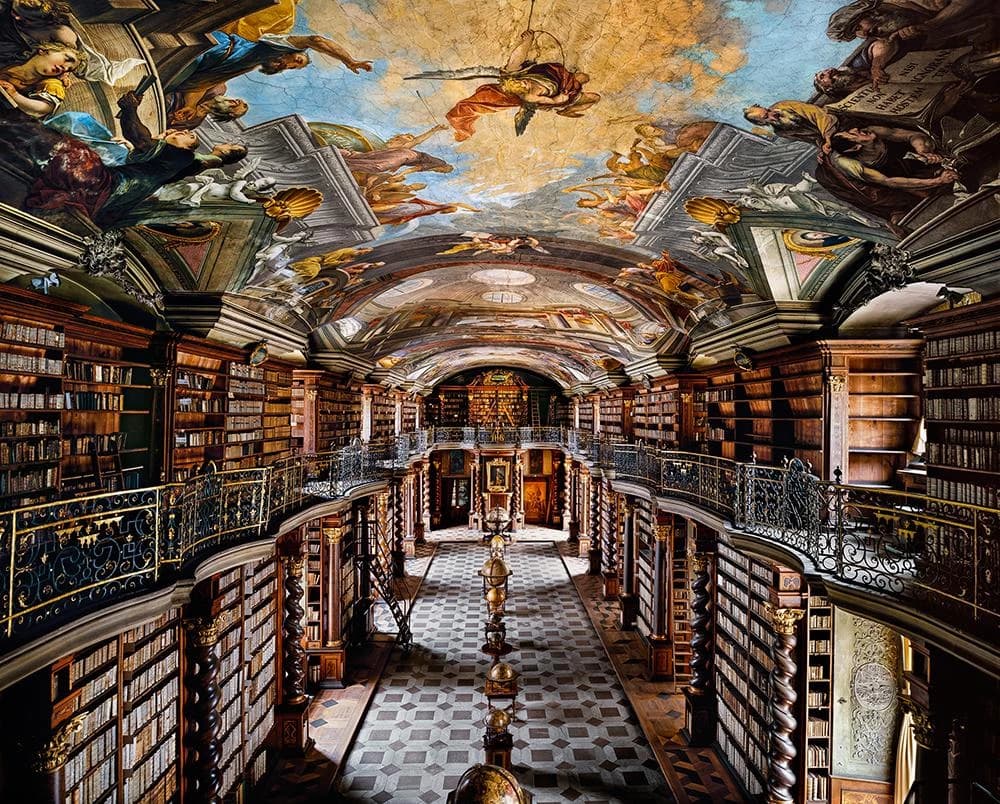
The Clementinum, Klementinum in Czech, is the second largest architectural complex in Prague after the Prague Castle. For over two centuries the Clementinum has housed the Czech National Library. It also offers organ and classical music concerts. The site where the Clementinum is currently located was home to the Saint Clement chapel, founded during the eleventh century. In 1232, the Dominicans occupied the church and built a monastery on the same grounds. The Jesuits were invited to come to Prague in 1556 by the Emperor Ferdinand I. They soon established themselves in the Old Town, transforming and expanding the Dominican monastery and the chapel into a Jesuit college. With over 20,000 books, frescos and geographical and astronomical globes in a dimly lit hall the National Library of the Czech Republic, seated in the Baroque complex of Clementinum near Charles Bridge, is the central library of the country. Directed by the Ministry of Culture of the Czech Republic, it controls the system of all Czech public libraries and its book-stock preserves all books, manuscripts, and other publications issued in the Bohemian land since 1807. There are also much older documents, the oldest of which are Greek papyri from the 1st century.
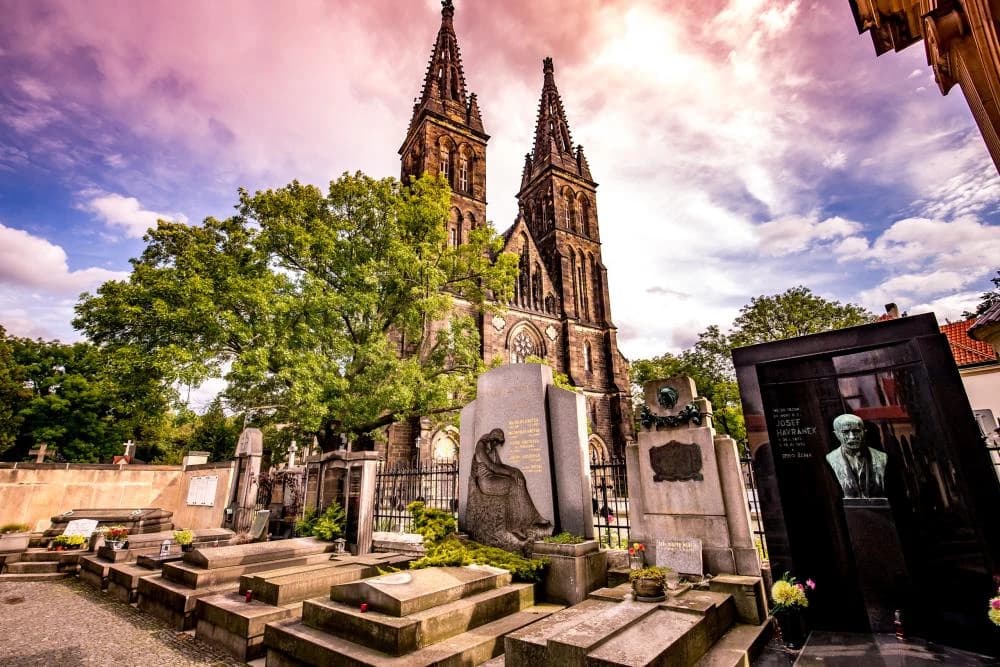
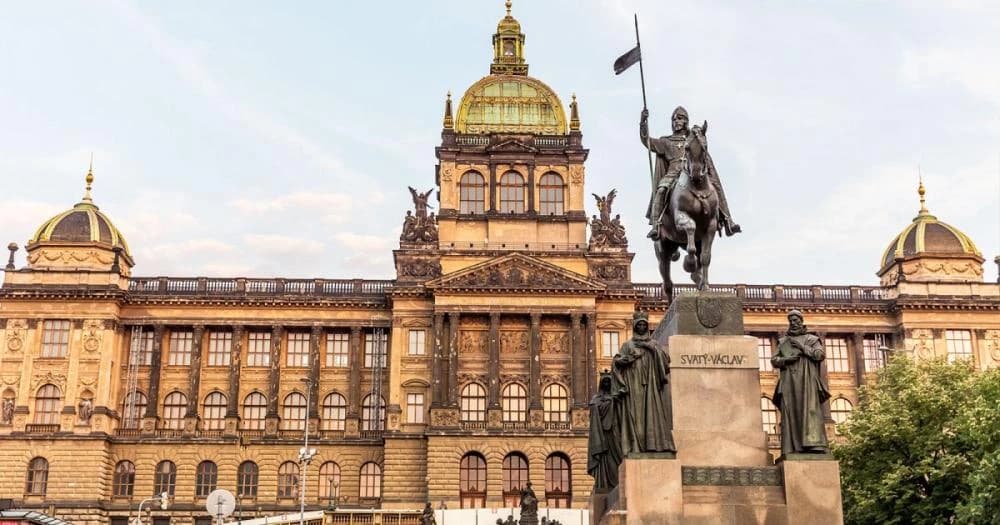
The Wenceslas Square was set up as part of the project of the New Town of Prague, decreed by the celebrated King of Bohemia and Holy Roman Emperor Charles IV himself in 1348. It was intended to be one of the main marketplaces of Prague. The square has been the central place where all important events of the Czech nation happen,some of the events were the declaration of the First Czechoslovak Republic in 1918, protests against the Soviet invasion in 1968, the self-immolation of Jan Palach following the invasion, and the fall of communism in 1989. Nowadays, Wenceslas Square is, among other things, a traditional meeting point for the citizens of Prague. They often say “let’s meet at the horse” or “under the tail”, referring to the famous statue of Saint Wenceslas on a horse. The square is one of Prague’s most popular centers of culture, shopping and dining. The above-mentioned bronze equestrian statue of Saint Wenceslas was created by Czech sculptor and medallist Josef Václav Myslbek in 1913. It was placed at the top of the square, in front of the main building of the National Museum, which was built between 1885 and 1890. And the Museumnow is probably the most important structure on Wenceslas Square.
 local
localLanguages:
 Українська
 English
Profile verified
 local
localLanguages:
УкраїнськаEnglishProfile verified
 pro
proLanguages:
English Русский
Profile verified
 local
localLanguages:
 ČeštinaEnglish
Profile verified
 local
localLanguages:
English Español
Profile verified
 pro
proLanguages:
 ქართულიEnglish
Profile verified
 local
localLanguages:
EnglishРусскийProfile verified
 local
localLanguages:
ČeštinaEnglishProfile verified
 local
localLanguages:
УкраїнськаEnglishProfile verified
 pro
proLanguages:
ČeštinaEnglishProfile verified
 pro
proLanguages:
РусскийProfile verified
Find private local guides worldwide. Connect with real people, real stories — not just scripted tours





Find a personal guide in just 1 minute and create your dream itinerary!

FindGuide is a platform for finding private and local guides around the world. You can choose a guide in advance who will show you the city from a local perspective, not just the standard tourist route.
Enter the city or country you're interested in into the search bar, choose a guide you like, and send them a request. All bookings are made directly on the platform.
We offer walking, food, historical, driving, private, and family tours in more than 100 destinations.
Yes, all guides go through moderation and verification. You can read reviews from other travelers, check the guide’s rating, and view their profile with photos and experience descriptions.
Tour prices vary depending on the destination, duration, and format. You see the cost upfront — no hidden fees.
Yes, the app is completely free for tourists. You can place your tour requests for local guides and access expert travel content totally free of charge.


