
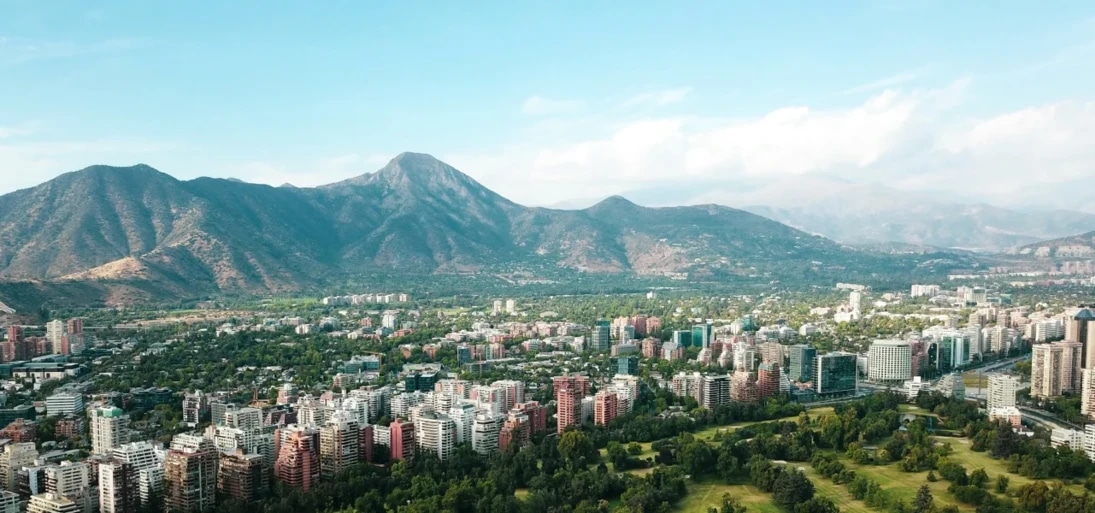
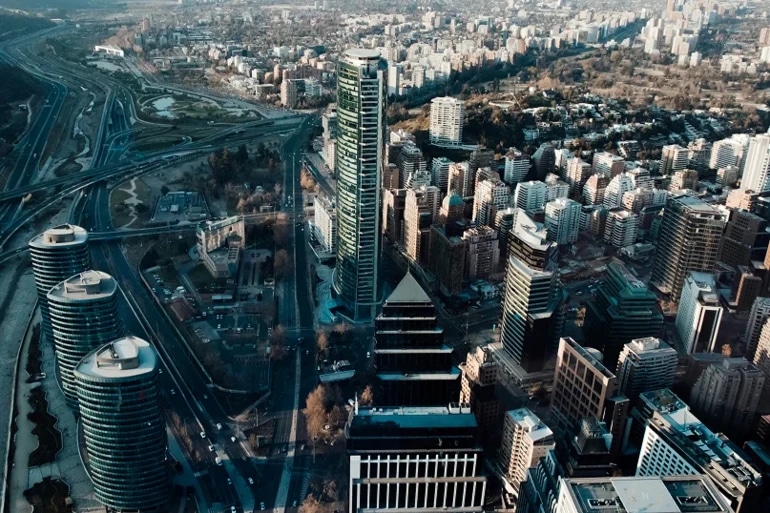
Explore Madrid with a private guide. Visit iconic Prado Museum and Royal Palace, stroll through lively Plaza Mayor and charming neighborhoods, and savor authentic Spanish cuisine. Personalized tours reveal hidden gems, local stories, and unforgettable moments in Spain’s energetic capital.
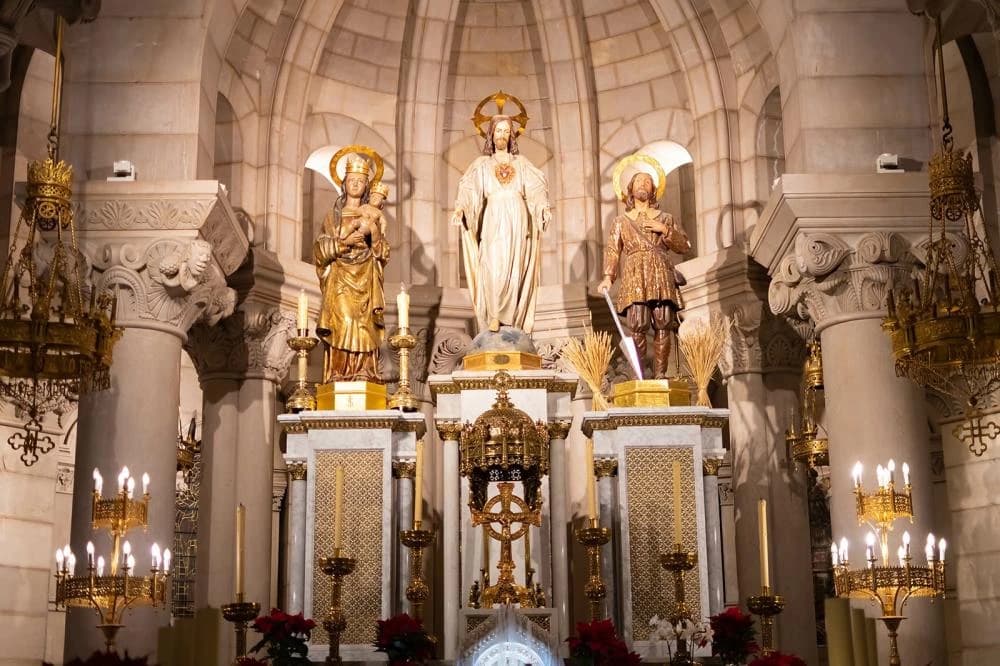
The Catedral de Almudena is Madrid’s grandest church, situated next to Madrid’s Palacio Real, the royal palace. It is the most important religious building in Madrid. It was consecrated by Pope John Paul II on 15 June 1993, making it the first cathedral to be consecrated outside of Rome. The construction of la Almudena began on 4 April 1883 when Alfonso XII of Spain set the first stone. The project was driven and designed by the architect Francisco de Cubas. The temple’s interior is rather surprising since it is completely different to any other cathedral built during the same period; the ceiling and the stained-glass windows being decorated with vivid colors and straight lines, much unlike the classical style. La Almudena Cathedral Museum features numerous items that portray the history of the diocese of Madrid. The museum is made up of twelve halls that contain mosaics, Episcopal symbols and vestments. The cathedral itself was most recently the site of the wedding of King Felipe VI (who was prince at the time) to Letizia Ortiz Rocasolano on May 22, 2004.
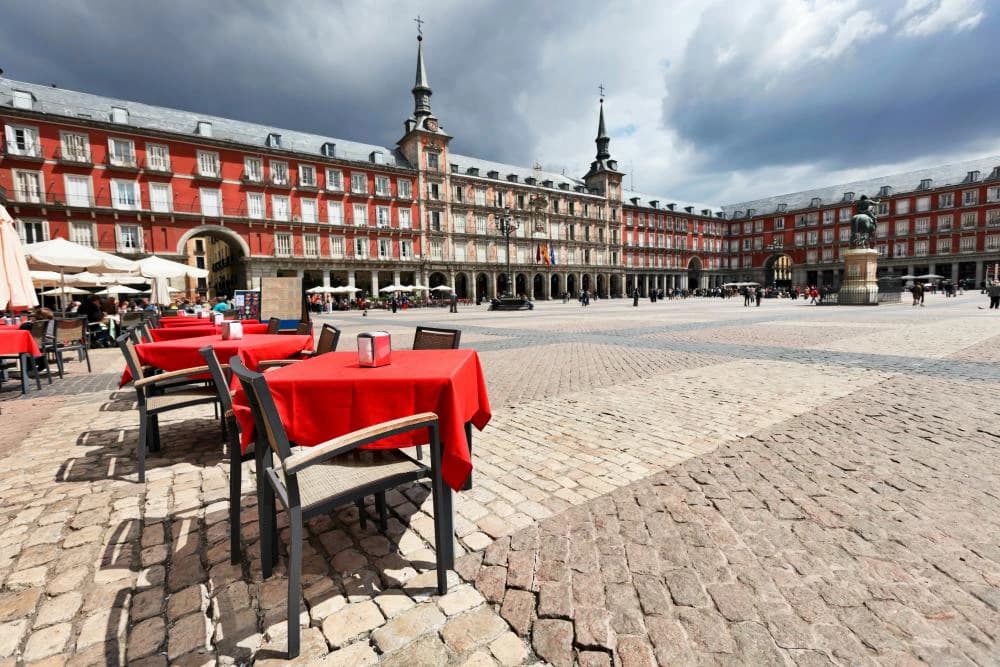
Madrid’s Plaza Mayor, a symbol of the city and a must-see, located in the heart of Madrid, near Puerta del Sol and the Royal Palace. This enormous esplanade in the city center was begun in the 17th century by King Philip III, whose bronze equestrian statue stands in the square. Officially opened in 1620, it is rectangular in shape and lined with pillars and arches. Over the years it has been the setting for many public events, from bullfights, processions, fiestas and theatrical productions to trials of the Inquisition and even executions. The arcades are home to many traditional shops and a plethora of bars and restaurants. Some of the most notable buildings on the square are the Casa de la Panadería, with a frescoed façade, the Casa de la Carnicería and el Arco de Cuchilleros - the most famous of the nine entrances to Plaza Mayor. The Casa de la Panadería was the first to be established here, in 1590. It was initially the most important bakery in Madrid. Its remarkable façade was decorated by Carlos Franco.
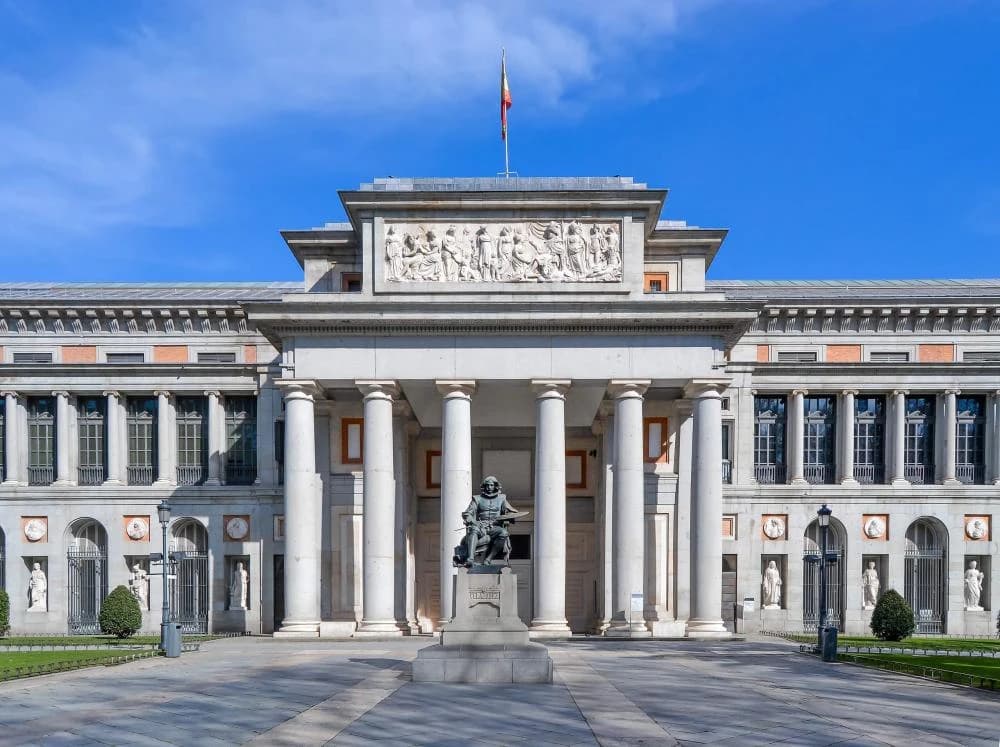
One of the most important museums in all of Spain, Prado Museum Madrid is known to have the most comprehensive collection of Spanish art and one of the most outstanding collections of European Art between the 12th century to the early 20th century. The monumental building which houses the Museo Nacional del Prado is worth visiting in itself. Designed by Juan de Villanueva in 1785, the building was intended as a home for the National History Cabinet under the orders of King Charles III. Two generations later, Charles’ grandson King Ferdinand VII decided to use it as a new Royal Museum of Paintings and Sculptures. The name was changed to the National Museum of Paintings and Sculptures, before becoming the Museo Nacional del Prado we know today. Today, Museo del Prado has around 7,500 paintings, along with dedicated sections for sculptures & decorative arts, and print, drawings, and photographs. Prado Museum, along with Reina Sofía Museum and Thyssen-Bornemisza Museum, forms Madrid's Golden Triangle of Art.
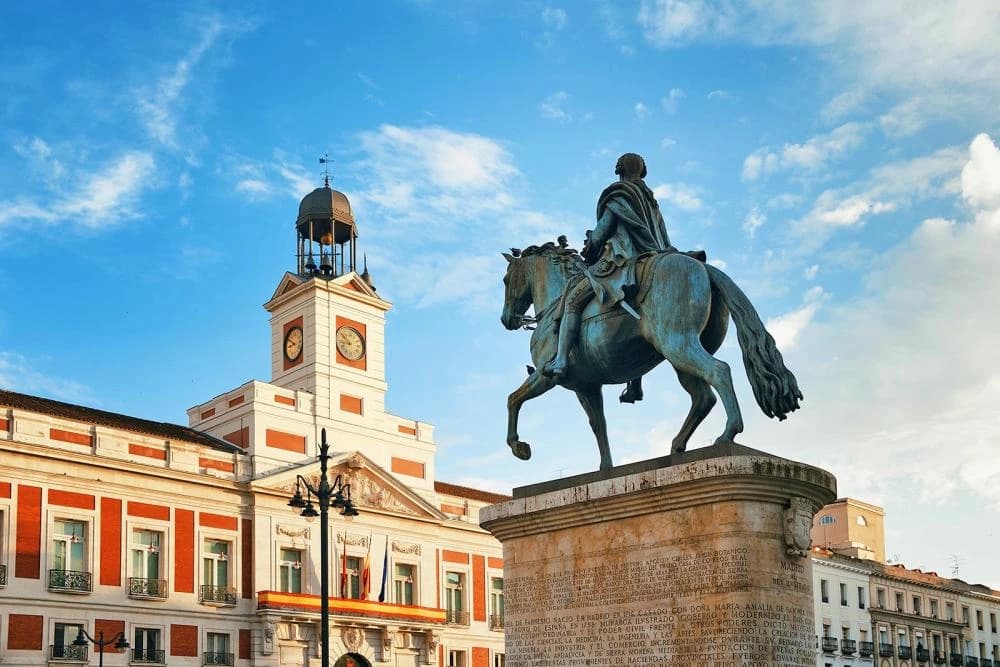
Located just a short walk from the Plaza Mayor, Puerta del Sol (The Sun's Gate in English) is Madrid‘s most famous and central square. Originally the site of one of the city’s gates, Puerta del Sol has plenty to see and do, but there are few major points of interest you won't want to miss. The first is El Oso y el Madrono, or the statue of the bear and strawberry tree. It gets its name from the original name of Madrid: ‘Ursaria’, which means ‘land of the bears’ in Latin. The other statues to be found in this square are a reproduction of the Mariblanca statue (the original is in the Municipal Museum) which is believed to be Venus or Diana the Hunter and a statue of King Carlos III (placed here by popular demand, since he was called the "Mayor of Madrid" due to the improvements he ordered made to the city). While in Puerta del Sol, you'll also want to see the Real Casa de Correos, or the house of the post office.This is where you'll find the famous clock that marks the Spanish new year tradition of the eating of the 12 grapes. Finally, you can visit Kilometer Zero, which is the spot where all major roads in Spain intersect, and it shows how distances in Madrid are measured.
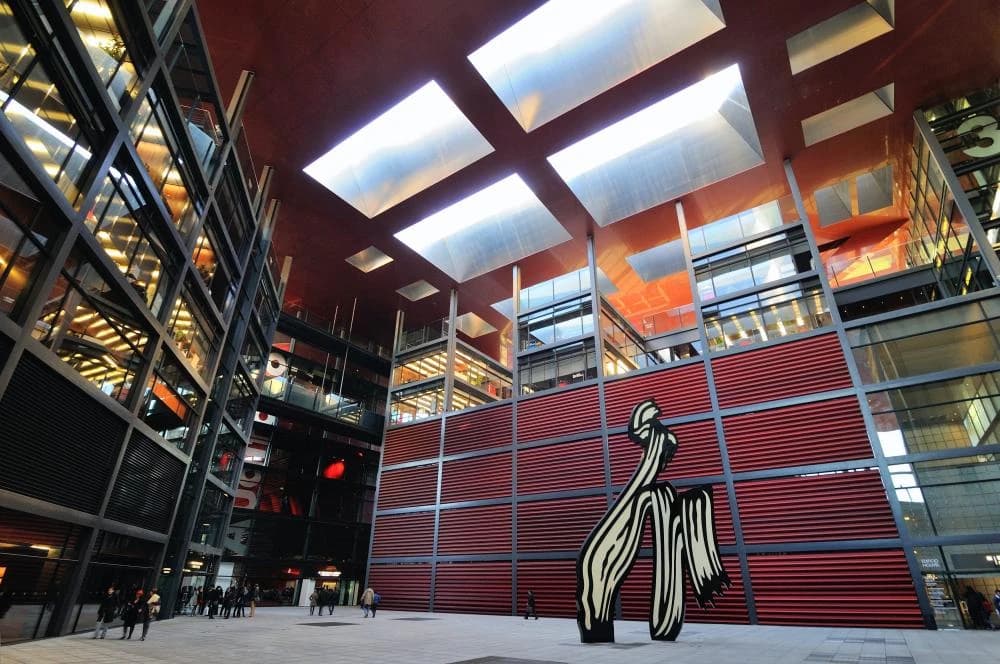
The Reina Sofía Museum, officially called Museo Nacional Centro de Arte Reina Sofía, is one of the most visited museums in Madrid with one of the finest collections of Spanish contemporary art. Founded in 1992, the Reina Sofía covers the periods that are not examined in the Prado Museum. The earliest work of art is from 1881, the same year Pablo Picasso was born. The building where the museum is currently housed was previously used as a hospital, Hospital de San Carlos, constructed at the end of the 18th century. The hospital was beautifully remodeled and converted into a museum in 1992, with two panoramic glass lifts standing out in the façade. In 2005 it added an extension designed by French architect Jean Nouvel. The Reina Sofía features a large collection of paintings by renowned twentieth-century Spanish artists like Pablo Picasso, Salvador Dalí and Joan Miró. The museum’s most famous composition is Picasso’s "Guernica", one of the most effective anti-war paintings in the world, although a large number of his works can be found in the Picasso museum in Malaga.
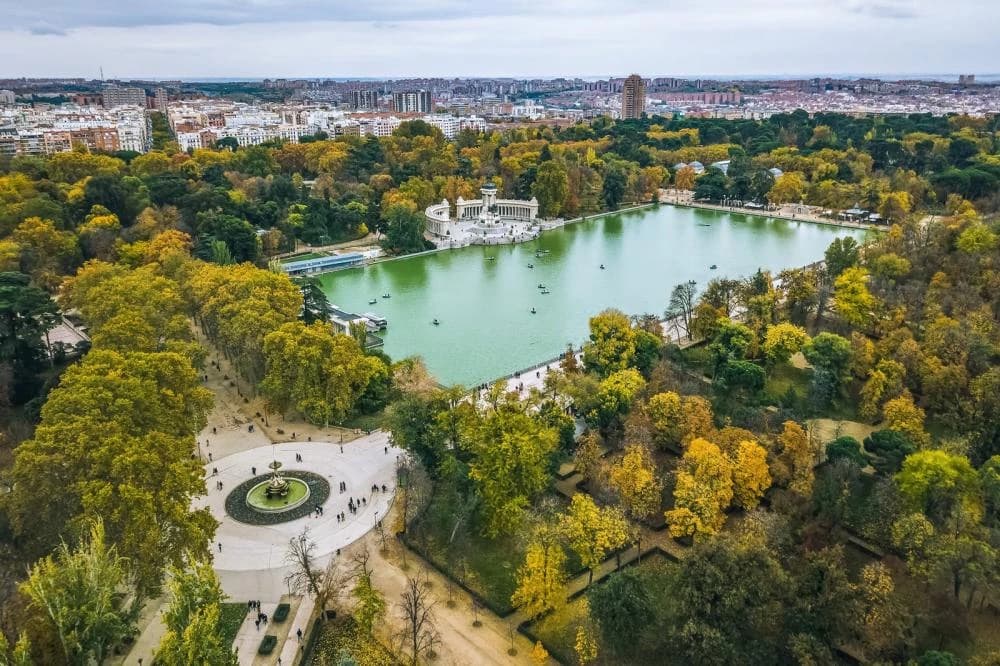
El Retiro Park, or Park of the Pleasant Retreat, one of Madrid's largest public parks, belonged exclusively to the Spanish monarchy in Madrid until the late 19th century. The park’s origins can be traced to 1505 when the royal family had a retreat built on this site. Over the decades, the monarchy expanded their park with additional gardens, palatial buildings and the great pond, Estanque del Retiro. Today, one of the most famous features of El Retiro Park in Madrid is its Crystal Palace, a remarkable glass pavilion and conservatory containing art galleries. Near the park’s north entrance is Retiro Pond, featuring a colonnade and monument honoring King Alfonso XII. A 20th-century rose garden contains numerous sculptures, including the Fountain of the Fallen Angel from 1922. In the Paseo de la Argentina, popularly known as the Statue Walk, you’ll find 18th-century statues depicting some of the Spanish kings. In addition to the Crystal Palace, other museums in El Retiro Park include the Salón de Reinos and the Casón del Buen Retiro.
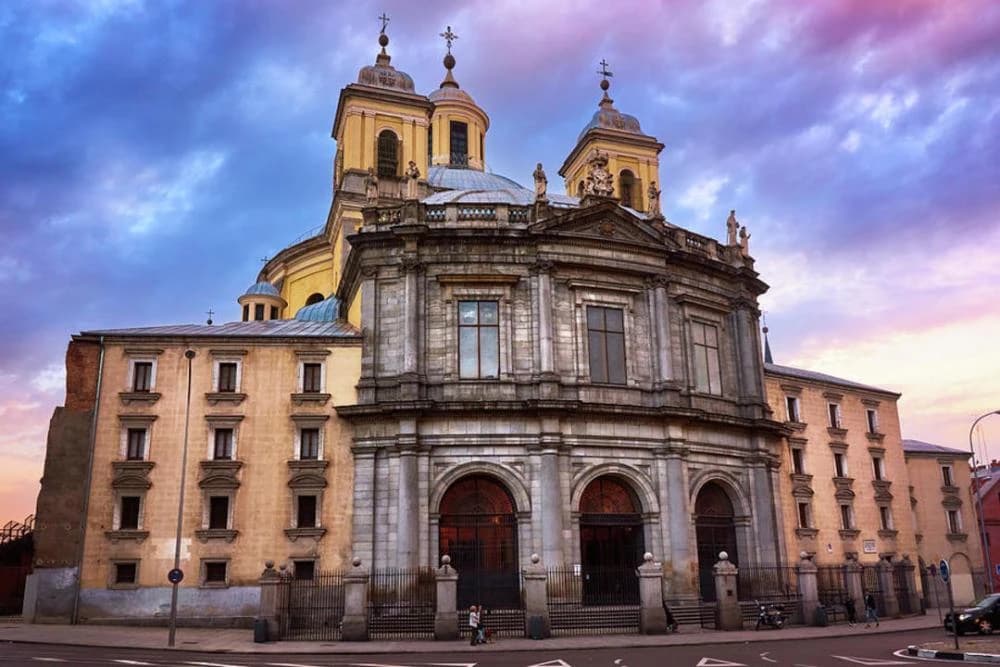
This monumental basilica, close to the popular La Latina quarter, stands out for its artistic wealth that it houses inside, with an impressive collection of paintings by Spanish masters, the most famous of which is Francisco Goya’s St. Bernardino of Siena preaching to Alfonso V of Aragon. With a diameter of 33 meters and height of 58 meters, the Basilica’s great dome is the largest in Spain and the fourth largest in Europe, after those of Saint Peter’s Basilica and the Pantheon in Rome, and the Santa Maria del Fiore in Florence. Declared a National Monument in 1980, the temple rises up, according to tradition, on the land that was offered to Saint Francis of Assisi following his time in Madrid in 1214 on his pilgrimage to Santiago de Compostela. On this site, three temples were erected prior to the current one, which dates back to the 18th century and which was carried out by the Franciscan Order. The church consists of a central circular floor covered by a large dome, a main chapel and six surrounding chapels also covered by domes. Inside,these hallowed halls exhibit 49 large paintings depicting scenes from the life of Saint Francis of Assisi, by renowned Spanish artists such as Alonso Cano, Francisco Zurbarán, Antonio González Velazquez, José Moreno Carbonero, among others. as well as important sculptures in white marble.
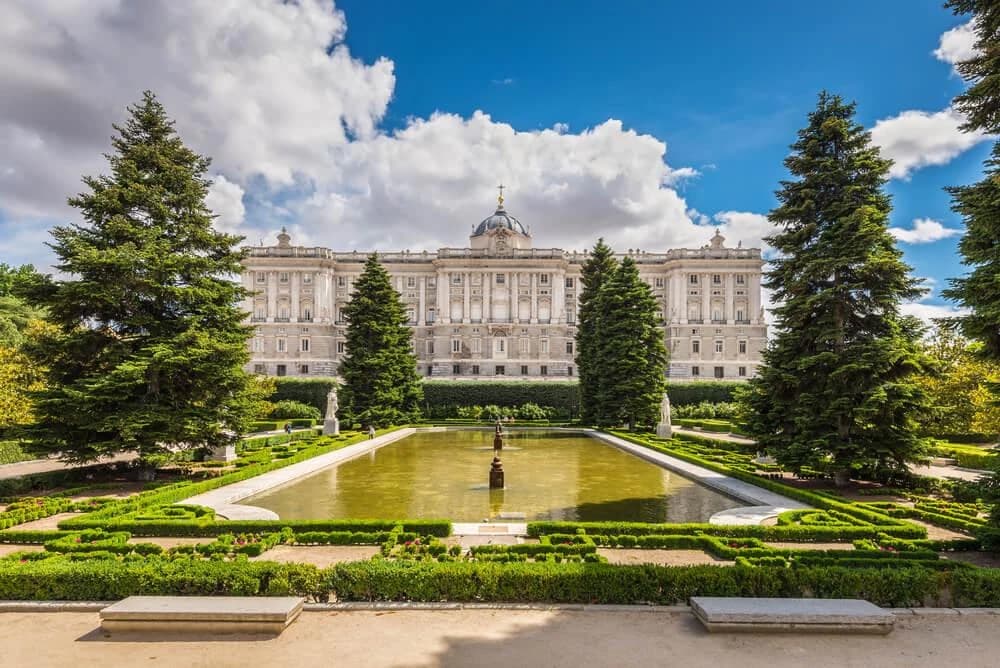
The Royal Palace of Madrid is the largest in Western Europe and one of the largest in the world. With over 135,000 square meters and 3,418 rooms, it has witnessed centuries of Spanish history. Though it is no longer the royal family's home, it continues to be their official residence. The Royal Palace dates back to the 18th century but actually sits on the site of the old Alcázar of Madrid, a medieval fortress converted into a palace which Philip II made the official residence of the kings of Spain in 1561. The Alcazar, decorated with great works of art from the Spanish golden age, was destroyed by a fire on Christmas Eve 1734. Legend has it that members of the court of Philip V, of French origin, started the fire in order to build a French or Versailles-style palace. But it's just that, a legend. The palace is home to important collections of tapestries, paintings, furniture and other luxury arts, making it one of the most notable collections in Europe. Its Royal Armory is thought to be one of the world’s best, housing weapons and armor worn by the kings of Spain and other members of the royal family since the 13th century.
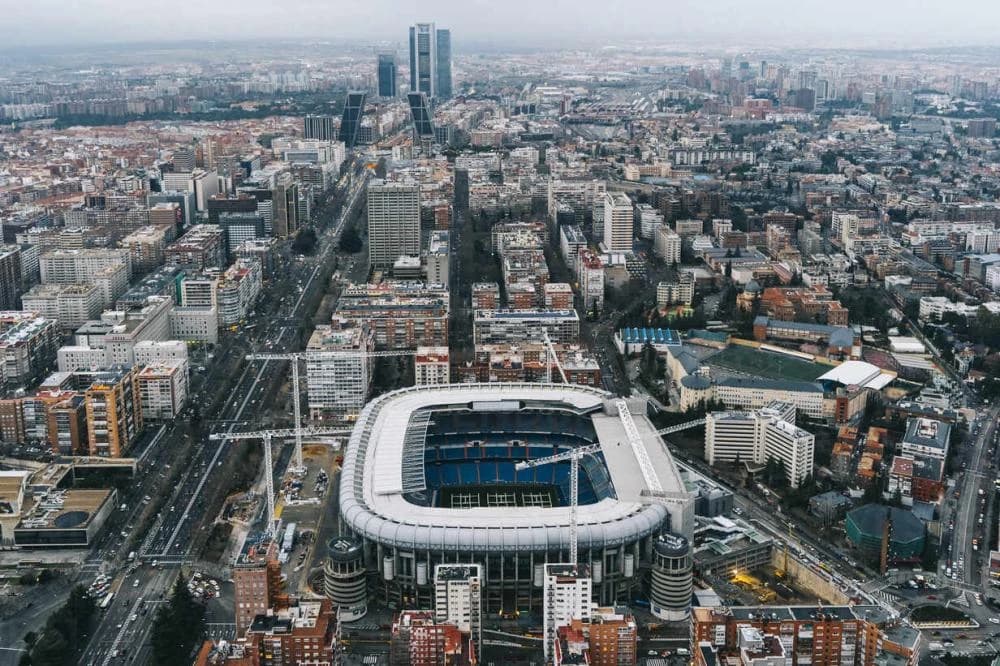
The Santiago Bernabéu is the home stadium of the Real Madrid football team, and its facilities –including the dressing rooms, trophy room and the dignitaries box– are open to visitors. The stadium opened in 1947 under the name Nuevo Estadio Chamartín. Its current name is in honor of the man who was president of the club for 35 years, Santiago Bernabéu. After various remodeling projects, it is today classified as an elite stadium, and holds the UEFA's highest distinction of five stars. This is the second largest football stadium in Spain, with a capacity of around 80,000 spectators. The visit to the stadium includes access to Real Madrid's well-stocked trophy room, the presidential box and a chance to walk around the technical area and see the dressing rooms of the visiting team. The stadium also has various restaurants, a large club shop and a shopping area. The stadium is open Mondays to Saturdays from 10:00 am to 7:00 pm, and Sundays and public holidays from 10:30 am to 6:30 am. On matchdays the tour is open until 5 hours before kickoff (though with limited access).
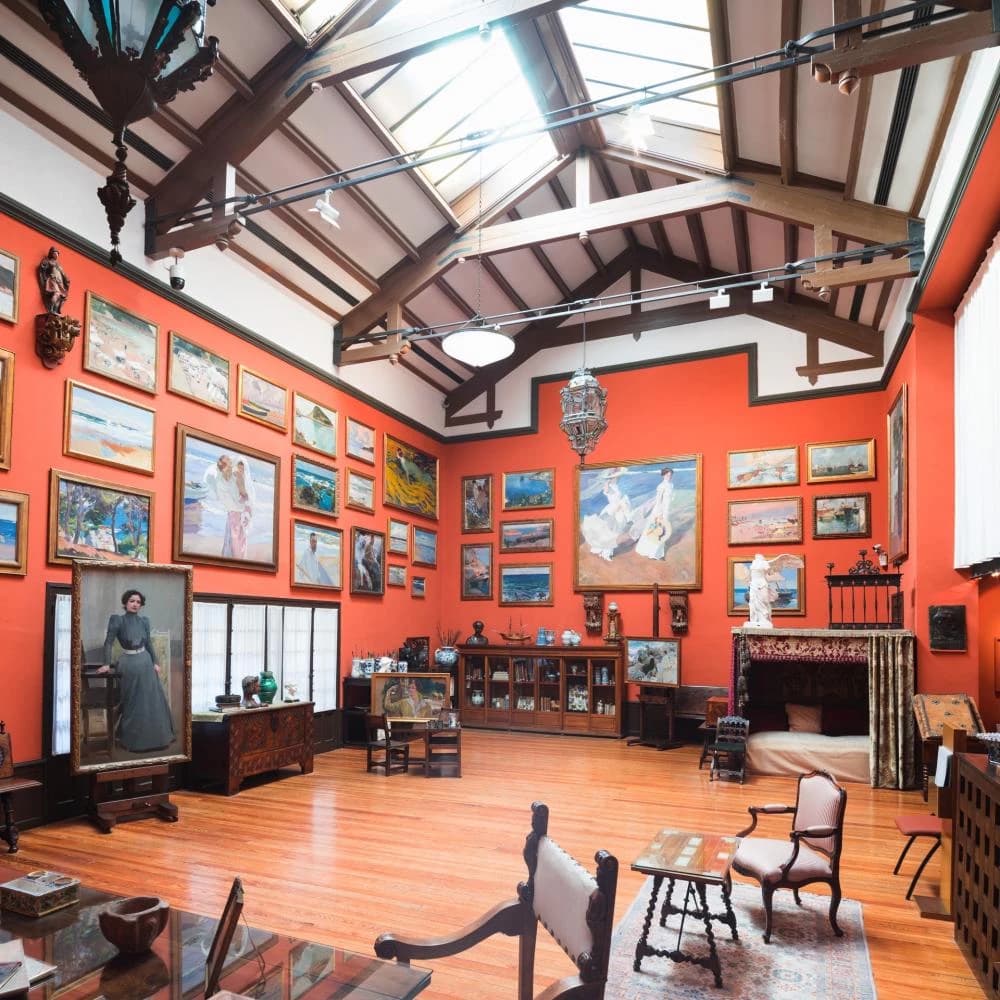
The Sorolla Museum, which has retained the original atmosphere of the home and studio of the renowned Spanish painter Joaquín Sorolla y Bastida (Valencia, 1863 - Cercedilla, 1923), houses the largest collection of his works. It is one of the best preserved house-museums of an artist in Europe, and its garden, which was also designed by him, is a little oasis in the city and was a common subject in his later paintings. Situated in the Chamberi neighborhood, just off the busy Castellana avenue, it was the home in which the artist lived with his family from 1911 till his death in 1923. The house and all its belongings were bequeathed to the Spanish government by his widow Clotilde García del Castillo in 1925 who asked for a museum to be opened in memory of her husband. In the museum, which opened in 1932 and which retains its original decor, you'll find most of the objects Sorolla acquired throughout his lifetime including sculptures, ceramics, traditional clothes and jewelry, letters and photographs. It is also home to a remarkable collection of over 1200 of his paintings and drawings, which has continued growing since 1982 thanks to works purchased by the Spanish state.
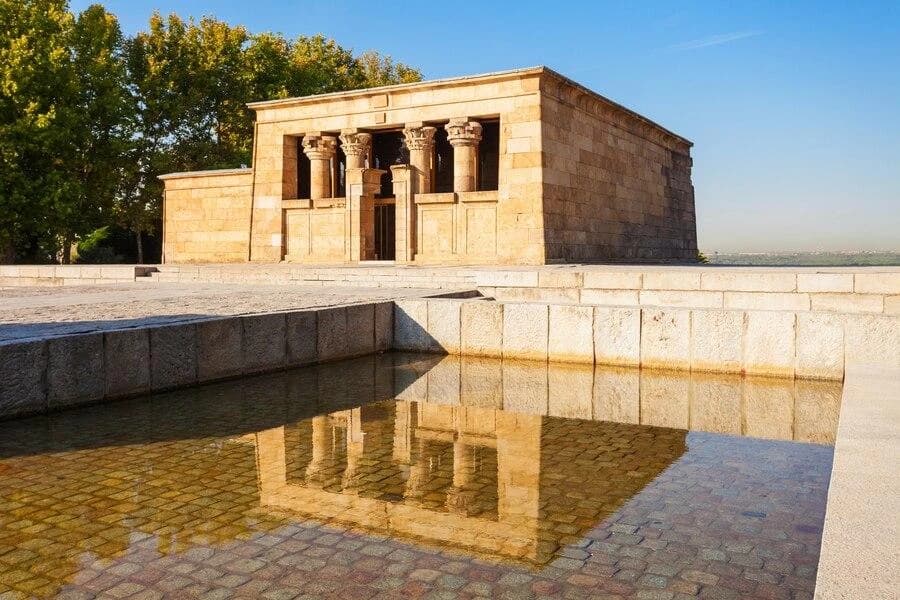
The Temple of Debod is one of Madrid’s most beautiful hidden treasures. It sits to the west of Plaza de España, in the Parque del Oeste. This ancient Egyptian temple is from the second century B.C. and was donated to Spain by the Egyptian state for helping save the Abu Simbel temple, as well as other monuments and archaeological sites, from being buried under the construction of the Aswan High Dam. The Debod Temple was dismantled and transported to Spain, but it took two years to rebuild, since there were no reliable blueprints of the structure and some of the stones got lost during the shipment and had to be replaced. Finally, Debod was opened to the public on 20 July 1972. The shrine’s interior is free to visit and is well worth exploring. Although it isn’t as well preserved as other Egyptian temples, its walls are covered by hieroglyphics and sculptures and it also includes interesting information about Egypt’s mythology and society. Moreover, on the upper floor is a curious miniature with the various temples in Nubia. Today, it is one of the few substantial examples of ancient Egyptian architecture rebuilt outside of Egypt, and the only one in Spain.
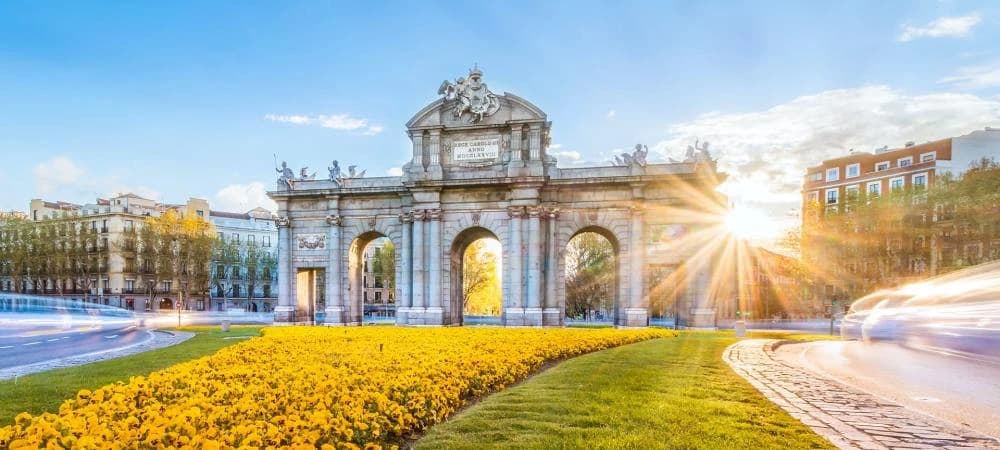
The Puerta de Alcalá is one of Madrid's most famous landmarks. This neoclassical triumphal arch is situated in Plaza de la Independencia (Independence Square), close to one of El Retiro’s main entrances. The Gate was inaugurated in 1778 by the Italian architect Francesco Sabatini, who spent most of his life working in Madrid for the Spanish Royal Family. The Puerta de Alcalá replaced a brick monument from the sixteenth century that King Charles III had demolished years earlier. Previously, it had been one of the five gates of the city walls, and has long been witness to Madrid's history. There was once another Puerta de Alcalá, made of brick, but Carlos III ordered its reconstruction in the Plaza de la Independencia. It was the first triumphal arch built in Europe following the fall of the Roman Empire. The arch is older than other monuments such as the Arc de Triomphe in Paris, or the Brandenburg Gate. The name “Puerta de Alcalá” (Alcalá Gate) and the street “Calle Alcalá” were both named this because this road had led to Alcalá de Henares, a Spanish city 22 miles – 35 km northeast of Madrid whose centre is a World Heritage Site.
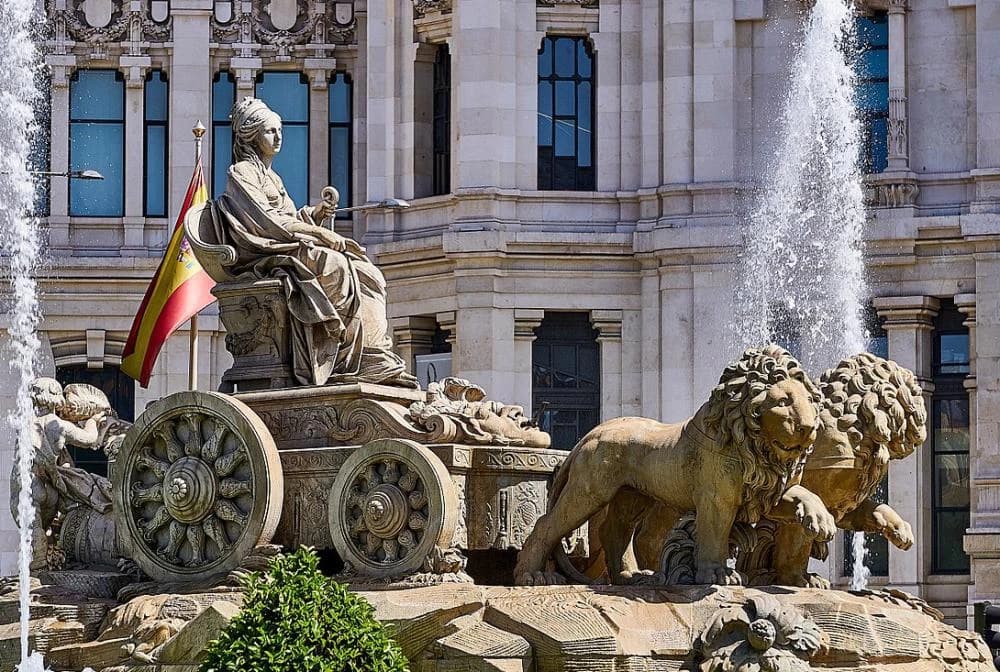
This fountain is the most important symbol of Madrid. It was built at the end of the 18th Century under the orders of King Carlos III. It was designed by architect Ventura Rodríguez in marble and represents the goddess Cibeles astride a lion-drawn chariot. In her hands she holds a scepter and the keys to the city. Its initial location was next to the Palacio de Buenavista, on the Paseo de Recoletos, but in the late 19th century it was moved to its current location in the center of the Plaza de Cibeles, the square to which it has lent its name and which marks the start of Madrid’s avenue of art, the Paseo del Arte. This square is surrounded by a number of important buildings, such as Banco de España, Buenavista Palace, Linares Palace (presently Casa de América), and the Communications Building. La Cibeles also has a more recreational aspect in the sporting sphere, as the fountain became the venue for celebrations of victories by Real Madrid Football Club.
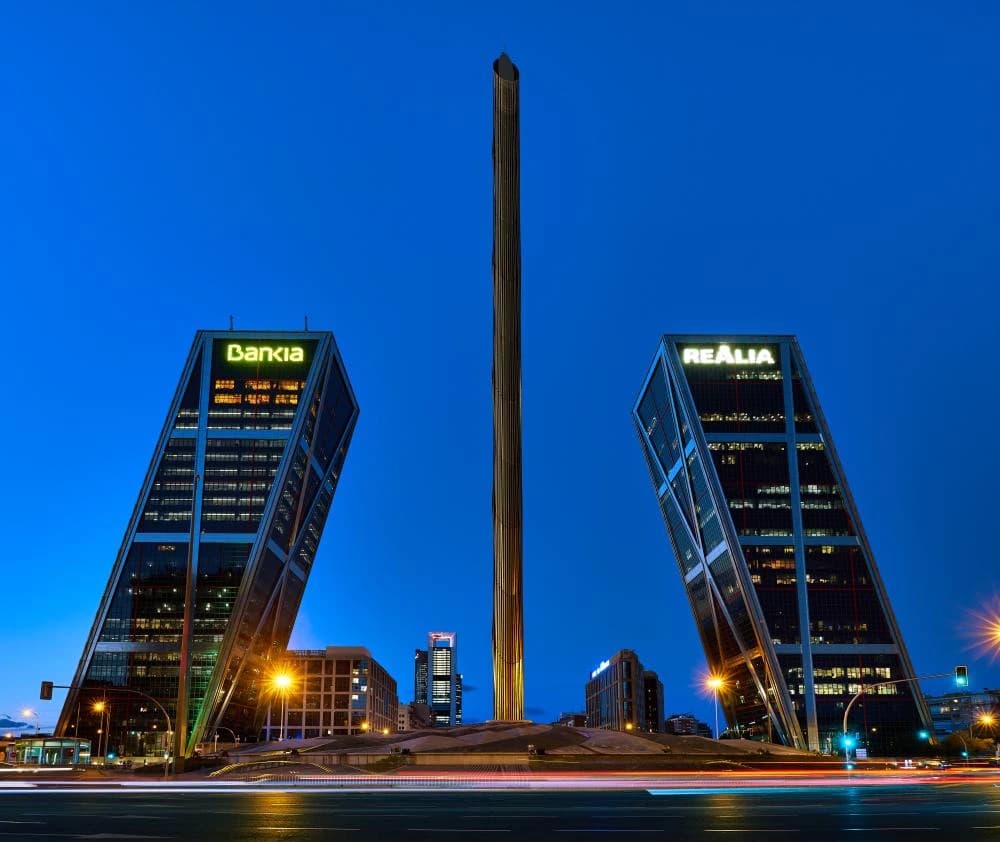
Also known as KIO Towers (Torres KIO), are twin office buildings in Madrid, Spain. The towers have a height of 114 m (374 ft) and have 26 floors. They were constructed from 1989 to 1996. The Puerta de Europa is the second tallest twin towers in Spain. The Gate of Europe towers were designed by the American architects Philip Johnson and John Burgee. Each building is 115 m tall with an inclination of 15°, making them the first inclined skyscrapers in the world. The left tower is called Gate to Europe I, the right one - Gate to Europe II. Not to mix them up, their helipads are painted in different colors - the left one is blue, while the right one is red. To make the identification process even easier, the left tower has the logo of Bancia and the right one - Realia (the construction firm).
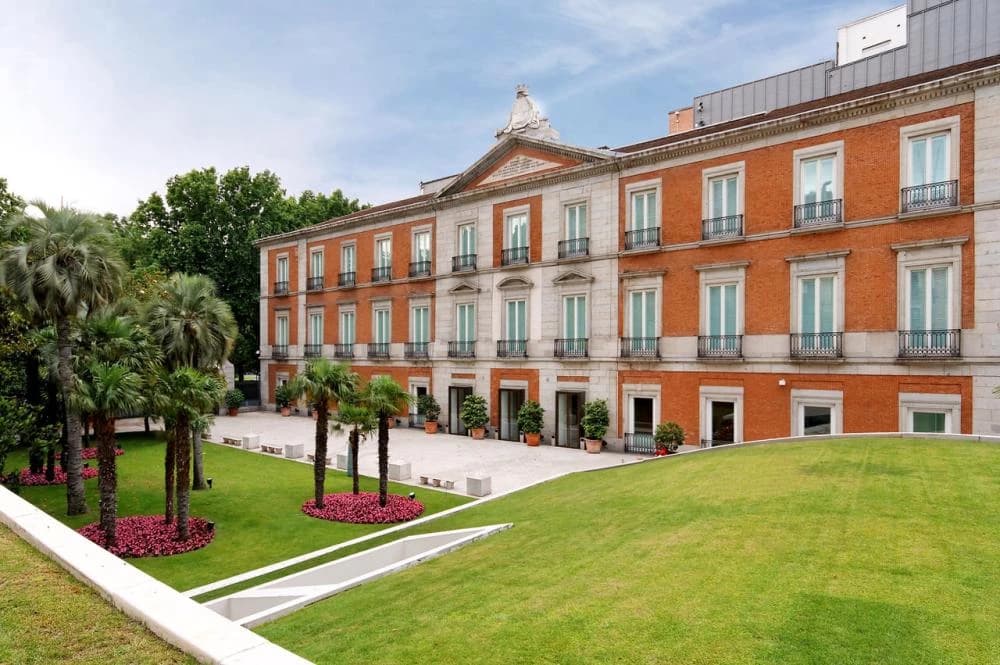
The National Thyssen-Bornemisza Museum in Madrid houses one of the most important art collections in Spain and is a must for all those interested in art. It has thirteenth-century Gothic paintings up to twentieth-century pop art. The Thyssen-Bornemisza family collected what became one of the world's finest private art collections over several generations. The Spanish state bought it from them in 1993 and converted the early-19th-century neoclassical Villahermosa Palace into a fabulous art gallery. The museum houses the second largest collection and showcases some of the finest works of art. Spanning from the 13th to 20th Century, the permanent collection of the museum has masterpieces from the likes of Renoir, Rembrandt, Van Dyck, Goya, Degas, Van Gogh, and others. A must-visit for art lovers, the Thyssen is definitely one of the best art museums around the globe.
 local
localLanguages:
 Português
 English
Profile verified
 local
localLanguages:
English Español
Profile verified
 local
localLanguages:
EnglishEspañolProfile verified
Find private local guides worldwide. Connect with real people, real stories — not just scripted tours



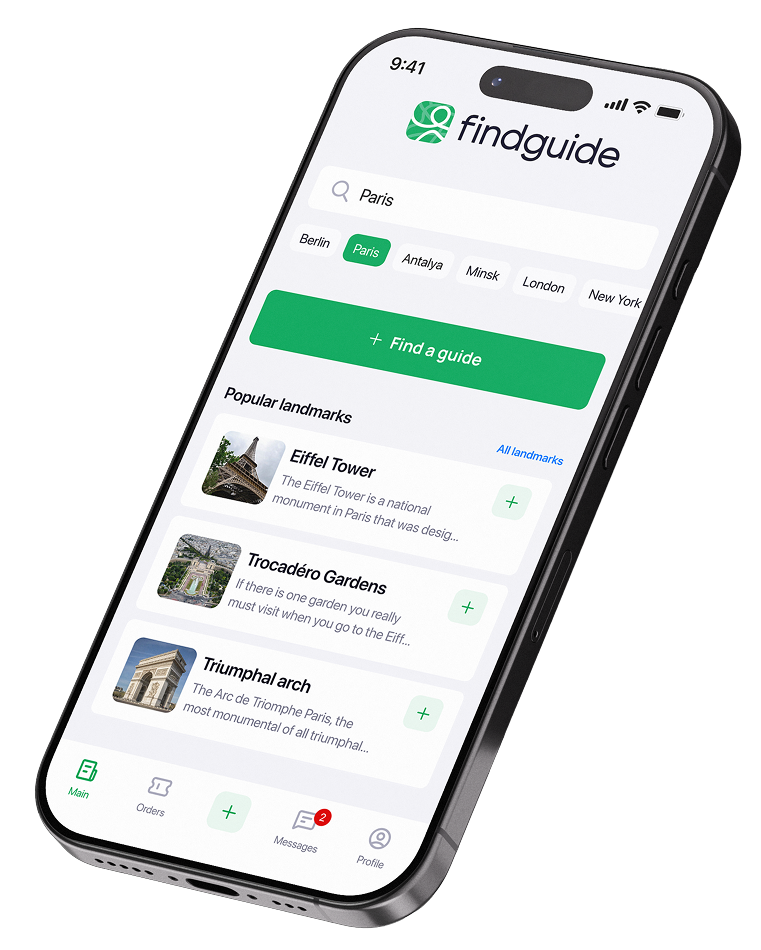

Find a personal guide in just 1 minute and create your dream itinerary!

FindGuide is a platform for finding private and local guides around the world. You can choose a guide in advance who will show you the city from a local perspective, not just the standard tourist route.
Enter the city or country you're interested in into the search bar, choose a guide you like, and send them a request. All bookings are made directly on the platform.
We offer walking, food, historical, driving, private, and family tours in more than 100 destinations.
Yes, all guides go through moderation and verification. You can read reviews from other travelers, check the guide’s rating, and view their profile with photos and experience descriptions.
Tour prices vary depending on the destination, duration, and format. You see the cost upfront — no hidden fees.
Yes, the app is completely free for tourists. You can place your tour requests for local guides and access expert travel content totally free of charge.


