
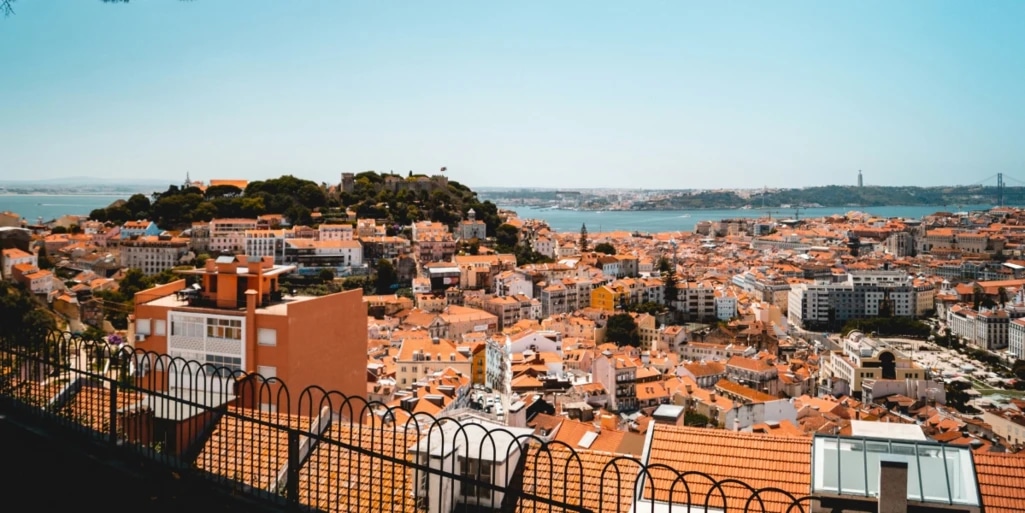
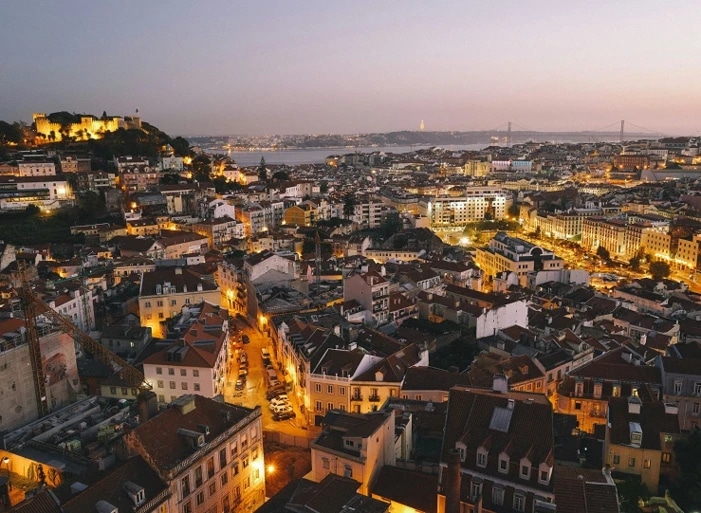
Discover Lisbon with a private guide and explore the vibrant capital of Portugal. Walk through historic neighborhoods like Alfama, Bairro Alto, and Belem. Visit iconic landmarks such as Jerónimos Monastery, Belem Tower, and Sao Jorge Castle. Stroll along the scenic waterfront and enjoy panoramic views from Miradouros. Ride the famous tram 28 and experience the city’s unique charm and atmosphere. Taste authentic Portuguese cuisine, from pastéis de nata to fresh seafood. Learn about Lisbon’s rich history, culture, and local traditions. Discover hidden gems, charming streets, and local markets with your personal guide. Create unforgettable memories on a customized cultural and historical tour of Lisbon.
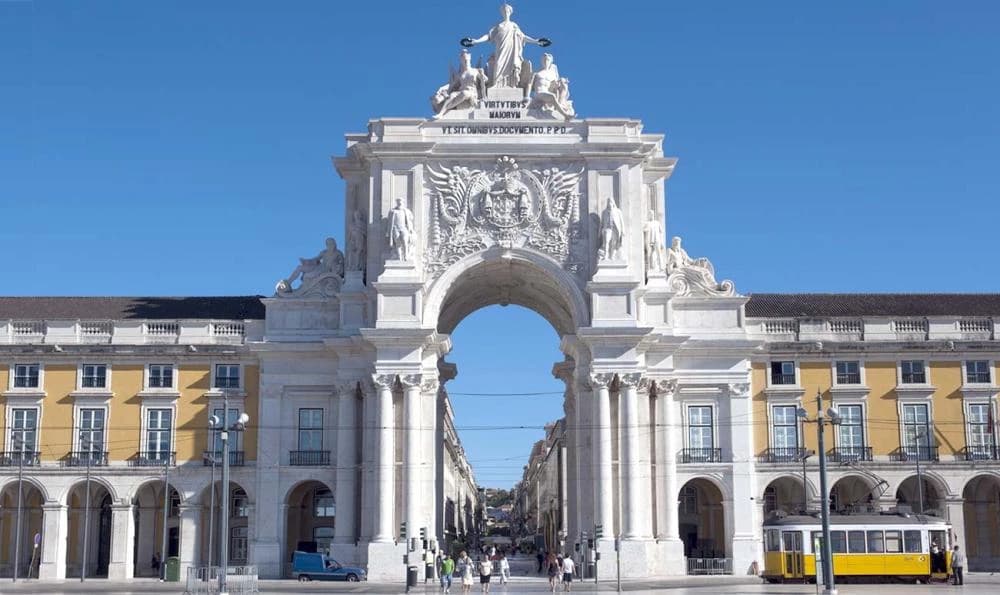
t's best known as "Rua Augusta Arch," as it’s found at the end of Rua Augusta (Lisbon main pedestrian street), but it faces Comércio Square. It's a triumphal arch designed in 1775 as a gateway to the city, but the version seen today dates from a century later, 1875. Sculptures at the top represent Glory crowning Genius and Valor, while below them are images of national heroes Vasco da Gama, the Marquis of Pombal, Nuno Álvares Pereira and Viriato. On the side facing Rua Augusta is a monumental clock featuring naturalistic motifs. The entire monument was restored in 2013, and an elevator was placed inside to allow visits to the terrace. From there, there’s a wonderful 360-degree-view over Praça do Comércio, Rua Augusta, the cathedral, and all of downtown. Before reaching the terrace, visitors pass by a small exhibition telling the story of the arch, and can see the mechanisms that make its clock work. Only 35 people are allowed at the top at a time, but as it receives a relatively small number of visitors, there’s usually no waiting.
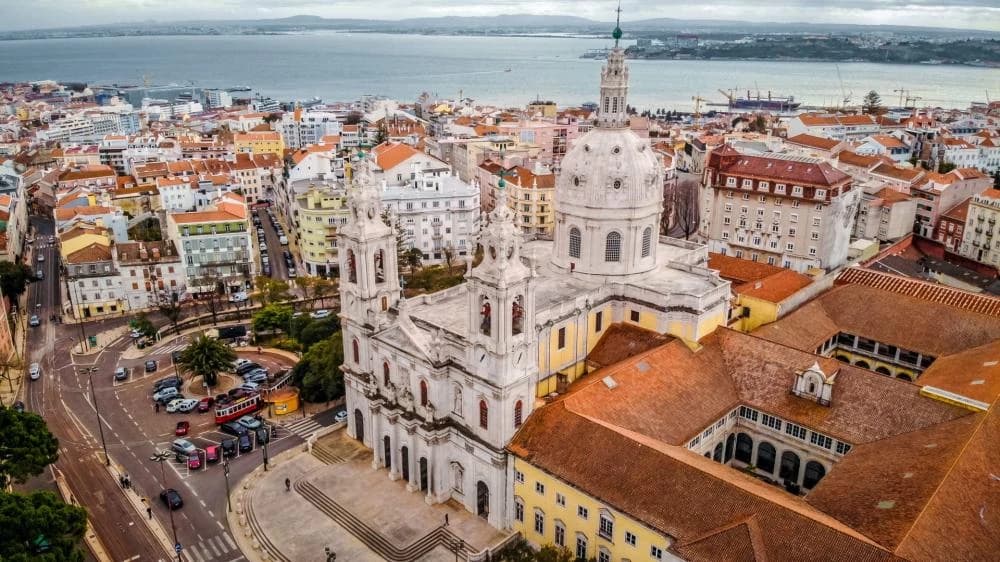
The Royal Basilica of Estrela is one of Lisbon's most beautiful monuments and one of its most monumental churches. It's a baroque and neoclassical building built by Queen Maria I in 1790, in thanks for the birth of her son. The tomb of the queen, who died in Brazil, is found inside, by the door that leads to a remarkable baroque nativity scene with over 500 terracotta and cork images. It's the country's largest nativity scene, created by leading sculptor Machado de Castro. The interior is covered in polychrome marbles and paintings by the Italian artist Pompeo Batoni and the Portuguese Cirilo Volkmar Machado, among others. The exterior, with a large rococo dome and two bell towers, was inspired by St. Peter’s in Rome and Mafra Palace outside Lisbon, and features monumental sculptures and figures alluding to the Sacred Heart of Jesus. You may see the dome up close by climbing 114 steps up to the terrace, where you have a view of the castle, of 25 de Abril Bridge and of the Amoreiras towers.
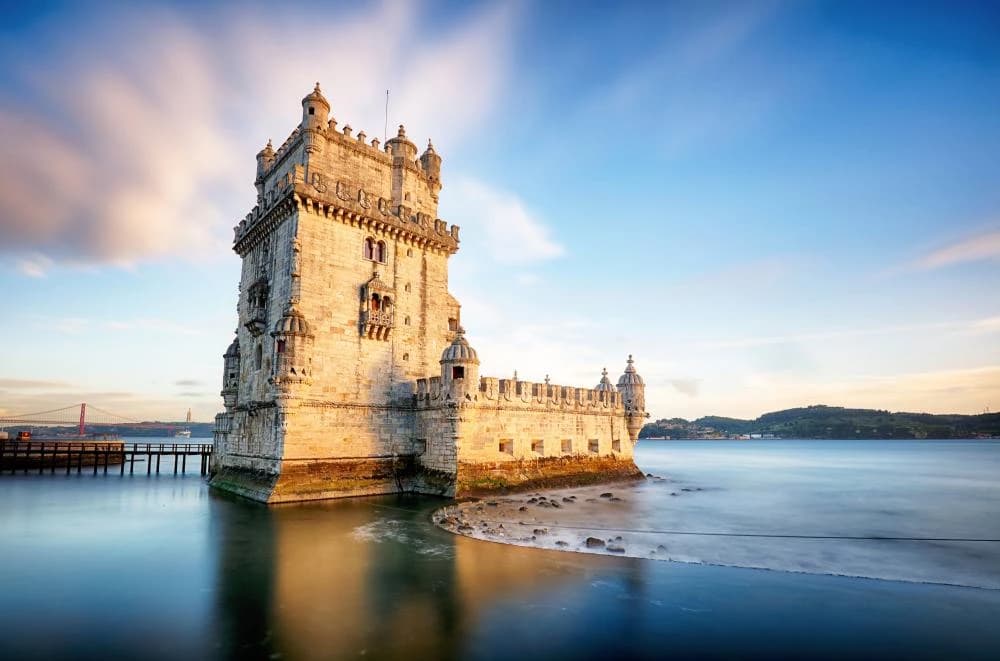
The Belém Tower (Torre de Belém) was built between 1514 and 1520 in a Manuelino style by the Portuguese architect and sculptor Francisco de Arruda. It was classified as a World Heritage Site in 1983 by UNESCO. Constructed on the northern bank of the Tagus River, this tower was used to defend the city. Years later, it was transformed into a lighthouse and customs house. It is situated very close to the Jerónimos Monastery. The tower has five floors which lead to a roof terrace. Each story is connected by a small and narrow spiral staircase, which, on the busiest days is a little overwhelming, having to wait your turn to climb and descend. The floors are, from bottom to top: The Governor’s Hall, The Kings’ Hall, the Audience Hall, the Chapel and Roof terrace. On the western façade of the Tower of Belém, you’ll find a curious gargoyle in the shape of a rhinoceros. Interestingly, the first rhino to set foot in Portugal was in 1513 from India.
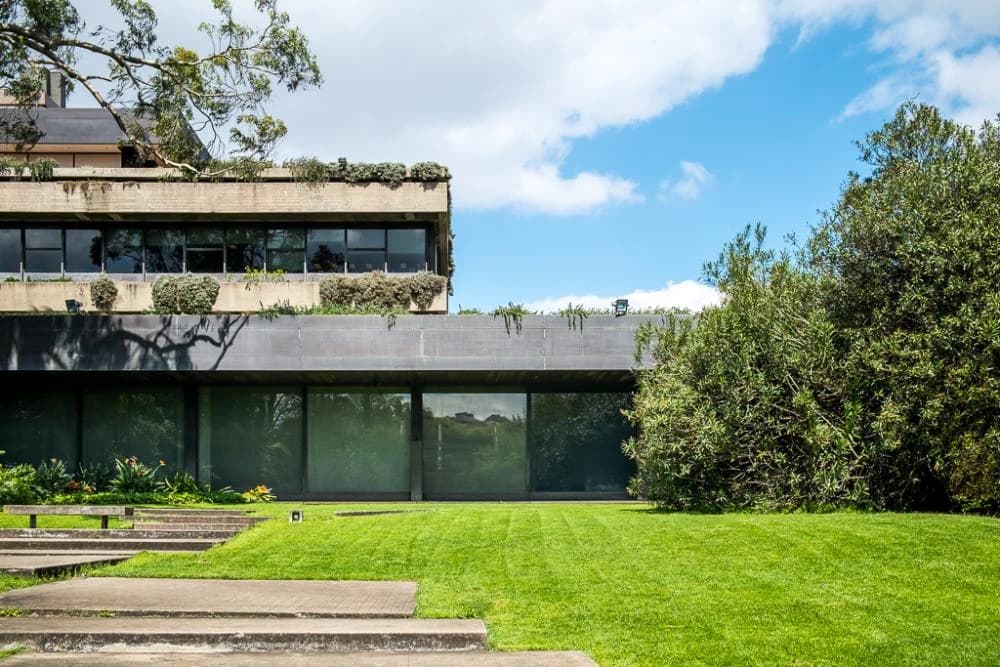
Northeast of Eduardo VII Park is the Gulbenkian Museum, one of the world's great museums and one of Europe's unsung treasures. Part of the Calouste Gulbenkian Foundation, it houses a magnificent collection of Egyptian, Greek, Roman, Islamic, Asian, and European art. It was substantially renovated and modernized in 2001 (many of its masterpieces were on display in New York's Metropolitan Museum of Art during renovation), and can't be missed during a visit to Lisbon. This is one of the world's finest private art collections, amassed over a period of 40 years by oil magnate Calouste Gulbenkian, who was one of the 20th century's wealthiest men. In his later years he adopted Portugal as his home, and donated all of his stupendous art treasures to the country when he died in 1955 at the age of 86. Of the many highlights is a haunting gold Egyptian mummy mask, an exquisite 2700-year-old alabaster bowl, a series of bronze cats and other priceless treasures in the Egyptian section, a stunning collection of Hellenic coins and a 2400-year-old Attic vase in the Greek and Roman section, rare pieces of Chinese porcelain, Japanese prints, and rich 16th- and 17th-century Persian tapestries.
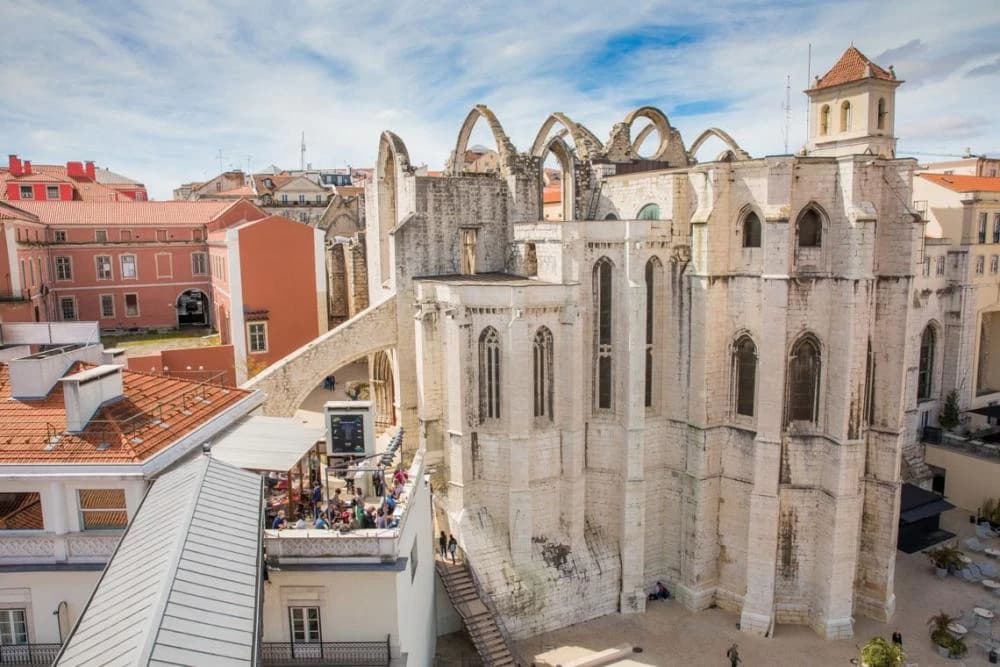
It used to be considered the most majestic gothic church of Lisbon but today it is just a bunch of ruins; despite that, it is imperfection itself that makes Carmo Convent such a charming place to visit. Its arches seem to be holding the sky. The lack of roof was not intentionally designed by the architect who projected the convent; the roof collapsed during the devastating earthquake of 1755. Carmo Convent suffered from very severe damages; Queen Mary I ordered to rebuild the church, but reconstruction works were never completed. In the 19th century, during a very romantic cultural climate, it was believed that the ruins were already very fascinating by themselves and therefore the restoration project was abandoned. It would be almost impossible nowadays to undertake reconstruction works again, as in the collective imagination the Convento do Carmo is famous for being a church without a ceiling and tourists come here to admire the sky framed by suspended arches.
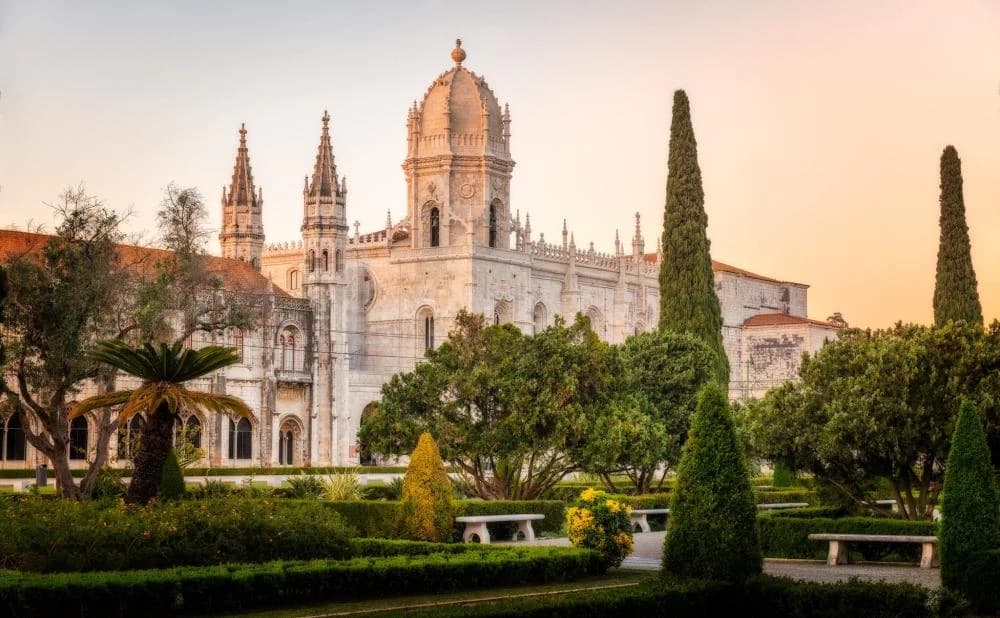
The Jerónimos Monastery, also called Hieronymites Monastery, is along with the Tower of Belém, one of the most visited sites in Lisbon. UNESCO declared it a World Heritage Site in 1983. This landmark is called Mosteiro dos Jerónimos in Portuguese. The religious building was designed by the Portuguese architect Diogo de Boitaca to commemorate the return of Vasco da Gama from India. The construction began on 6 January 1501 and wasn’t completed until the seventeenth century. Curiously, the monastery was built on the site of the former Ermida do Restelo, the chapel where Vasco da Gama and the rest of the sailors prayed before setting sail down the African coast to India. The Church of Santa Maria is unique in the world. It is completely different from the rest. The temple has a single nave that is held up by six beautifully sculpted columns and the church seems to go on forever. The Church houses the tombs of Vasco da Gama and Luís de Camões, a Portuguese poet and writer.
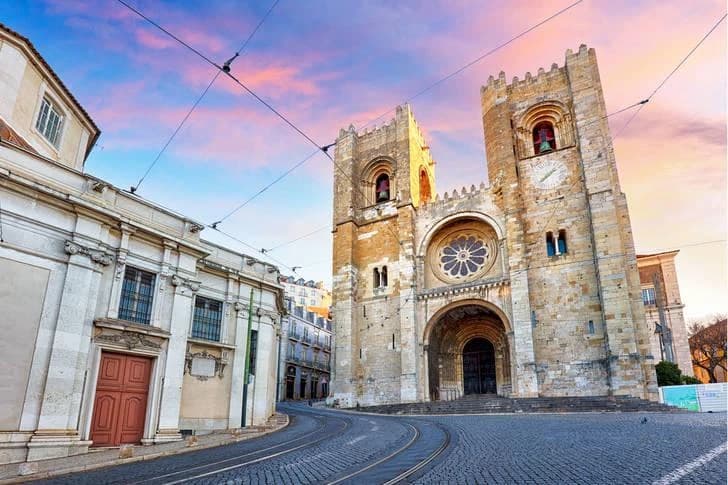
Lisbon Cathedral, better known as Sé de Lisboa, is the oldest and most important church in the city. The Cathedral's construction dates from the twelfth century and is predominantly Romanesque in style. Its official name is Santa Maria Maior. Surprisingly, it has survived several natural disasters, like the great earthquake of 1755, which left part of the religious edifice in ruins. Throughout the centuries, the Cathedral has been renovated and rebuilt on various occasions. The Cathedral’s Gothic cloister is similar in style to the Jerónimos Monastery, although a little smaller. Inside the cloister, you’ll see several Roman, Arabic and Medieval remains, which have been excavated a few years ago. From outside (with two bell towers and a splendid rose window) it resembles a medieval fortress, while inside it appears predominantly Romanesque, with a Gothic choir and ambulatory. In the sacristy is the cathedral treasury with numerous sacred objects, the most important being the casket containing the remains of St. Vincent, the official patron saint of Lisbon.
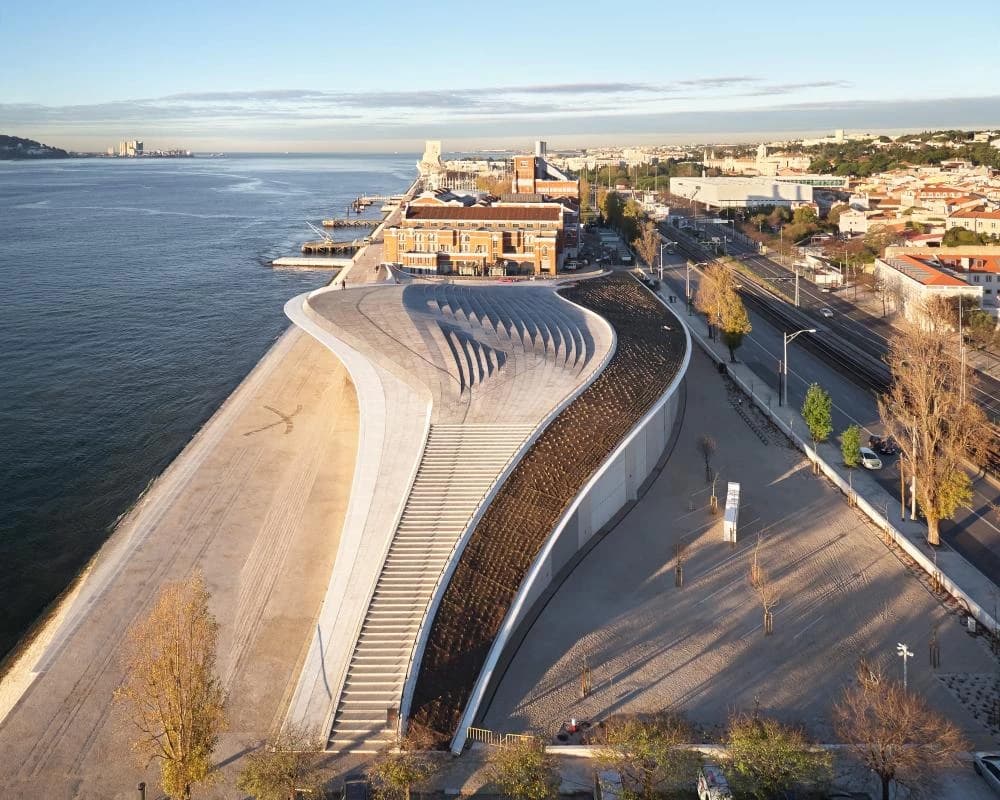
The Museum of Art, Architecture and Technology (MAAT) is a project of the EDP Foundation, and is spread over two neighboring buildings -- Portugal’s first power station and a modern construction designed by British architect Amanda Levete. It has almost 3000 square meters for exhibitions and events, and was originally directed by the former curator of contemporary architecture of the Museum of Modern Art (MoMA) in New York, Pedro Gadanho.The museum presents the relationship between art and new technologies, through contemporary and international exhibitions. The curvy, white-tiled building (which resembles a wave rising towards the river) is one of Lisbon’s modern icons, and even if you don’t go inside to see the exhibitions, it’s worth a stop for the view from the top - you may walk around, and even on top of, this waterfront landmark. The exterior staircase descends into the water, creating a large public space. The former power station dates from 1908 and was in use until 1975. It opened to the public as a museum in 1990. The industrial architecture is immaculately preserved, and all of the original machinery can be seen on the way to the MAAT’s temporary exhibitions.
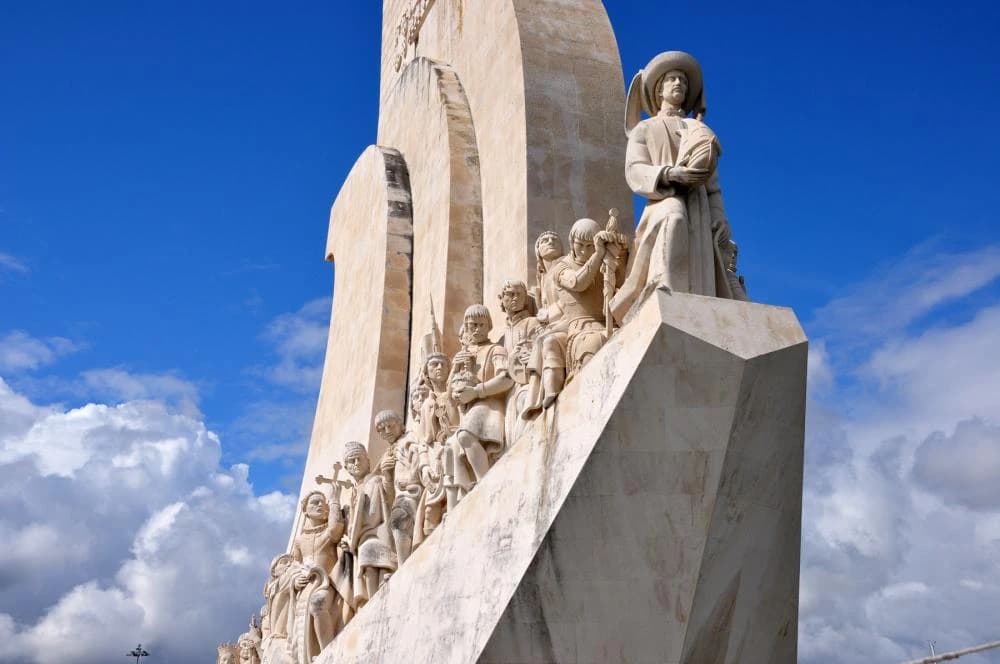
The Padrão dos Descobrimentos (Monument to the Discoveries) stands 52 m tall. This stunning monument was designed to commemorate the Age of Discoveries in Portugal. It was inaugurated in 1960, on the fifth centenary of one of the country’s great discoverers, Prince Henry the Navigator, who discovered the Azores, Madeira and Cape Verde. The Monument to the Discoveries is made up of a group of sculptures that represent the prow of a caravel (a small sailing ship constructed by the Portuguese to explore the Atlantic Ocean). Leading the ship is Prince Henry the Navigator and behind him are many other great Portuguese discoverers - only one of them is a woman, Queen Filipa de Lencastre, who was Prince Henry’s mother. If you would like to see Belém from above, we recommend you visit the observation deck on the top of the Padrão dos Descobrimentos. The views of the monument, the city’s western neighborhoods are impressive, but the most beautiful view is a marble mosaic at the foot of the Monument that represents a compass, with a world map in the center. The compass was designed by Cristino da Silva and is 50m in diameter. It was given to Portugal by the Republic of South Africa.
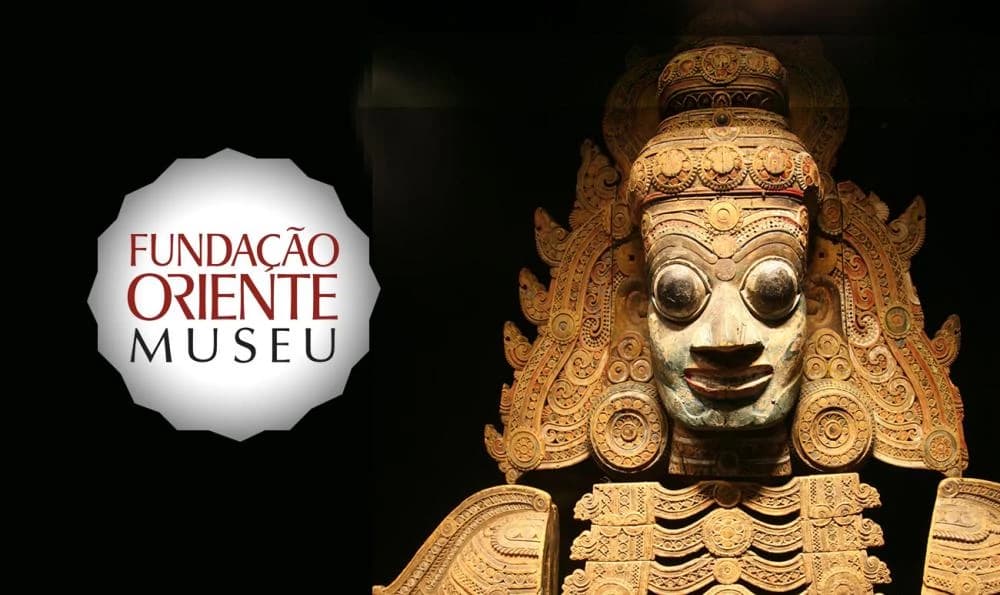
Housed in a former warehouse, Lisbon's Orient Museum is dedicated to Asian art, with a special emphasis on the Portuguese presence in the East. Opened in 2008, it was the result of 30 million euros of investment for the conversion of the building, which maintained the façade. The collection belongs to Portugal's Orient Foundation, and includes Indo-Portuguese pieces, Chinese, Japanese, and Indonesian ceramics, textiles, furnishings, paintings, and masks. One of the rooms is dedicated to the former Portuguese colonies in the East, recalling the days when Portugal was the world's mercantile power dominating the spice routes. It shows the resulting Catholic Asia and multicultural Asian society, with rare crucifixes, ornaments, and antiques, as well as unique maps and charts from the first colonial days. A particularly strong collection is found in the Gods of Asia section, a selection from the vast Kwok On collection that was donated to the Orient Foundation, including Hindu and Buddhist pieces.
The National Coach Museum (Museu Nacional dos Coches) houses an important horse-drawn carriage collection of vehicles from the seventeenth, eighteenth and nineteenth century. The Museum is housed in an old riding school and was inaugurated on 23 May 1905 by Queen Amélia of Orleans and Bragança, the Princess of France married to King Carlos I of Portugal. Nowadays, it is one of the most popular museums in Lisbon. Each carriage is more magnificent than the other; one of the most outstanding has gilded figures on the tailgate, showing Lisbon crowned by Fame and Abundance. Another one, used in an embassy to France's Louis XIV, depicts cherubs with bat's wings. Yet another splendid example was built in 1716 for Portugal's ambassador to Pope Clement XI, decorated with allegorical scenes representing Portuguese military and maritime triumphs. More wonderful examples belonged to several European royal families, from Spain to England, including a 19th-century coach built in London last used by Queen Elizabeth II on a state visit.
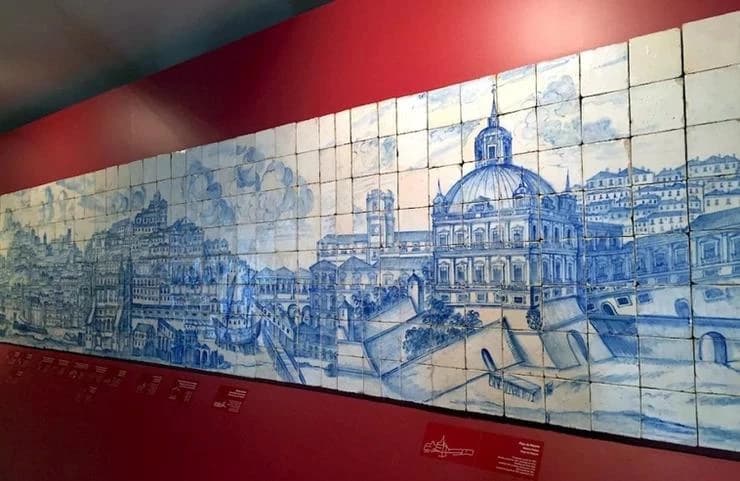
Despite its somewhat out-of-the-way location, this delightful museum is well worth a visit, presenting five centuries of decorative ceramic tiles, or azulejos, tracing the history and production of the art form. Its collection is the only of its kind in the world, and contains a splendid array of tiles from as early as the 15th century, along with displays on how they're made. It's housed in the monastic buildings of the Madre de Deus Convent, which, after renovation following the Great Earthquake, had its interior turned into one of the city's most magnificent. The splendor and opulence of the chapel dedicated to St. Anthony and the chapter house are particularly impressive. Noteworthy amid the rich decoration, are panels in the ceiling with gilt frames set with paintings, including portraits of King João III and his queen, Catherine of Austria. Several other glorious paintings in the church depict the life of saints, and filling the main vault are scenes from the Life of the Virgin. The highlight of the museum is a blue and white composition of 1300 tiles, 23m in length, of Lisbon's cityscape made in 1738, prior to the Great Earthquake, and reputedly the country's longest tile piece.
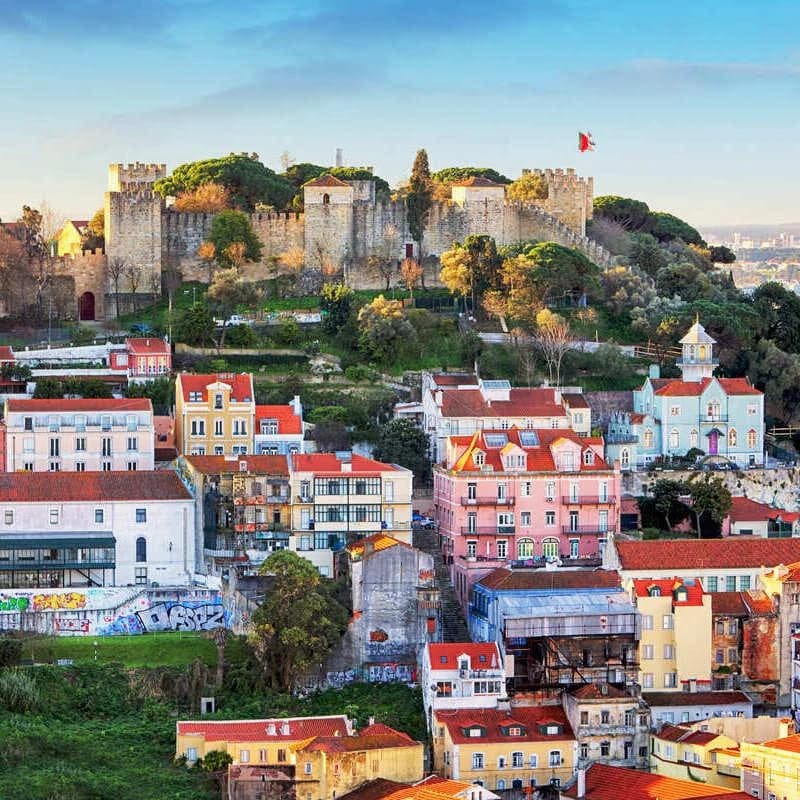
São Jorge Castle (Castelo de São Jorge) is one of Lisbon 's most emblematic landmarks. The silhouette of the Castle stands out both by day and when illuminated at night, located on the summit of São Jorge hill, the highest in Lisbon. The hillside also houses two of the city’s neighborhoods called Alfama and Castelo. A small fortress was built by the Visigoths during the fifth century. It was modified and enlarged by the Moors in the mid-eleventh century and during the reign of Afonso I of Portugal (1109 – 1185), it was altered and in later years transformed into a Royal Palace. Finally, it was completely restored in 1938. The Castle reached its maximum splendor during the thirteenth century and lasted until the sixteenth century when it was occupied by both the Kings of Portugal and the Bishop. Most of the castle was destroyed over the years, especially in the Great Earthquake of 1755, but still includes a long extension of walls and 18 towers that were restored in the early 20th century. One of the castle's inner towers, the Tower of Ulysses, holds the Câmara Escura, a periscope that projects sights from around the city.
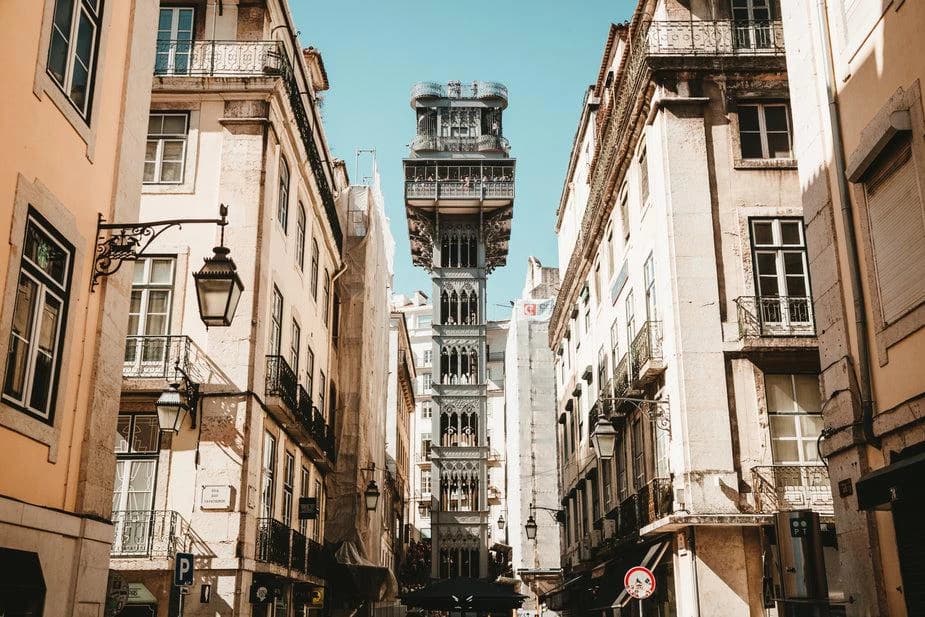
Like the vintage streetcars that run-in Portugal’s capital, this Lift is not only a convenient means of transportation, but has also become a popular tourist attraction. It was inaugurated as one of the city’s public transport systems on 10 July 1902 and was called Elevador do Carmo (Carmo Lift). Lisbon’s inhabitants were so excited to try this novelty that on the first day, 3,000 tickets were sold. The Carmo Lift was originally powered by steam until 6 November 1907, when an electric motor was put in place. The Elevador de Santa Justa stands 45m tall and the structure is built in the same style as the renowned French architect, Eiffel. The similarity between his designs and this Elevator is not accidental, as it was built by Raoul Mesnier de Ponsard, who was an admirer of Gustave Eiffel and applied the same techniques used in some of the funiculars in France of the time. The Lift has a stunning observation deck at the top and offers magnificent views over Baixa. Curiously, this lift can carry 20 people upwards, but can only take 15 people down. Nevertheless, when it was first inaugurated, it held up to 24 people.
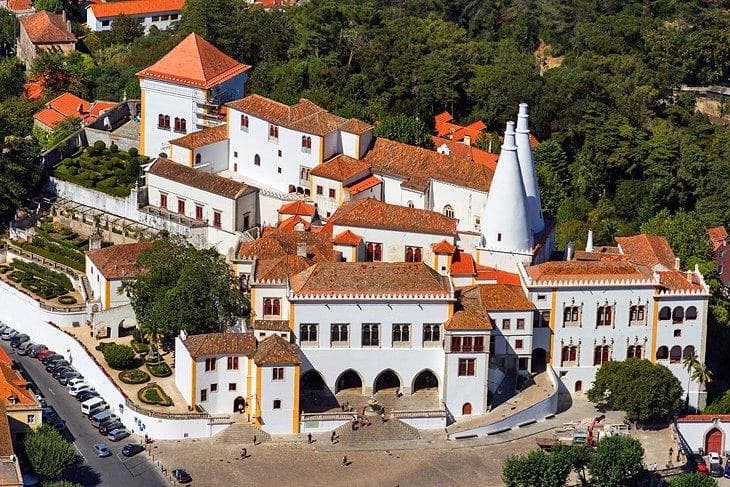
The National Palace of Sintra, located in the historic town center, was inhabited for nearly eight centuries by the Portuguese monarchy and its court. It was much used, particularly during the Middle Ages, as a hunting retreat and summer resort, as well as a refuge from outbreaks of disease in the capital. The Palace of Sintra combines various architectural styles, including Gothic and Manueline elements, together with the Mudéjar style—a harmonious combination of Muslim and Christian artistic influences—immediately apparent in the exuberant Hispano-Moresque tiling. The collections displayed here bear artistic witness to the multicultural nature of Portuguese decorative art between the 16th and 18th centuries. The building was severely affected by the 1755 earthquake, after which it was rebuilt, maintaining the current day silhouette that dates back to the mid-sixteenth century. The 1910 revolution brought an abrupt end to the use of this palace as a royal residence. Queen Maria Pia, widow of King Luís was the last royal inhabitant of the Palace, from where she left to go into exile.The Sintra National Palace was classified as a monument in 1910, and is part of Sintra's Cultural Landscape, classified as a World Heritage Site by UNESCO since 1995. In 2013 it became part of the Network of European Royal Residences.
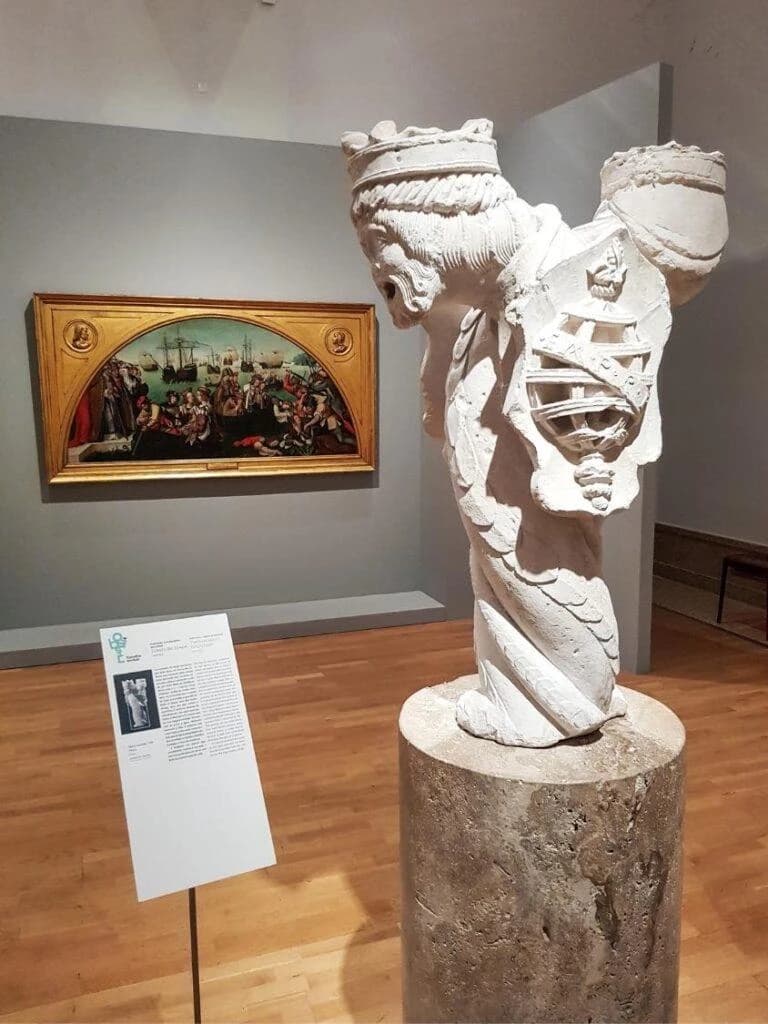
Сreated as the Fine Arts Museum in 1884, the Ancient Art Museum is Portugal’s “national gallery,” with paintings, sculptures, and decorative arts from the Middle Ages to the 19th century. Housed in a 17th-century palace, it displays most of the “national treasures,” plus art from around Europe and the Asian lands that traded with the Portuguese. Much of the collection dates from the so-called “Age of Discovery,” the period between the early 15th century and the late 18th century, when Portuguese navigators opened the sea route to the East, creating the first exchanges between European cultures and different parts of Asia, Africa and the Americas. Some of those navigators are among the sixty 15th-century personalities depicted in the museum’s showpiece, the Panels of St. Vincent. It’s the first known collective portrait in Western Art, and considered the greatest masterpiece of Portuguese painting. Attributed to artist Nuno Gonçalves, it also features the most famous portrait of Prince Henry the Navigator. Also from that period are fascinating Japanese screens illustrating the Portuguese arriving in Japan, and the Belém Monstrance from 1506 made with gold and gems brought back by explorer Vasco da Gama.
 pro
proLanguages:
 Português
 English
Profile verified
 pro
proLanguages:
 ΕλληνικάPortuguês
Profile verified
 pro
proLanguages:
English Español
Profile verified
 local
localLanguages:
PortuguêsEnglishProfile verified
 pro
proLanguages:
PortuguêsEnglishProfile verified
 local
localLanguages:
English Italiano
Profile verified
 local
localLanguages:
EnglishProfile verified
 local
localLanguages:
EnglishProfile verified
 local
localLanguages:
PortuguêsEnglishProfile verified
 local
localLanguages:
PortuguêsEnglishProfile verified
 local
localLanguages:
PortuguêsEnglishProfile verified
 pro
proLanguages:
PortuguêsEnglishProfile verified
 local
localLanguages:
EnglishProfile verified
 local
localLanguages:
EnglishEspañolProfile verified
 local
localLanguages:
 PolskiPortuguês
Profile verified
 local
localLanguages:
English Türkçe
Profile verified
 pro
proLanguages:
PortuguêsEnglishProfile verified
 local
localLanguages:
 Русский
Profile verified
 local
localLanguages:
PortuguêsEnglishProfile verified
 local
localLanguages:
 RomânăEnglish
Profile verified
 local
localLanguages:
EnglishItalianoProfile verified
 local
localLanguages:
PortuguêsEnglishProfile verified
 local
localLanguages:
EnglishProfile verified
 local
localLanguages:
PortuguêsEnglishProfile verified
 local
localLanguages:
PortuguêsEnglishProfile verified
 local
localLanguages:
PortuguêsEnglishProfile verified
 local
localLanguages:
PortuguêsEnglishProfile verified
 local
localLanguages:
PortuguêsEnglishProfile verified
 local
localLanguages:
PortuguêsEnglishProfile verified
 local
localLanguages:
PortuguêsEnglishProfile verified
 pro
proLanguages:
PortuguêsEnglishProfile verified
 pro
proLanguages:
PortuguêsEnglishProfile verified
 local
localLanguages:
Português Українська
Profile verified
Find private local guides worldwide. Connect with real people, real stories — not just scripted tours






Ana Isabel Moreira Medinas
11.02.2026
Portugal is better known perhaps as a summer or spring destination. However its wonders don't cease as the cooler months begin. It's actually quite the opposite!
Find a personal guide in just 1 minute and create your dream itinerary!


FindGuide is a platform for finding private and local guides around the world. You can choose a guide in advance who will show you the city from a local perspective, not just the standard tourist route.
Enter the city or country you're interested in into the search bar, choose a guide you like, and send them a request. All bookings are made directly on the platform.
We offer walking, food, historical, driving, private, and family tours in more than 100 destinations.
Yes, all guides go through moderation and verification. You can read reviews from other travelers, check the guide’s rating, and view their profile with photos and experience descriptions.
Tour prices vary depending on the destination, duration, and format. You see the cost upfront — no hidden fees.
Yes, the app is completely free for tourists. You can place your tour requests for local guides and access expert travel content totally free of charge.


