
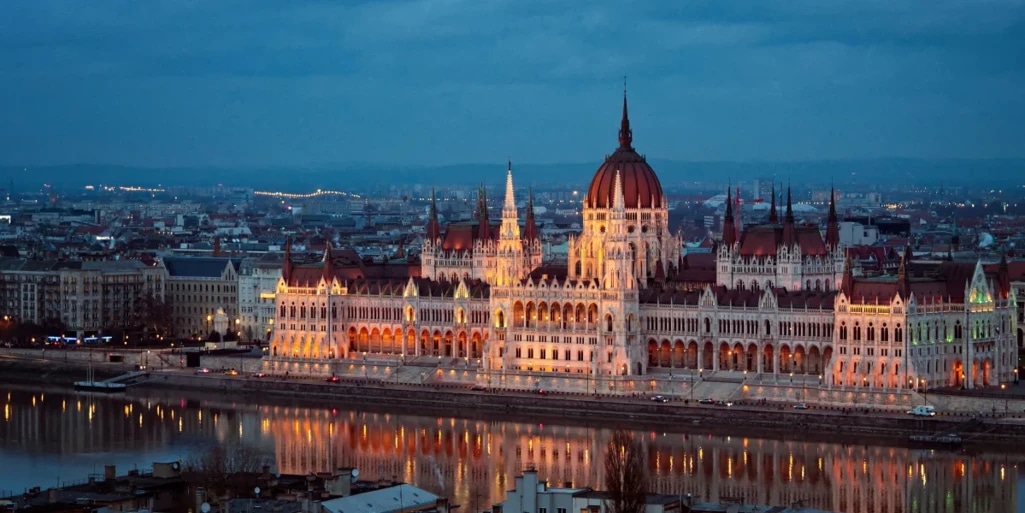
Discover Budapest with a personal guide. Visit Buda Castle, Parliament, Fisherman’s Bastion, and Széchenyi Thermal Bath, plus hidden streets, local cafés, and secret spots. Enjoy a fully tailored Budapest tour
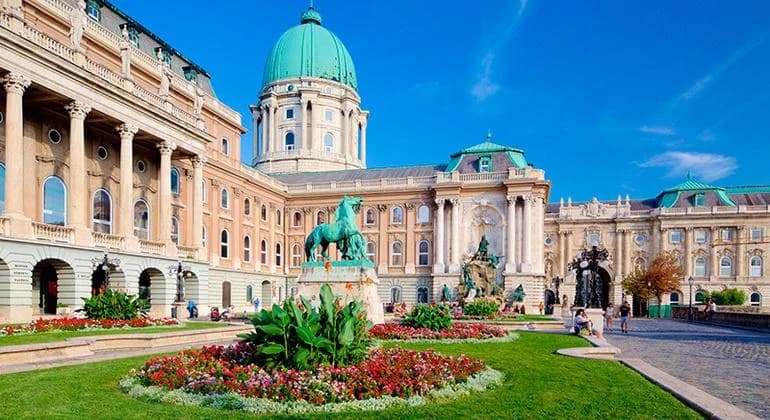
The Buda Castle is without doubt one of the best known images of the capital. The castle is also known as the Royal Palace, as it was previously where the Hungarian kings lived. Buda Castle is a remarkable castle and one of Budapest and Hungary’s most magnificent symbols, along with the Chain Bridge to which it is linked. Nowadays, Buda Castle houses the National Széchényi Library, the Budapest History Museum and the Hungarian National Gallery. The imposing Buda Castle sits at the top of Castle Hill and offers an impressive panoramic view over Pest and the river. The views are very similar to those from Fisherman’s Bastion. And being connected to the Chain Bridge, the palace complex is breathtaking at night when the overpass and the Castle are lit up. There is also part of Buda Castle which you can’t see just by looking at it: the tunnels underneath. Since the castle was also used for defending the city an intricate tunnel system with hiding places was built underneath. It’s said to be of a length of 10.000 meters.
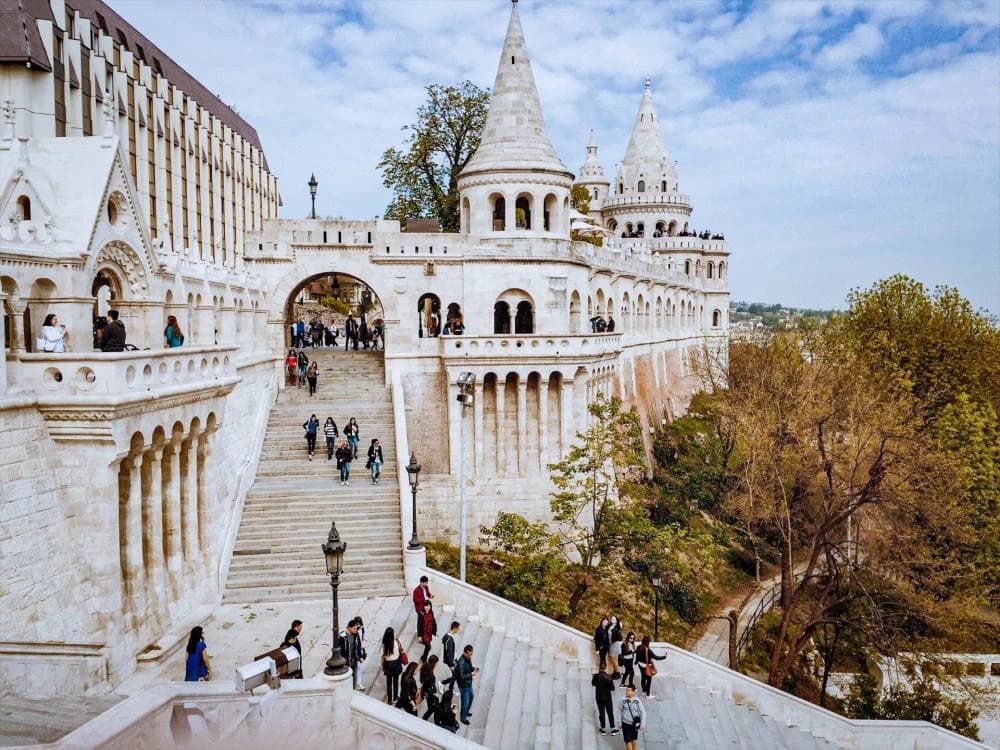
One of the most outstanding examples of Hungarian eclecticism, the Fisherman's Bastion is located in the Buda Castle District. The edifice is an important part of the cityscape and has been a UNESCO WORLD HERITAGE SITE since 1987. It’s worth taking a walk along its 140 meter long facade to enjoy the spectacular views of the city. The neo-Gothic and neo-Romanesque structure took nearly twenty years to complete. It was opened to the public in 1902. The terrace has seven towers that represent the seven Magyar tribes that founded Hungary and the bastion houses an equestrian statue of Stephen I. The original purpose of the Fisherman’s Bastion was defense, as part of the Buda Castle wall. The bastion was named after the Fishermen’s Town lying beneath and when necessary, the fishermen living here defended the tower. Besides becoming one of Budapest’s most visited tourist attractions over time, the edifice is also a popular filming location: it features, for example, in music videos by two world-famous singers, Ellie Goulding and Selena Gomez. Just a few steps from the Fisherman’s Bastion is Matthias Church, which also functioned as a coronation site. You just have to climb 197 stairs to get to the wreath-shaped balcony of the church tower.
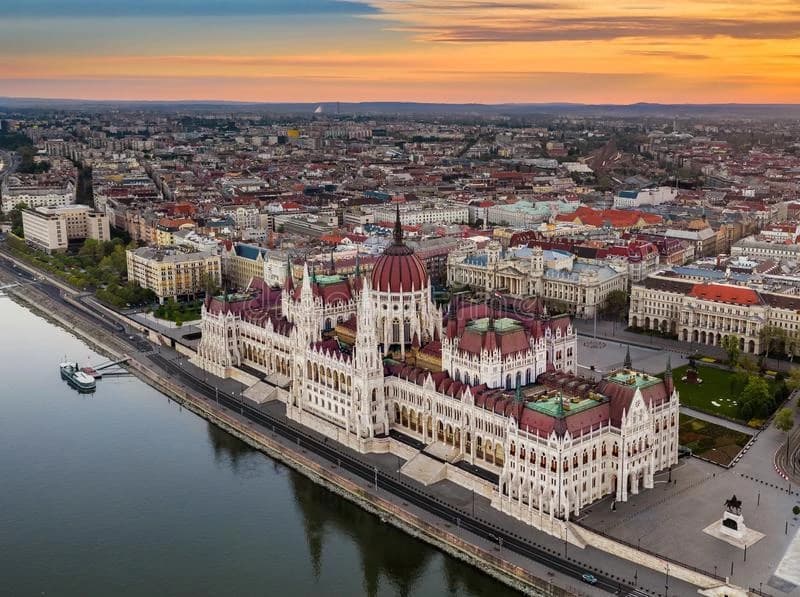
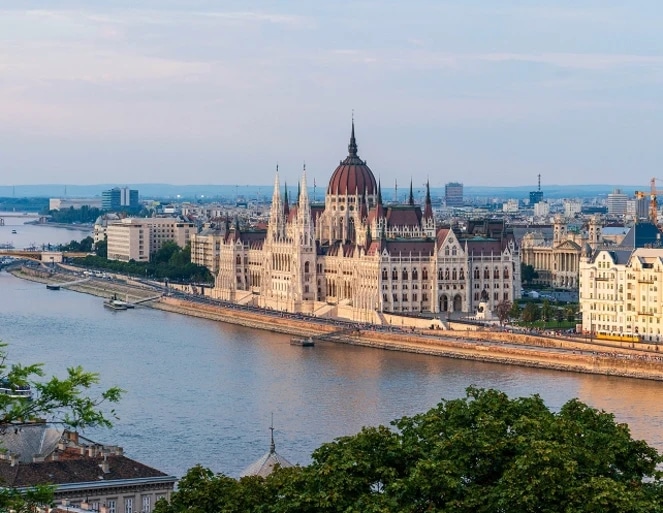
The Hungarian Parliament, also known as the Budapest Parliament, has become one of the city’s main symbols. It is also one of the best-known structures in Europe. It is the third largest assembly building in the world, after the Parliament of Romania and the National Congress of Argentina. Founded between 1884 and 1902, the seat of the National Assembly of Hungary was the biggest building of its time. It has 691 rooms and is 268 m long and 123 m wide. The main façade overlooks the River Danube, but the official main entrance is from the square on the east side of the building. The façade displays statues of Hungarian rulers, Transylvanian leaders and famous military figures. The coats of arms of kings and dukes are depicted over the windows. The east stairs are flanked by two lions. One of the famous parts of the building is the hexadecagon (sixteen-sided) central hall, with huge chambers adjoining it: the Lower House and the Upper House. The modern National Assembly is unicameral and meets in the Lower House, while the Upper House is used as a conference and meeting room. The Holy Crown of Hungary, which is also depicted in the coat of arms of Hungary, has been displayed in the central hall since 2000.
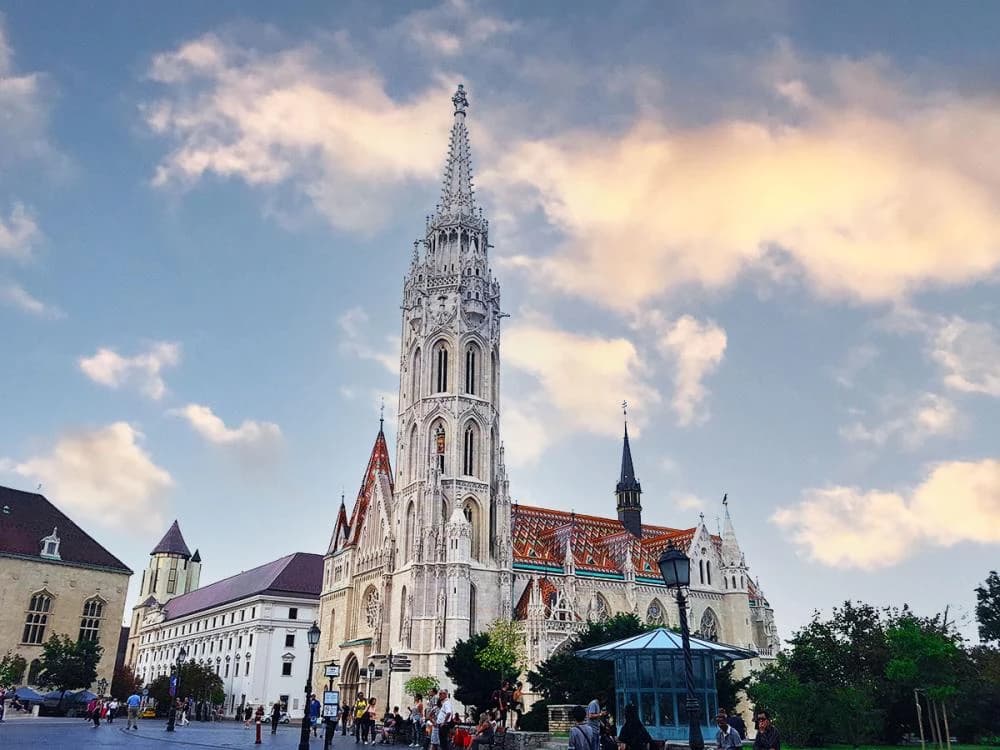
Matthias Church, known as the Mátyás-templom in Hungarian, is a very majestic and impressive church. It is one of the city’s oldest buildings and it is located on the Buda hill, in front of the Fisherman's Bastion, not too far from the castle. Also known as the Church of Our Lady, this holy building constructed in the florid late Gothic style has more than 700 years of history. The church houses the burials of Béla III of Hungary and his wife Agnes of Antioch, King of Hungary and Croatia from 1172 to 1196. Matthias Church has witnessed several Royal weddings and coronations, including that of Charles I in 1916 (the last ruler of the Austro-Hungarian Empire). The organ of Matthias Church, the largest one in Budapest, has resounded for centuries in the best acoustic space of the city. In 1907, King Francis Joseph offered an endowment of 50.000 crowns from his private treasury, on the occasion of the 40th anniversary of his coronation, for building a new, worthy musical instrument.
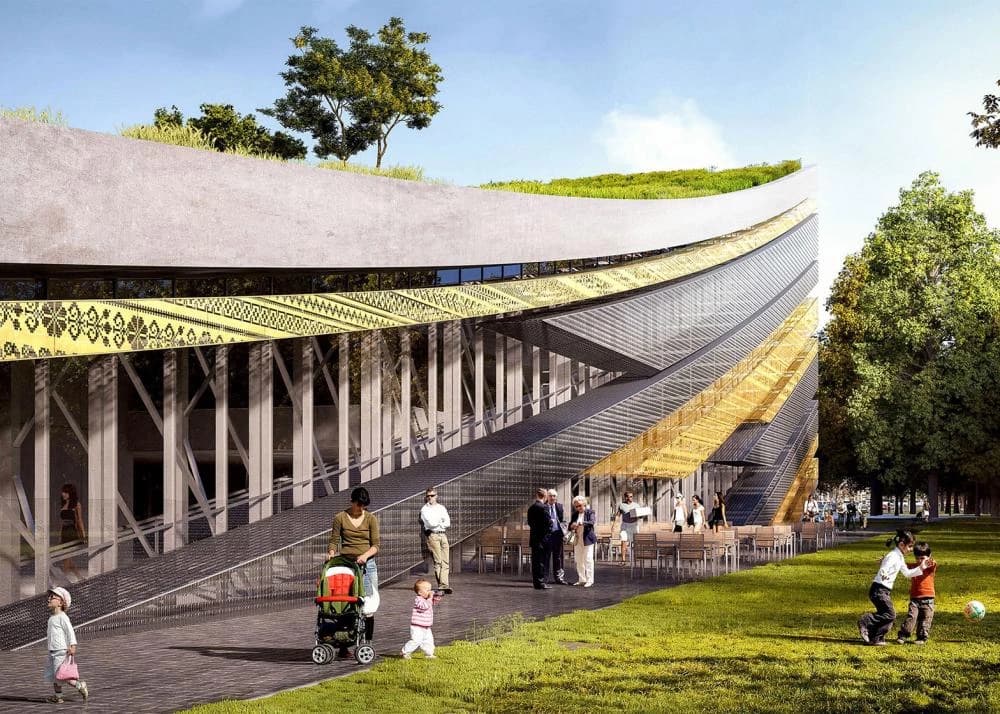
The Museum of Ethnography in Budapest depicts traditional Hungarian life and culture. Founded in 1872, the museum previously was housed in the grand but considerably smaller Palace of Justice close to the Danube. In May 2022 The Museum of Ethnography’s new home was constructed in City Park, one of the oldest green spaces in the city, based on designs by Napur Architect Ltd. One of the most impressive elements of the building, the “glass curtain” covering the façade, is surrounded by a raster metal lattice mesh of almost half a million pixels based on ethnographic motifs selected from the museum's Hungarian and international collections. The Museum of Ethnography houses a splendid permanent collection on Hungarian traditional culture, as well as various temporary exhibitions. Through its varied collection, the museum depicts the country’s traditional culture and the citizen’s way of life, including the different ethnic groups that existed in Hungary. The Museum recreates everyday Hungarian life from the end of the eighteenth century until World War I. The collection includes old photographs, furniture, costumes and tools that reflect the Hungarian peasants and townspeople.
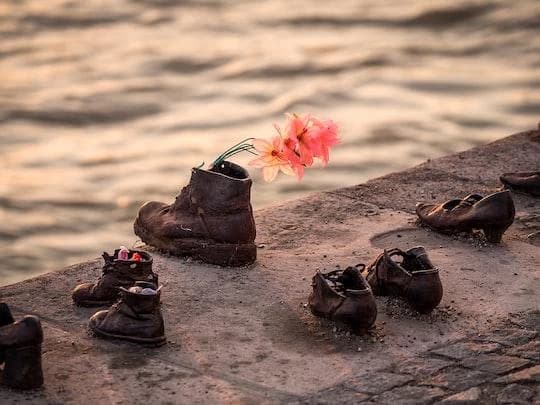
On the banks of the Danube River in Budapest, not far from the Hungarian Parliament building, sit sixty pairs of old-fashioned shoes, the type people wore in the 1940s. There are women's shoes, there are men's shoes and there are children's shoes. They sit at the edge of the water, scattered and abandoned, as though their owners had just stepped out of them and left them there. If you look more closely, you see that the shoes are rusted, made of iron and set into the concrete of the embankment. They are a memorial and a monument to the Hungarian Jews who, in the winter of 1944-1945, were shot on the banks of the Danube River by the members of the Arrow Cross Party. Known as "The Shoes on the Danube Promenade", the memorial was conceptualized by film director Can Togay, and was created by Togay together with the sculptor Gyula Pauer. It was installed on the Pest bank of the Danube River in Budapest in 2005. At three separate places on the memorial, cast iron signs read in Hungarian, English and Hebrew: "To the memory of victims shot into the Danube by Arrow Cross militiamen in 1944-45."
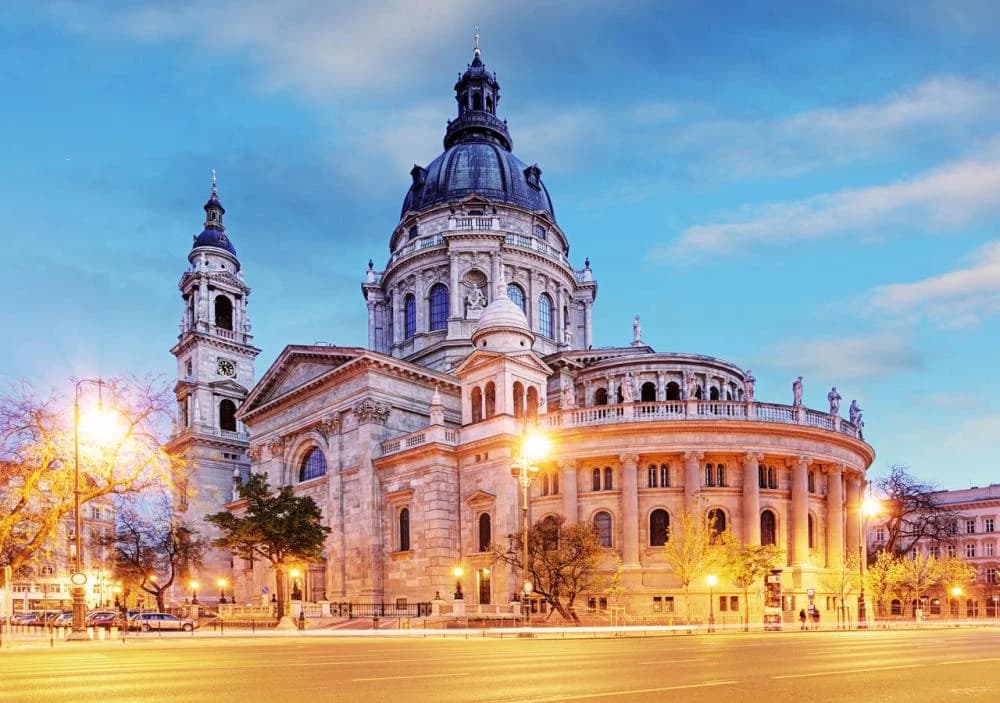
St. Stephen’s Basilica in Budapest is one of the largest religious buildings in Hungary, where it's said the basilica can hold over 8,500 people inside it. The Name of St. Stephen's Basilica was given this name in memory of Stephen I of Hungary (975-1038), the country’s first king. The temple houses the Holy Right Hand of St. Stephen, one of Hungary’s most sacred relics. The dimensions of the church are extremely impressive; it is 55 m wide and 87 m long. The dome stands 96 m tall, making it the highest building in Hungary’s capital, along with the Hungarian Parliament building. The construction of St. Stephen’s Basilica was completed in 1905. It took over half a century to build, partly because the dome collapsed in 1868, due to inadequate construction works. Visitors can climb to the top of the church’s right tower, where there is an impressive observation deck with beautiful views over Budapest.
 local
localLanguages:
 English
 Русский
Profile verified
 local
localLanguages:
English Español
Profile verified
 pro
proLanguages:
 Magyar
 Svenska
Profile verified
 local
localLanguages:
MagyarEnglishProfile verified
 pro
proLanguages:
Español Italiano
Profile verified
 local
localLanguages:
Magyar 日本語
日本語Profile verified
 local
localLanguages:
 PortuguêsEspañol
Profile verified
 pro
proLanguages:
РусскийProfile verified
 pro
proLanguages:
 ČeštinaEnglish
Profile verified
 local
localLanguages:
EnglishProfile verified
 local
localLanguages:
MagyarEnglishProfile verified
 local
localLanguages:
EnglishProfile verified
Find private local guides worldwide. Connect with real people, real stories — not just scripted tours



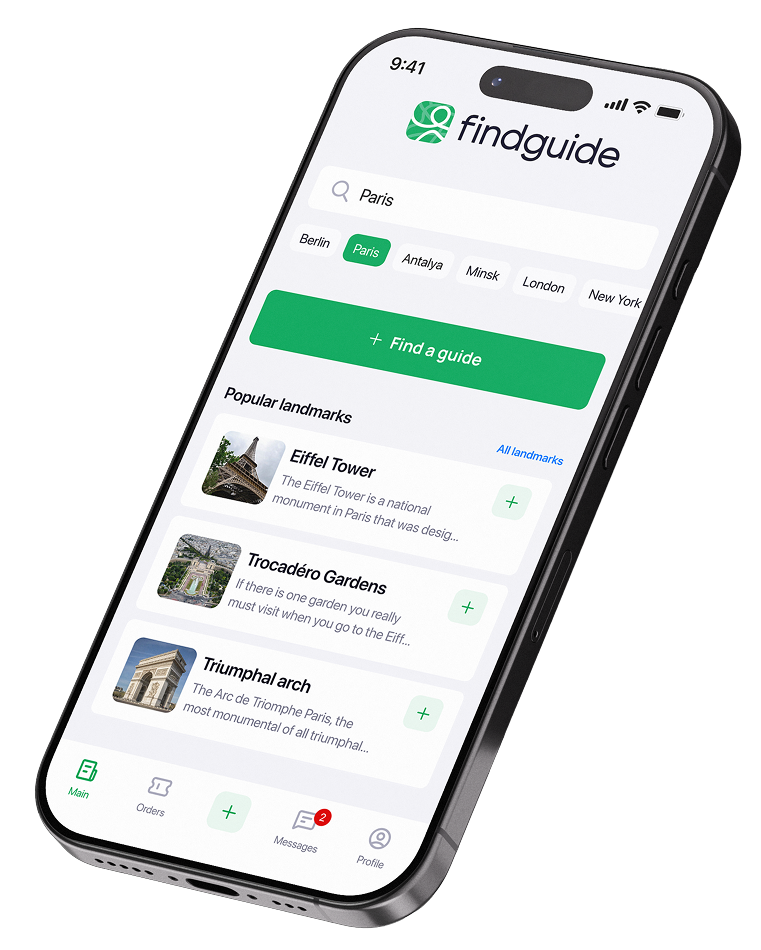

Find a personal guide in just 1 minute and create your dream itinerary!
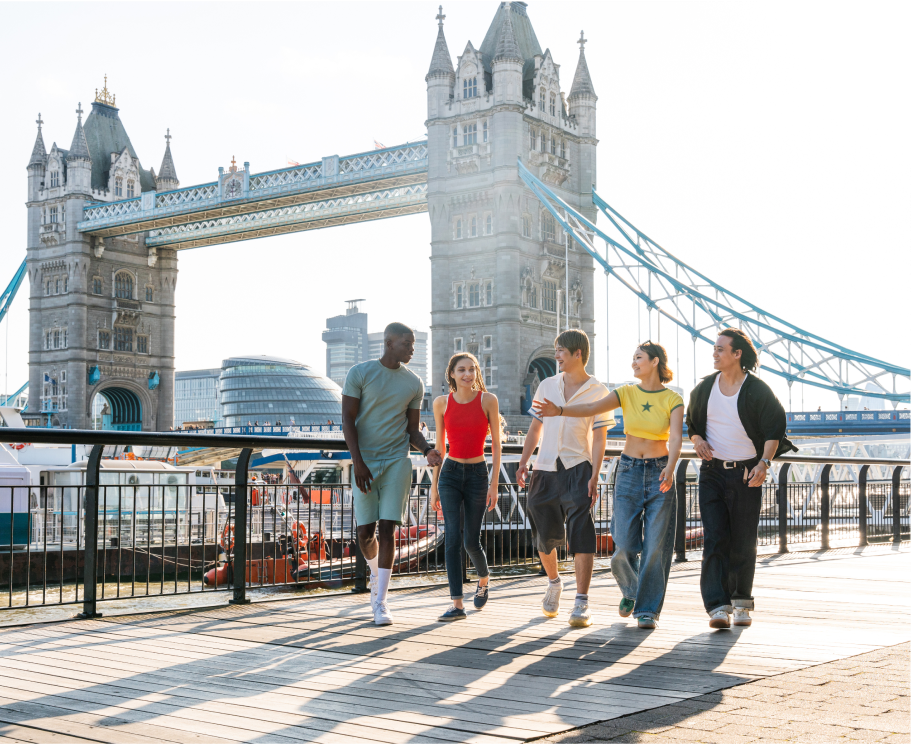

FindGuide is a platform for finding private and local guides around the world. You can choose a guide in advance who will show you the city from a local perspective, not just the standard tourist route.
Enter the city or country you're interested in into the search bar, choose a guide you like, and send them a request. All bookings are made directly on the platform.
We offer walking, food, historical, driving, private, and family tours in more than 100 destinations.
Yes, all guides go through moderation and verification. You can read reviews from other travelers, check the guide’s rating, and view their profile with photos and experience descriptions.
Tour prices vary depending on the destination, duration, and format. You see the cost upfront — no hidden fees.
Yes, the app is completely free for tourists. You can place your tour requests for local guides and access expert travel content totally free of charge.


