
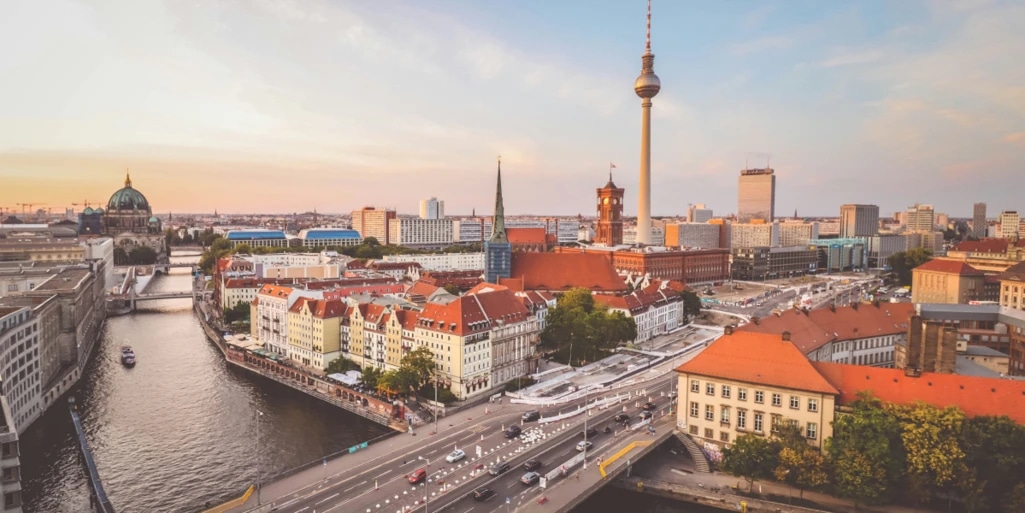
Explore Berlin with a professional guide. From Brandenburg Gate, Berlin Wall, Checkpoint Charlie, and Museum Island to hidden neighborhoods and street art, enjoy a custom Berlin tour full of culture and history
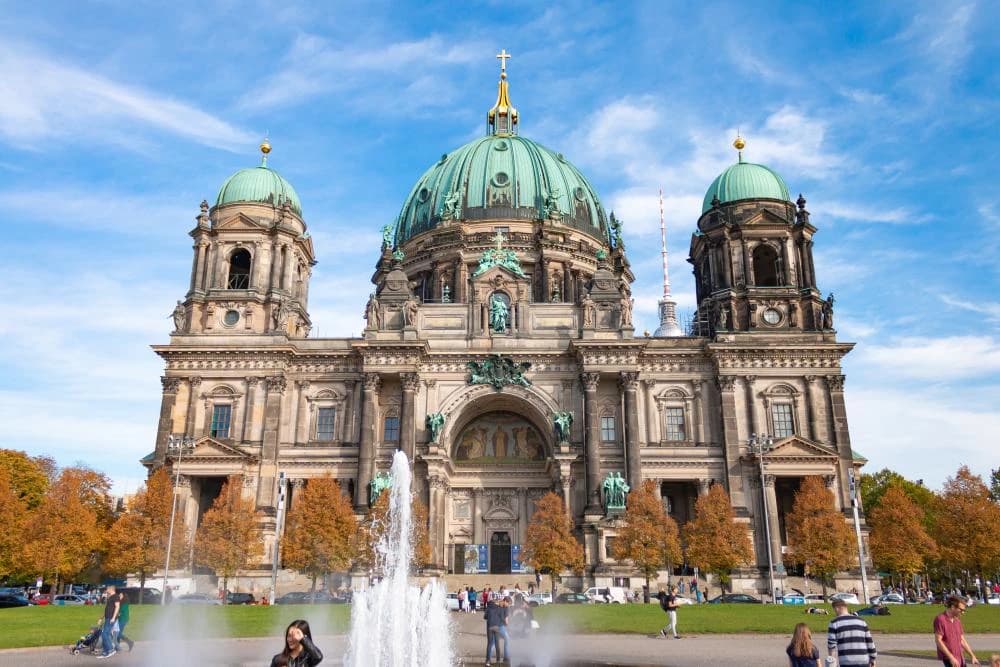
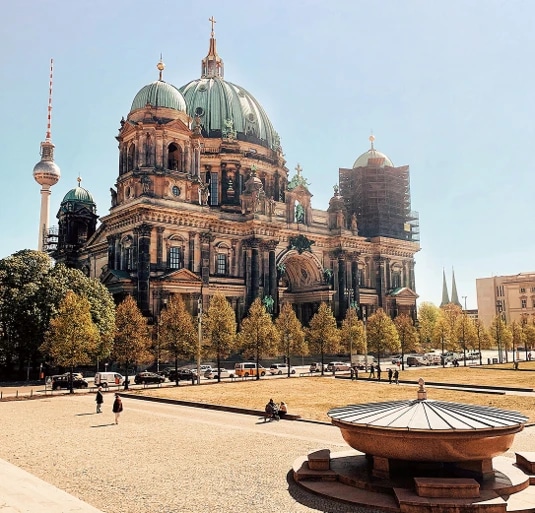
Established between 1894 and 1905, the Berlin Cathedral (Berliner Dom), situated on Museum Island, is the most iconic religious temple in the German capital. Sitting in front of the Lustgarten park, it is considered the most prominent religious edifice in Berlin. The Berlin Cathedral became the main church and burial place of the Hohenzollern dynasty and their court because of its proximity to the Palace. The interior of the Cathedral is immense with a striking main altar made of white marble and onyx. Another highlight worth discovering is the imposing Sauer organ that was built at the same time as the original Cathedral. It was the largest organ in Germany when it was inaugurated. The Hohenzollern Crypt is located below the Cathedral. The crypt holds over 90 tombs all belonging to the royal family, dating from the end of the sixteenth century until the beginning of the twentieth century. The climb to the top of the dome is a bit like walking up to an abandoned attic, since the staircase is not in very good condition. Nevertheless, climbing the 270 steps is worthwhile, as the views of central Berlin are magnificent.
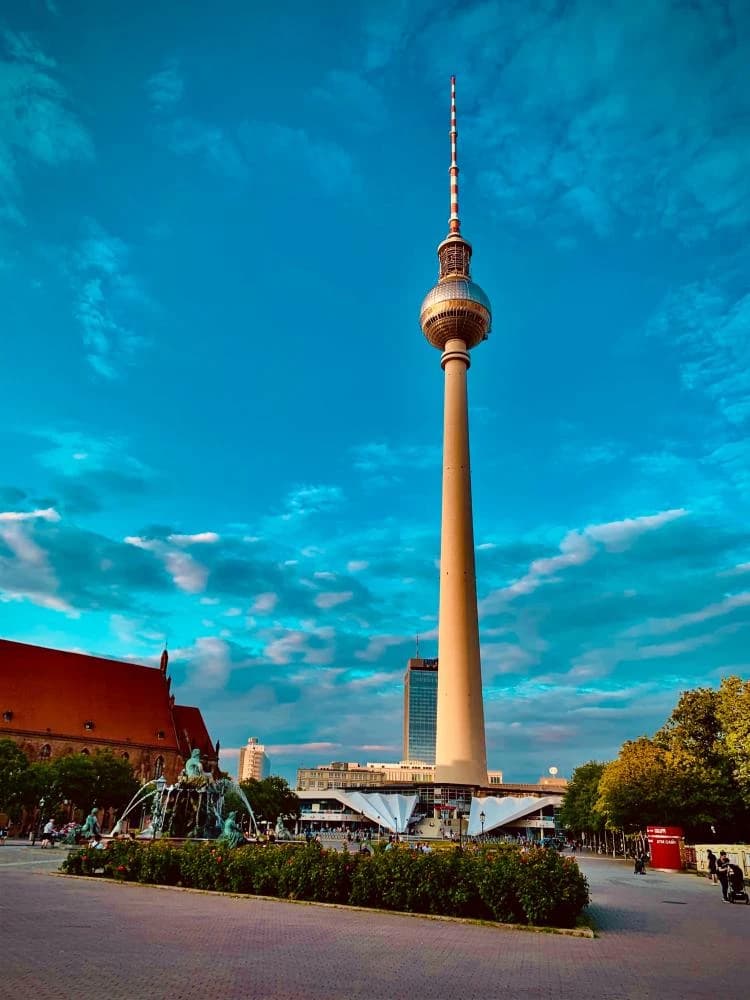
The Berlin TV Tower is the highest building in Germany. Nowhere else in the city offers such superb views over the capital’s landmarks. The elevator ride to the 203m high observation deck takes a mere 40 seconds and once there you can enjoy a drink at Berlin’s highest bar whilst delighting in the fantastic 360° panorama. Built in the center of Alexanderplatz, the most prominent square in East Berlin at the time, measured 368 meters high. The Tower, opened to the public in 1969, was the pride of the German Democratic Republic for years. Originally built as an antenna for the East German television network, the Television Tower is one of Berlin's most iconic sights.
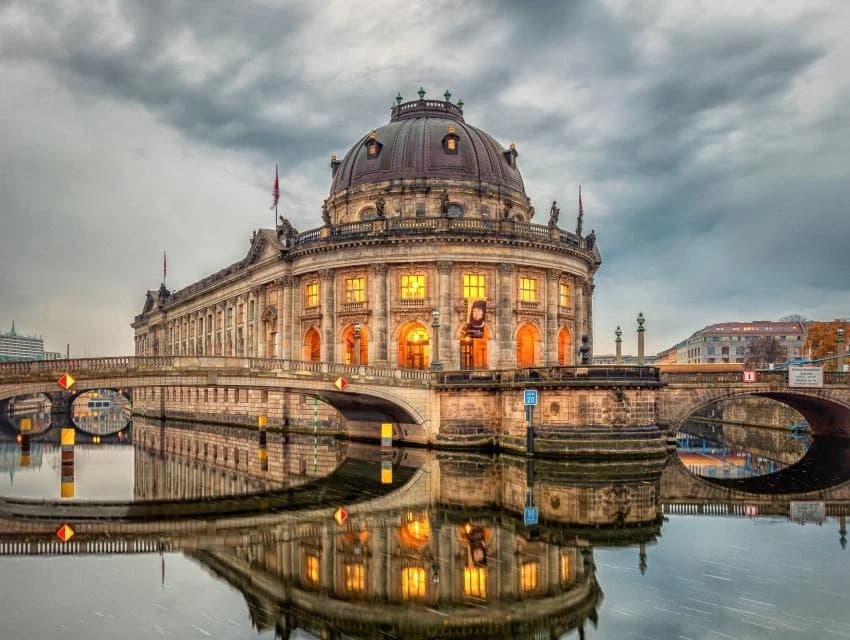
Reopened in 2006, the Bode Museum on the Museum Island in Berlin, houses an interesting and unusual collection of statues, coins, medallions and Byzantine art. The Bode Museum was initially inaugurated on Museum Island in 1904 as Kaiser-Friedrich-Museum. It contained a pictorial collection of the Christian era. The Bode Museum was badly damaged by the air raids of the Allied forces at the end of the Second World War. Between 1948 and 1986, the building suffered important repairs. In 1956, the museum was renamed after Wilhelm von Bode in 1956. It was then closed between 1997 and 2006 for further renovations. Nowadays, the museum houses a collection of Byzantine art, sculptures, coins and medals. The highlight of Bode Museum is its sculpture collection, which is considered one of the biggest in the world. The Byzantine Art collection is also quite interesting with artworks from Late and Byzantine antiquity. The second floor accommodates the numismatic collection. It has more than half a million objects and is one of the most important coin collections in the world.
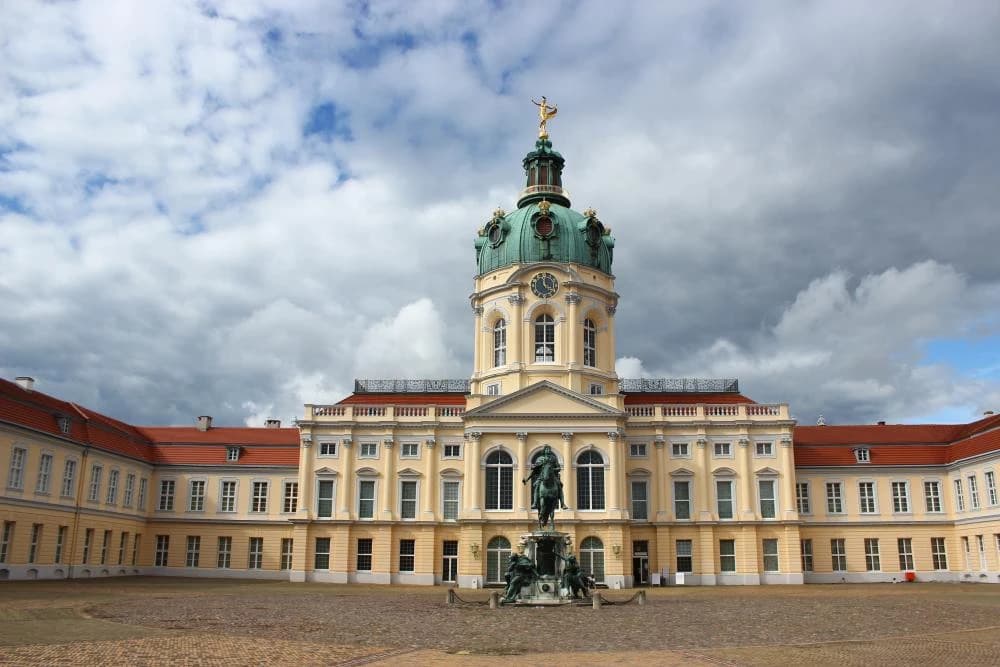
The Charlottenburg Palace, constructed between 1695 and 1699 in a baroque style, was commissioned by the wife of Friedrich I of Prussia as a summer residence. Charlottenburg Palace was extended in 1702, a year after Friedrich crowned himself. He had previously sent the royal architect to study architecture in Italy and France, especially the Château de Versailles. Sophie Charlotte died in 1705 and did not see the finished version of the Palace. In her memory, the King renamed the mansion Charlottenburg. It had formerly been called Lietzenburg, after the district in which it was constructed. The British air force bombarded Berlin in 1943, destroying part of the Palace. Some of the building’s decorations could never be fully restored. Some of the halls, ceilings and walls preserve the original furniture, decoration and frescoes. Unfortunately, the second floor of the Palace was not as lucky and was badly damaged during World War II, ruining the beautiful decorative elements. One of the most charming areas of Charlottenburg are the extensive and well cared for gardens designed in 1697 in a French Baroque style and reformed in an English romantic style in 1788. The enclosure was also badly hit during the air raids and was redeveloped in 2001, giving the Gardens a baroque style again.
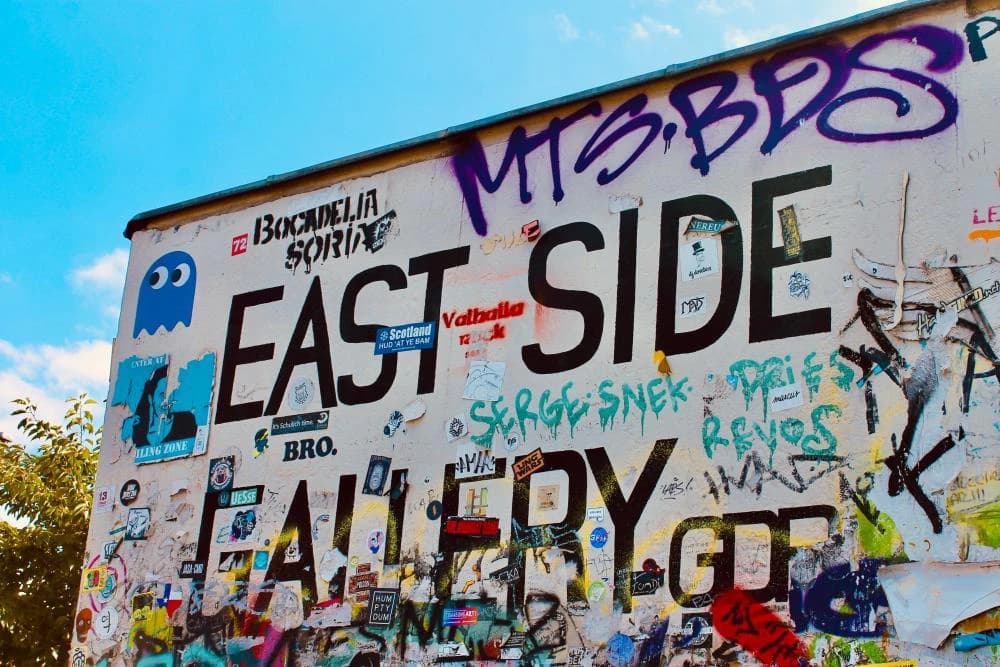
Most of the Berlin Wall was knocked down in 1989. One of the parts that was preserved is a 1.3 km stretch that was transformed into the East Side Gallery, the longest open-air art gallery in the world. The whole wall, situated near the city center, is covered by approximately one hundred graffities from artists from different nationalities. These have left their testimony of a great historical event, most of the paintings demonstrating a moment of extreme happiness and opportunity. Some of the graffiti paintings are extremely striking, but the most-renowned are the “My God, Help Me to Survive This Deadly Love” that depicts the Soviet politician Leonid Brezhnev kissing the leader of the GDR Erich Honecker. And “Berlin Wall Trabant” shows a Trabant, the typical East German car crashing through the wall.
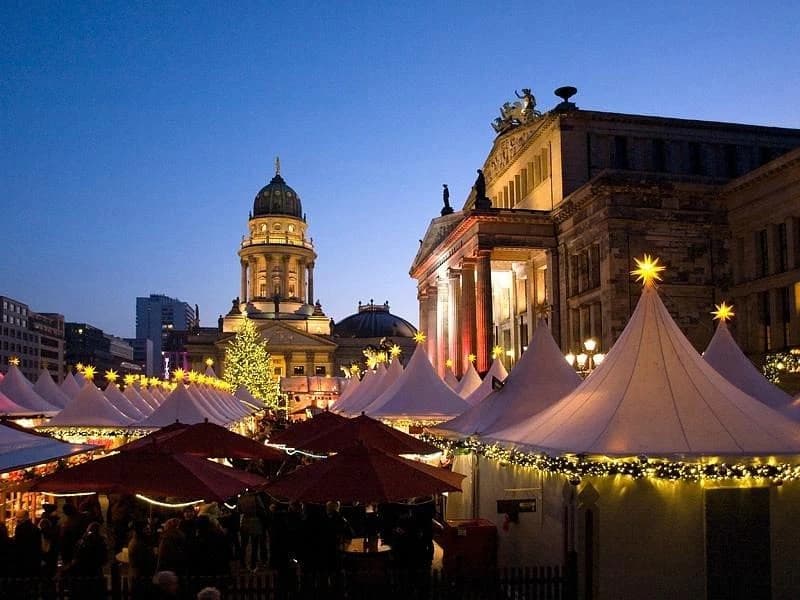
Gendarmenmarkt is one of the most splendid squares in Berlin. Founded during the twelfth century, it houses the Konzerthaus (concert hall) and the German and French Churches. Also, right in the middle of the square, in front of the Konzerthaus, is a statue of the poet Friedrich Schiller. The French Church, located on the north side of the precinct, was designed by the Huguenot community (French Protestants) who moved to the city at the beginning of the eighteenth century. It is the first church to be built in the square. In 1708, the German Lutheran community established a temple on the south side of the square. Nearly eighty years later, in 1785, a similar tower and dome to the French Church were added to the German Church. The Deutscher Dom was gravely damaged during World War II. In 1980 it was transformed into an art gallery and in 1996 it was remodeled into the Bundestag’s Museum.
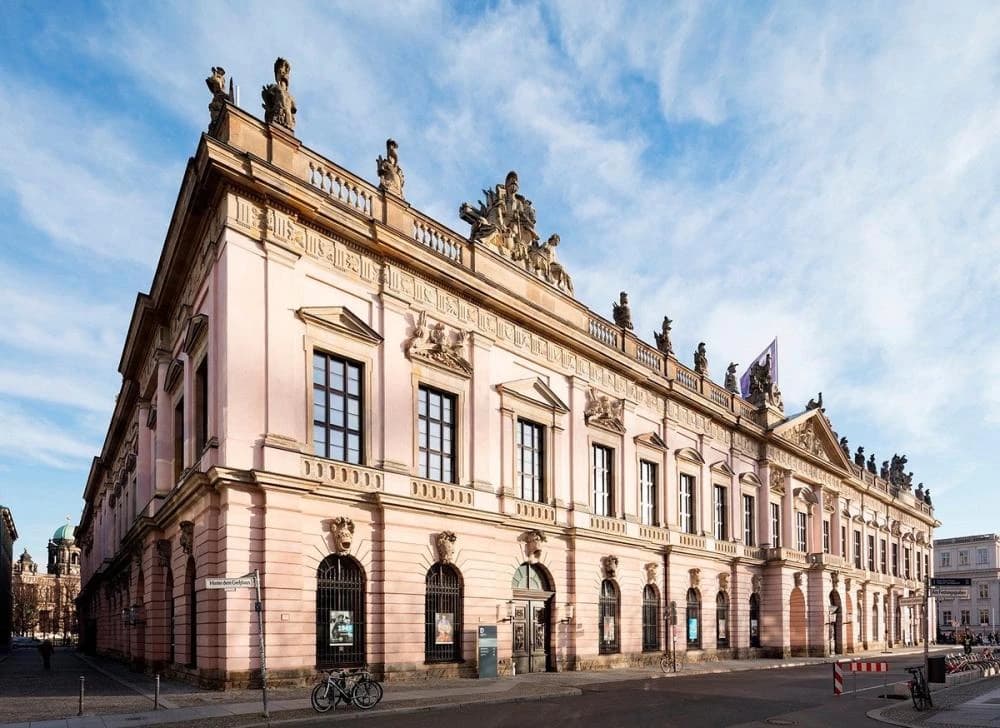
The German Historical Museum recalls the history of Germany from 100 B.C.E. until the present day. The collection has over 7,000 items and is displayed throughout the museum’s 8,000 square meters. The museum is housed in two architecturally remarkable buildings: Berlin's most important preserved baroque building, the Zeughaus, and a highlight of modern architecture, the Pei-Bau. The permanent exhibition on German history in the Zeughaus is expected to be closed until the end of 2025 for the development of a new permanent exhibition. The 6000 objects exhibited so far will be stored in an interim depot. The building is also not accessible due to necessary repairs. The Pei Building will continue to show temporary exhibitions on formative events and people in German history in a European context, accompanied by guided tours, inclusive formats, digital presentations, discussions and lectures. An outdoor poster exhibition on the façade of the Zeughaus in the alley leading to the Pei-Bau bears witness to the building's eventful history.
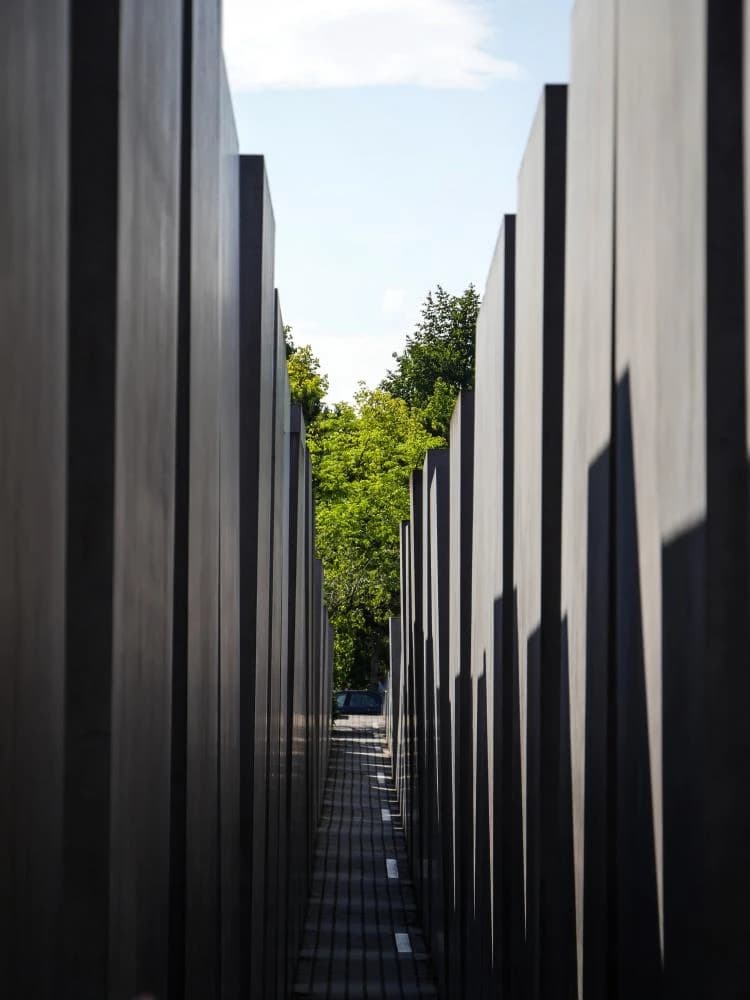
The Memorial to the Murdered Jews of Europe is better known as the Holocaust Memorial by most Berliners. Opened in May 2005, the memorial in Berlin-Mitte is located near the Brandenburg Gate and is one of the city's most impressive sights. The Holocaust Memorial consists of an undulating field of concrete steles, which can be passed through from all sides. Beneath the memorial is the Information Centre, which documents the crimes of the Nazi era in themed rooms. In June 1999, the Bundestag decided to build the Memorial to the Murdered Jews of Europe - which is the official name of the memorial - in the immediate vicinity of the Brandenburg Gate. After two years of construction, the memorial was ceremoniously opened on May 10, 2005. On a field of about 19,000 square meters, 2711 steles were installed - just as the design by the New York architect Peter Eisenman envisaged. The memorial is the central Holocaust memorial in Germany.
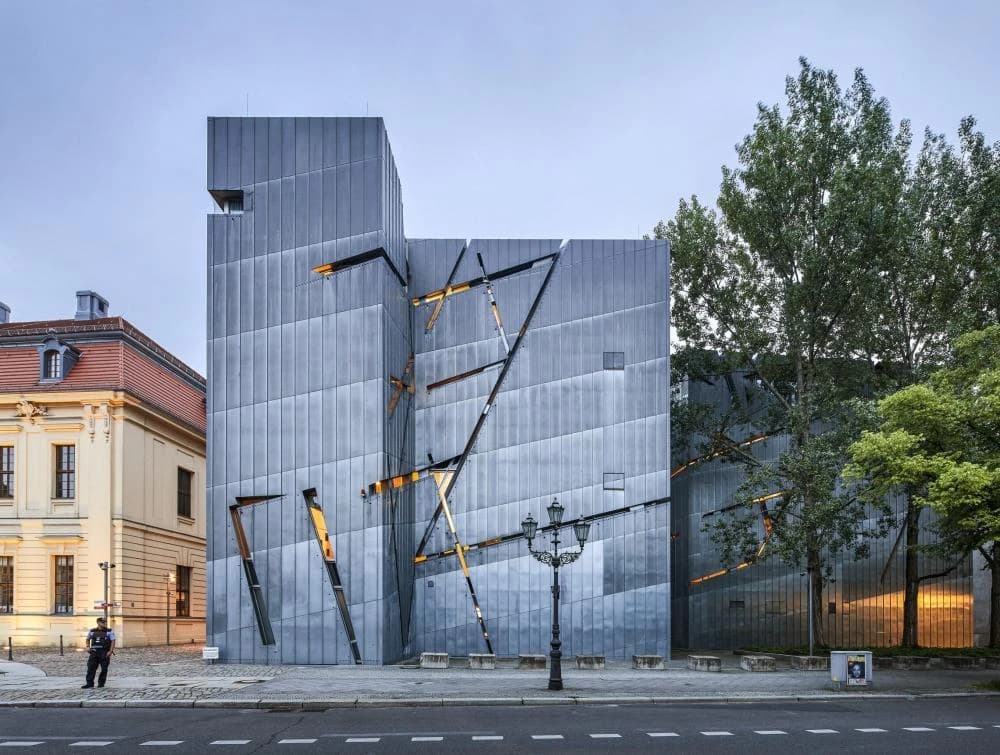
Opened to the public in 2001, the Jewish Museum Berlin (Jüdisches Museum Berlin) was created to spread the history and culture of the Judeo-German population. The Berlin Jewish Museum is housed in two buildings, one of which was designed by Daniel Libeskind. The Museum has become one of the most emblematic landmarks in Berlin. The exterior of the newest building is covered in zinc and was created by the Polish-American architect to describe the tensions there have been throughout the German-Jewish history. The most remarkable parts of the museum include the “Holocaust Tower”, a small tower almost completely plunged in the darkness, the “Garden of Exile”, an area made up of 49 concrete slabs that will remind you of the Holocaust Monument in Berlin. And the “Void Void”, an alleyway with thousands of face-shaped iron masks are placed. When you walk on them, they make a hair-raising moan. The Museum houses a 3,000-square meter permanent exhibition about the last 2,000 years of Jewish-German history. The collection includes photographs, letters and numerous everyday items that show how the Jews lived in Germany throughout the centuries.
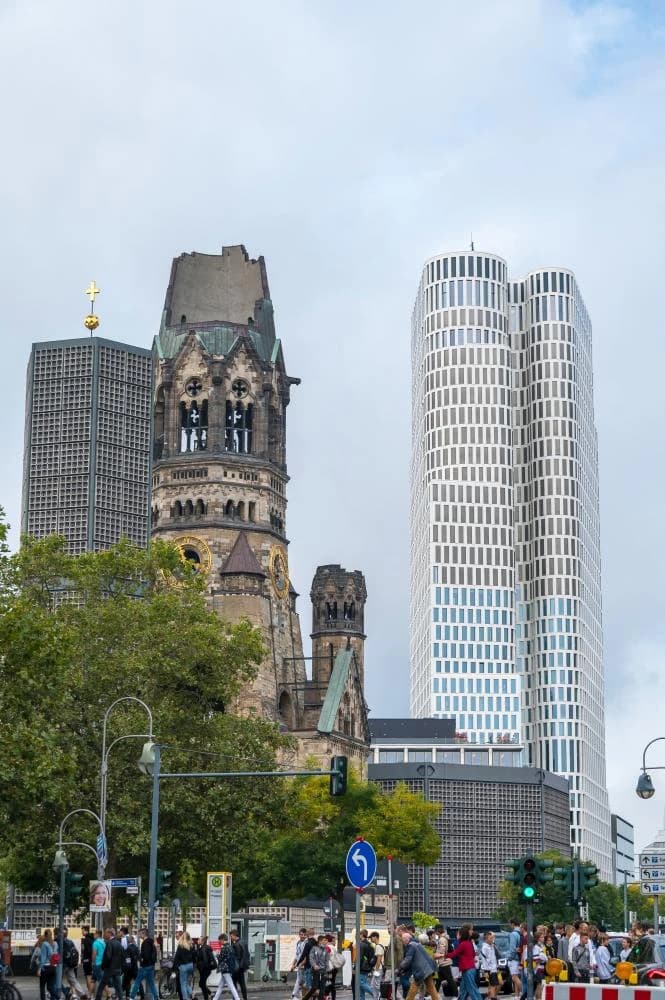
The Kaiser Wilhelm Memorial Church is a Romanesque Revival style church which was designed by the German Emperor Wilhelm II in honor of his grandfather Wilhelm I. The original temple built in the 1890s was not one of the most prominent churches in Berlin. In 1943, the air raids wrecked the church. In 1950, the Allies planned to demolish the whole temple, but the West Germans protested and finally a new church was designed. However, the citizens protested again, and the ruined church was completed into the new temple in 1961. The demolished and blackened church recalls the madness of war. Inside, a small exhibit displays some photos of the recently devastated building. The new church has a modern chapel (called New Church) with blue windows that reflect a beautiful light in its interior. The rear of the building houses an octagonal edifice with blue-colored windows, built as a bell tower in 1960. It is now a souvenir store. The Berliners have nicknamed the church “hollow tooth”.
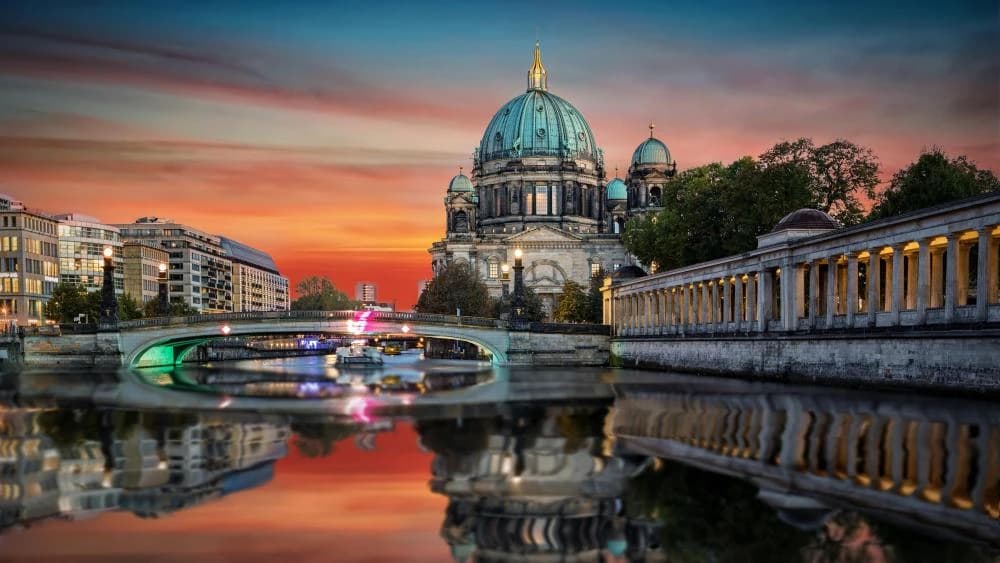
Berlin's Museum Island is one of the most outstanding museum complexes in Europe. Five architects designed the impressive architectural ensemble in the heart of the city. Construction was finished in 1930. Nabbing the title of a World Heritage Site by UNESCO in 1999, this isle of enlightenment is a proud landmark of Berlin. Each museum specializes in its own slice of history and art. The Pergamom is characterized by its collection of ancient architecture. The Altes Museum hosts art of antiquity – mainly Greek and Roman. The Neues Museum is defined by its archeological objects. The Alte Nationalgalerie covers the 19th century, while the Bode Museum takes on earlier works from the Byzantine empire to the beginning of the 19th century. The collections were briefly separated during the Cold War, as Germany and Berlin were split in two, but after reunification the ensemble was united once again. As Museum Island grew, so did its historical significance, which is why it’s a protected and highly regarded piece of Berlin’s historical legacy.
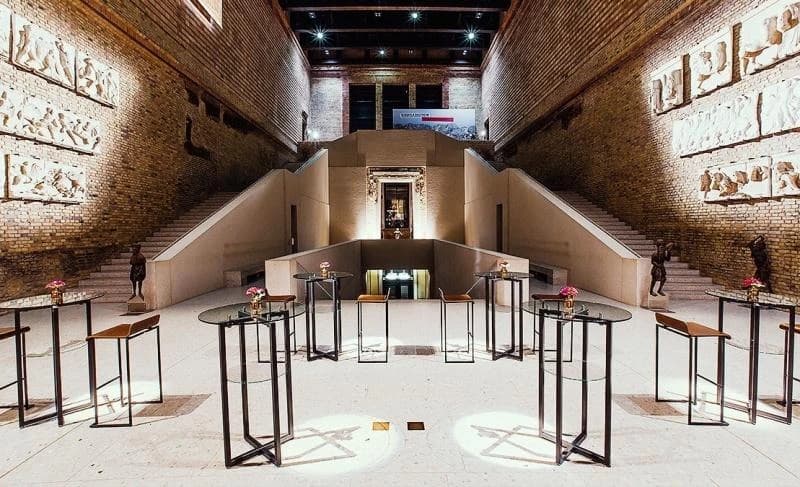
The Neues Museum ("New Museum") is considered the gem of the five museums on Museum Island. The building has received several architecture prizes and its collection is surprising. Founded between 1843 and 1855, the building was severely damaged during World War II. During the following forty years, the ruins were exposed to inclement weather. It wasn’t until 1986 that East Germany began working on the reconstruction. However, the works were stopped when the Berlin Wall fell. In 1997, the British architect David Chipperfield was selected to lead the reconstruction project, but the works didn’t start until 2003. The “New Museum” was reopened in 2009 after being closed for over 70 years. Today, Neues Museum is home to some of the most famous archaeological elements, like the Nefertiti Bust and other samples of prehistoric and protohistory Egyptian art. It features over 2,500 objects displayed along 3,600 square meters divided on three floors. And It is probably the most important section of the gallery.
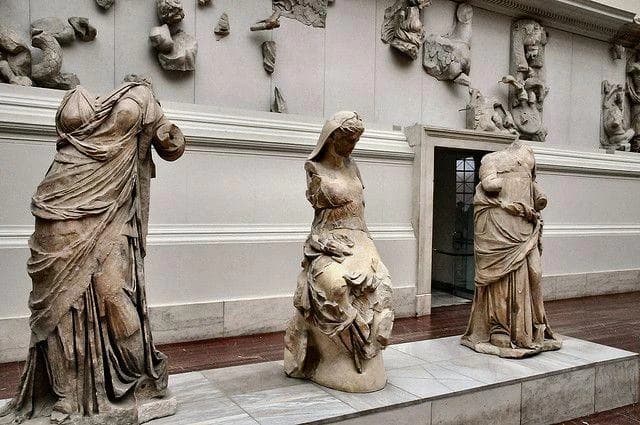
One of the most popular attractions in Berlin, the Pergamon Museum is world famous for its archaeological holdings. The Pergamon, located on Museum Island, is really three museums in one – the Collection of Classical Antiquities (also on display in the Old Museum), the Museum of the Ancient Near East, and the Museum of Islamic Art. The Pergamonmuseum takes its name from its main attraction, the altar of Zeus from Pergamon . Considered a masterpiece of the Hellenistic Age, this ancient Greek structure was shipped to Berlin in 1910, and the museum was built, in part, to house it. The Museum of the Ancient Near East, which ranks among the world’s best collections of treasures from this region, is dominated by the imposing bright blue glazed-brick Ishtar Gate of Babylon from 6th century BC. The Museum of Islamic Art was started in 1904 with a donation of precious carpets by Wilhelm von Bode. Today, the Museum of Islamic Art exhibits Islamic art of the 8th to 19th century representative of the various Islamic cultures ranging from India to Spain, although the collection’s emphasis is primarily on Egypt, Iran, and the Middle East.
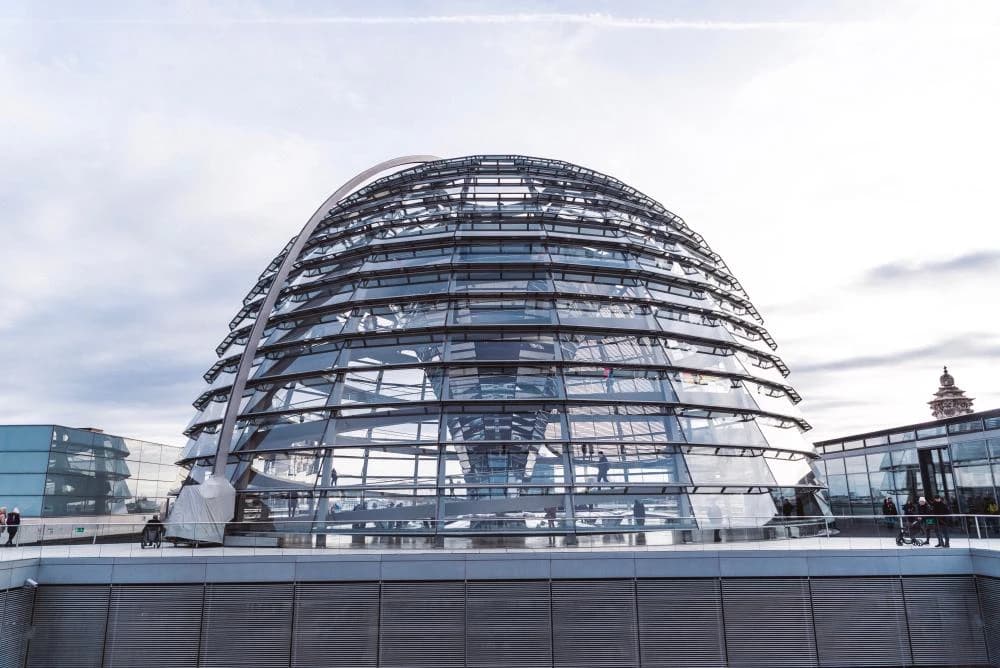
The historic Reichstag building with an observation deck at the top of the famous glass dome is where the German Parliament (Bundestag) meets regularly. Restored by Norman Foster in 1990, it has become one of the iconic symbols of the capital. Located on the border with East Berlin, the Reichstag was separated from the nearby Brandenburg Gate for nearly twenty-nine years by the Berlin Wall. Established in 1894, the Reichstag served as the home of the German parliament until 1933 when the building was badly damaged in a fire. This event marks the end of the Weimar Republic and provides a convenient pretext for Hitler to suppress dissent. Under Nazi dictatorship, the building falls into neglect and was severely damaged during the Second World War. There was a large debate on whether to demolish it completely or rebuild it. Finally, in 1956, the decision was made to restore the building, but without its original dome. Though the use of the Reichstag was met with some criticism, the Bundestag opened its inaugural session there on September 7, 1999.
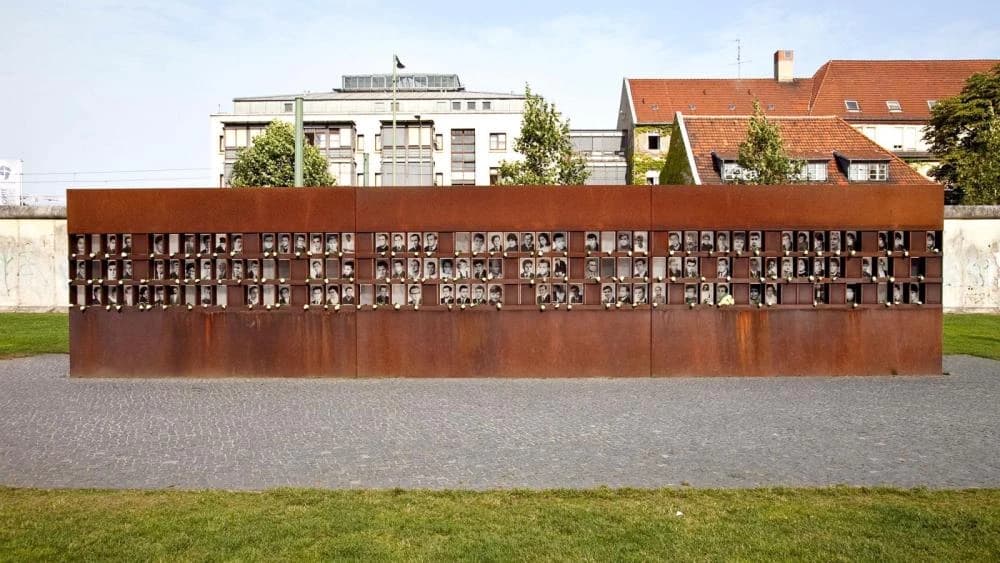
The Berlin Wall divided the capital of Germany in two for 28 years. The construction and fall of the Berlin Wall are two crucial 20th-century episodes. At the end of World War II, Berlin was divided into two areas and the Allies and the Soviet Union created 81 checkpoints between the two sections of the city. Between 1961 and 1989 over 5,000 people tried to cross the Wall and over 3,000 of them were detained. Approximately 100 people died trying to escape. Until 9 November 1989, East Germany’s government opened all the checkpoints. The next day, the Berlin Wall started to be knocked over. The longest part of the Berlin Wall that is still standing is called the East Side Gallery. Visitors can walk along the 1.3 kilometers of barrier that is beautifully decorated with paintings that reflect several events related to the Wall.
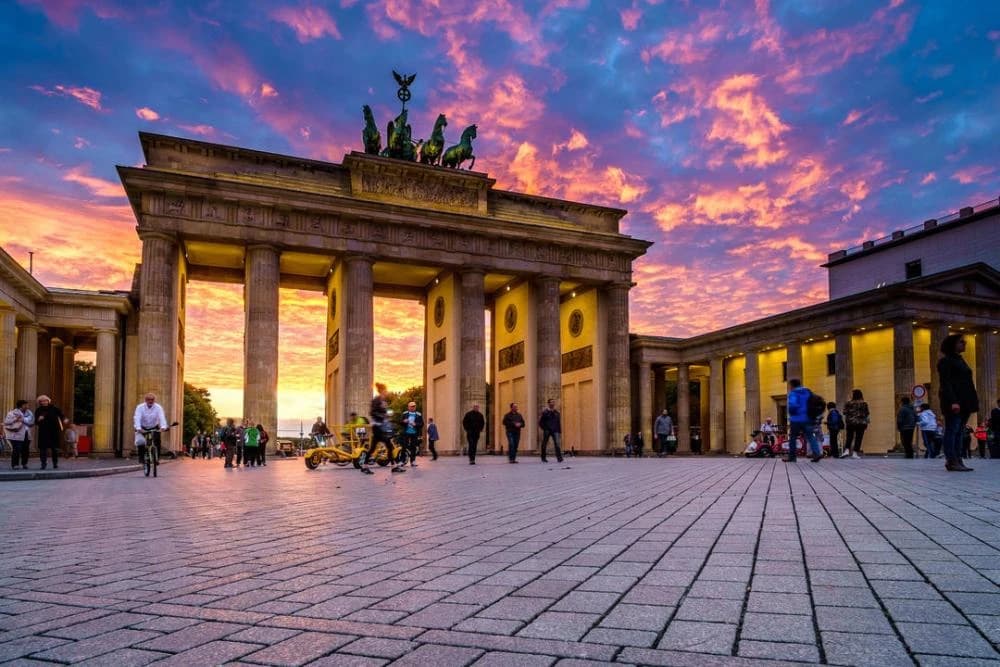
The Brandenburg Gate is one of the most iconic sights in today’s vibrant Berlin. More than just Berlin’s only surviving historical city gate, this site, designed in 1791, came to symbolize Berlin’s Cold War division into East and West – and, since the fall of the Wall, a reunified Germany. The neoclassical gate stands 26-meters high and was inspired by the Acropolis of Athens. In 1795 the monument was crowned with a chariot drawn by four horses heading into the city, known as the Quadriga. The bronze statue represents the Goddess of Victory. The original sculpture was destroyed during World War II, so it was replaced by an exact replica made in West Germany in 1969. In 1956, the East and West joined together to rebuild the landmark. Several years later, in 1961, the Soviet Union built the Berlin Wall and the Gate stood between both parts, with little access to it. When the city was reunified, the Brandenburg Gate finally regained the importance it was once given.
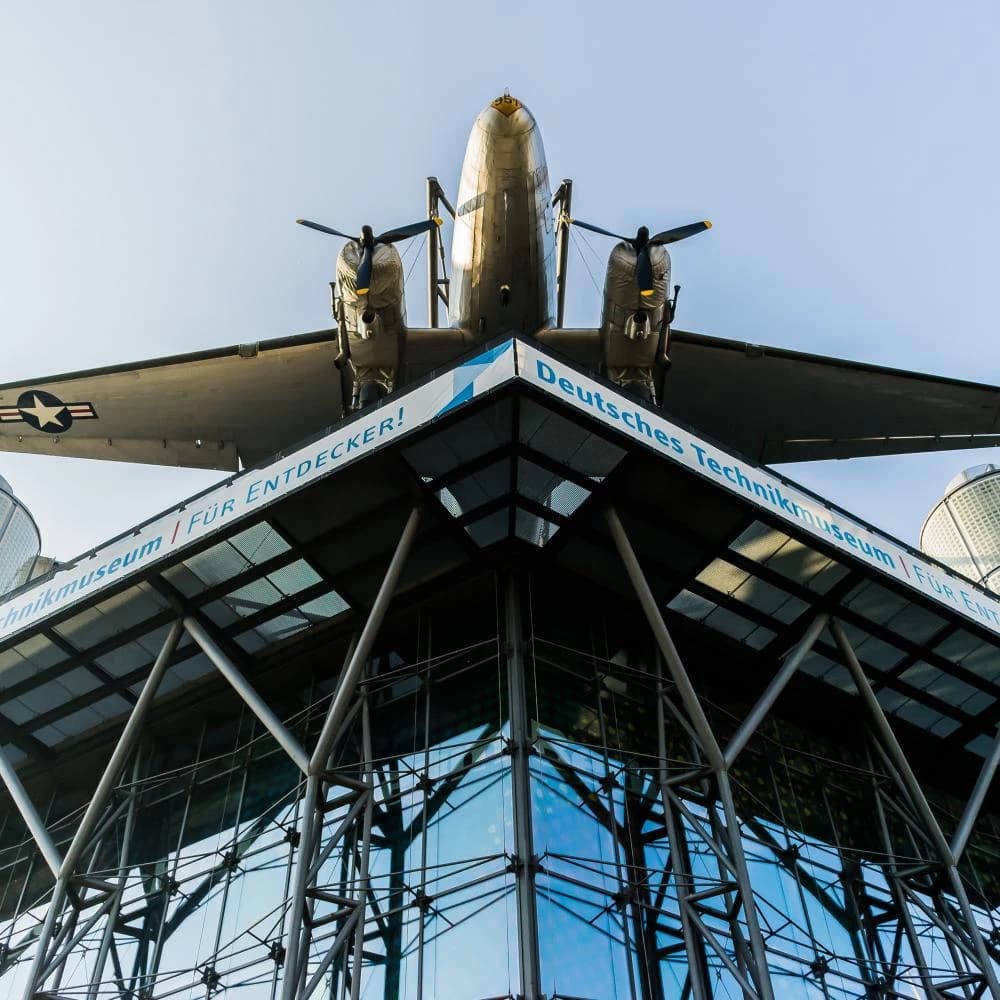
The German Museum of Technology is a museum where visitors can learn about the history of science in a fun and entertaining way. It is a great option for children. Housed in the railyard of the former Hamburger Bahnhof, which was destroyed during World War II, the German Museum of Technology features a large collection of steam trains and electric trains. It also includes a historical brewery and a blacksmith’s working-place, where visitors can see how the blacksmiths work. Moreover, there is also a windmill and a water wheel. Established in 1982, the museum shows numerous facets of both old and modern technology, including technology in the history of civilization and the daily life of humans. Most of the new building is dedicated to sailing and aeronautics, where dozens of military aircrafts are on display. There is also an interesting collection about technology in photography and the textile industry.
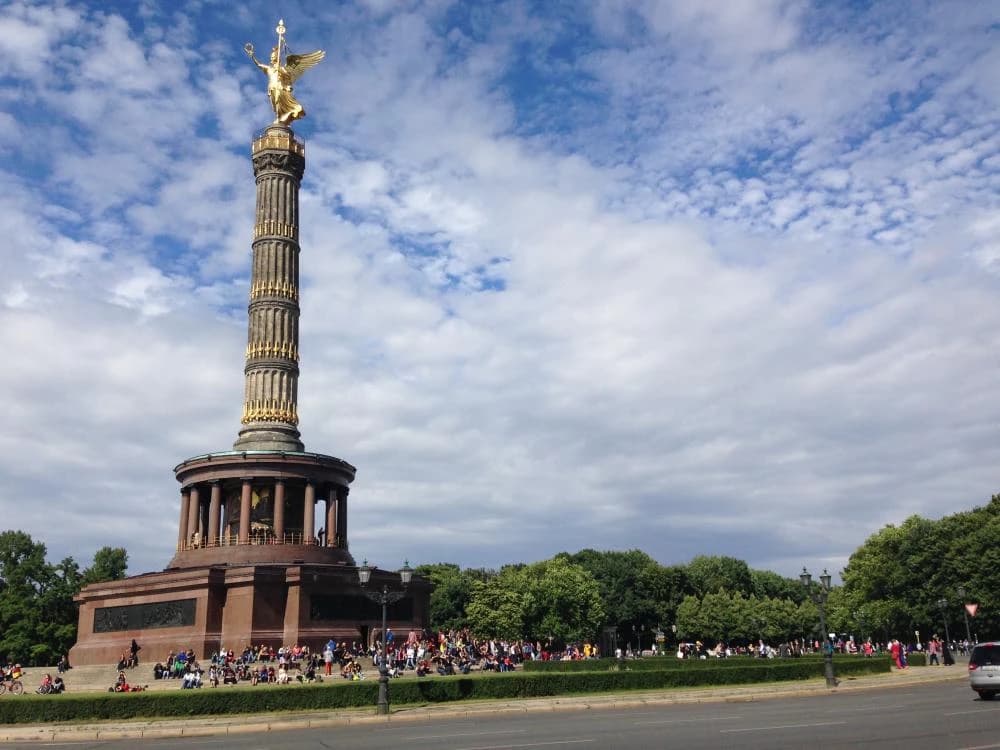
Popular among locals and visitors alike, the Tiergarten is Berlin's largest and most frequented inner-city park. Close to the city center and bordering such major sights as the Brandenburg Gate or Potsdamer Platz, the forested grounds cover a spreading 210 hectares– slightly more than Hyde Park in London. In the late seventeenth century, Friedrich III, then Elector of Brandenburg and Duke of Prussia, turned the former royal hunting grounds just outside the city into a “park for the pleasure of the general population”. In this major makeover, Peter Joseph Lenné, Prussia’s leading landscape gardener, drew his inspiration from English models to transform the grounds and give the park the shape it still has today. Tiergarten Park was not only badly damaged during the Second World War, but it also suffered dramatically in the wake of the war. Facing an acute lack of coal in winter 1945/6, Berliners cut down what was left of the park’s trees as fuel, nearly deforesting the entire area. Tiergarten Park was replanted with trees from 1949, largely thanks to the many donations of trees from across Germany.
 local
localLanguages:
 English
 Deutsch
Profile verified
Find private local guides worldwide. Connect with real people, real stories — not just scripted tours





Find a personal guide in just 1 minute and create your dream itinerary!

FindGuide is a platform for finding private and local guides around the world. You can choose a guide in advance who will show you the city from a local perspective, not just the standard tourist route.
Enter the city or country you're interested in into the search bar, choose a guide you like, and send them a request. All bookings are made directly on the platform.
We offer walking, food, historical, driving, private, and family tours in more than 100 destinations.
Yes, all guides go through moderation and verification. You can read reviews from other travelers, check the guide’s rating, and view their profile with photos and experience descriptions.
Tour prices vary depending on the destination, duration, and format. You see the cost upfront — no hidden fees.
Yes, the app is completely free for tourists. You can place your tour requests for local guides and access expert travel content totally free of charge.


