
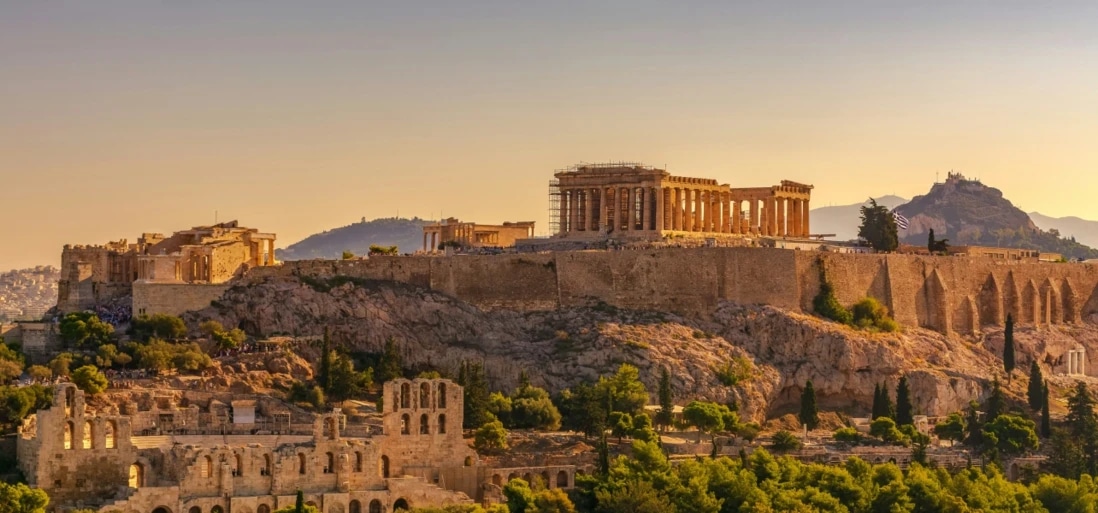
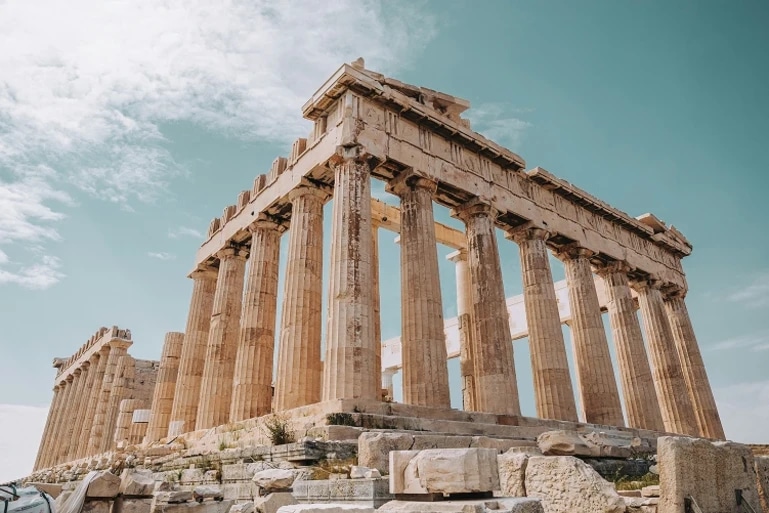
Experience the ancient wonders of Athens with a private guide. From the Acropolis and Parthenon to the lively Plaka district and hidden tavernas, explore the city’s history and culture in a unique, personalized way.
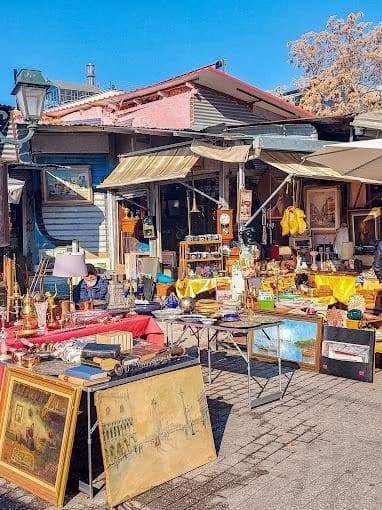
This square lies just to the north of Hephaestus street and south of Ermou street. It may take its name from a neighborhood of Ethiopians (i.e. Abyssinians) which might have lived in the vicinity at one time. After the Ottoman period . There are some genuine antiques and traditional objects, trendy collectables, stamps, coins and old books sold by street vendors.
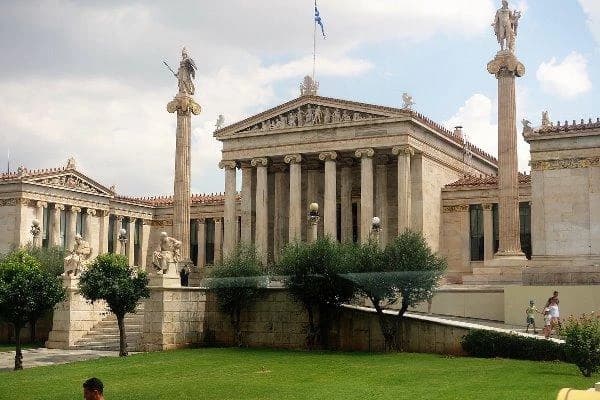
The Academy of Athens is Greece's national academy, and the highest research establishment in the country. It was established in 1926, with its founding principle traces back to the historical Academy of Plato, and operates under the supervision of the Ministry of Education. The Academy's main building is one of the major landmarks of Athens.
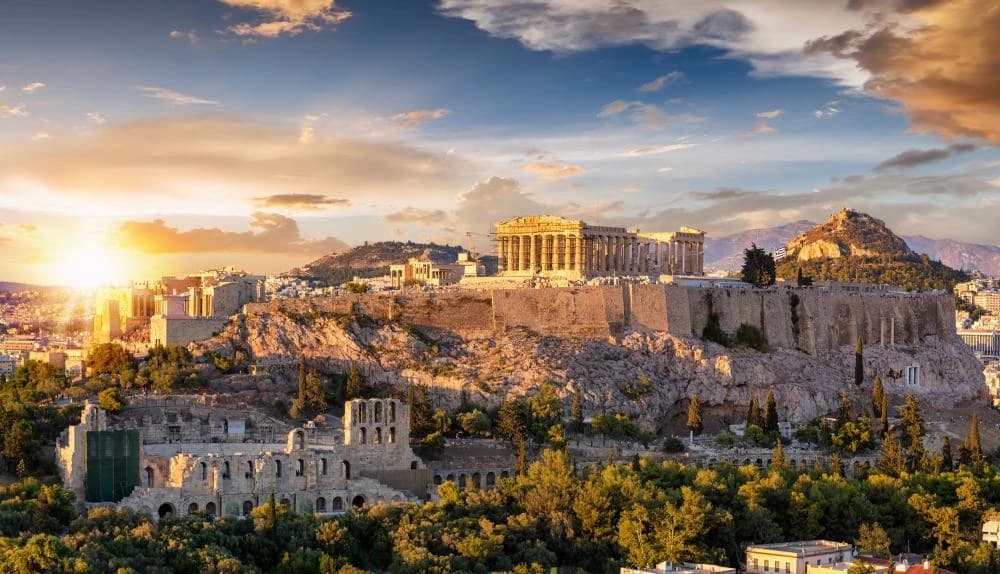
The Acropolis of Athens, meaning “high point city” in ancient Greek is an iconic symbol which stands 156 meters above the sea leve, home to numerous temples and other important buildings. It has a privileged location and is visible from most parts of the city. The Acropolis in Athens was a fortress and military base during the Neolithic period, due to its position which offers a great view of the land and the sea. During the Mycenaean times, it became a religious center, dedicated to the worship of the goddess Athena. It is said that the place was declared a province only to the gods by an oracle, and therefore stopped being inhabited by the people. The three temples of major importance, the Parthenon, the Erechtheion and the Temple of Nike, were erected during the classical period (450-330 B.C.) on the remains of earlier temples. The Persians destroyed some parts of the Acropolis during the battle of Salamis in 480 B.C. The founder of the Athenian democracy, Pericles, was the one who rebuilt it under the form it has kept until today. He made it into a city of Temples, and, as everything else created at that period, turned it to the ultimate achievement in terms of classical Greek architecture and sculpting.
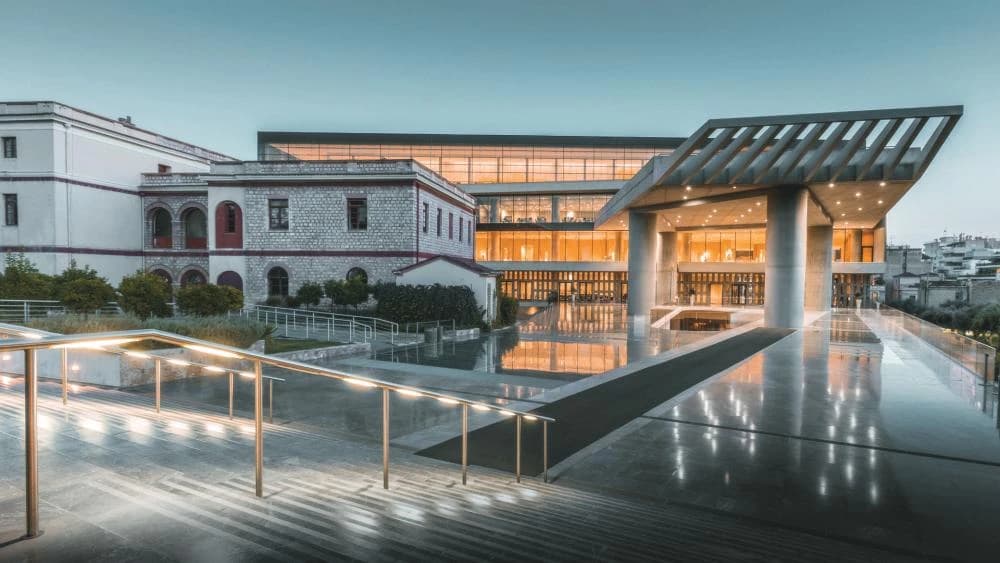
The New Acropolis Museum was opened to preserve and exhibit the findings of the Acropolis of Athens, displaying the history of Athens and the citadel’s importance as a religious site in Ancient Athens. The New Acropolis Museum was erected just 300 meters from the Parthenon in the historical area of Makriyianni. The building designed by Bernard Tschumi is an extremely modern edifice and completely covers an archeological excavation. The top floor of the museum is extremely special, since it was built with the same dimensions as the Parthenon and is shifted 23 degrees from the rest of the edifice. It is built in this way to look upon the Acropolis and visitors can contemplate it from above. The Acropolis Museum houses a large collection of relics excavated from the archaeological site of the Acropolis. The remains of the Ancient City are located all along the bottom of the museum, underneath the glass floor. The exhibits also display numerous sculptures and classical period artifacts from the various temples on the Acropolis and fragments of the religious buildings, like the Propylaea, Temple of Athena Nike and Erechtheion. The Parthenon room, on the top floor of the museum, visitors will find items of greater value, once belonging to the Parthenon. Some of the highlights of the museum include the Caryatids, beautifully sculpted columns in the shape of a female figure.
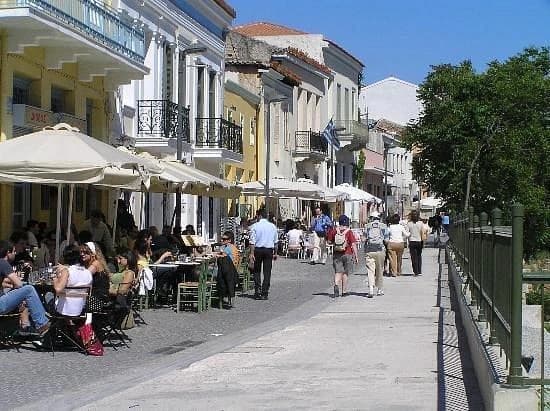
Adrianou claims to be the oldest street in Athens dating back to BC era, running around the Acropolis base, connecting it with the Hadrian's library and ancient Agora. As one my conclude it's packed with souvenir shops and restaurants.
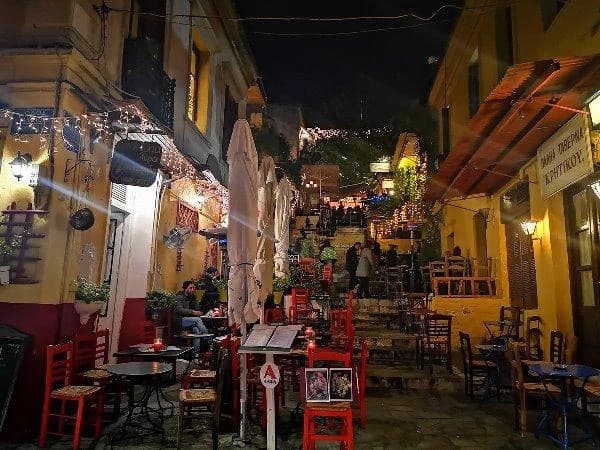
Anafiotika is a scenic tiny neighborhood of Athens, part of the old historical neighborhood called Plaka. It lies in northerneast side of the Acropolis hill. The first houses were built in the era of Otto of Greece, when workers from the island of Anafi came to Athens in order to work as construction workers in the refurbishment of King Othon's Palace.
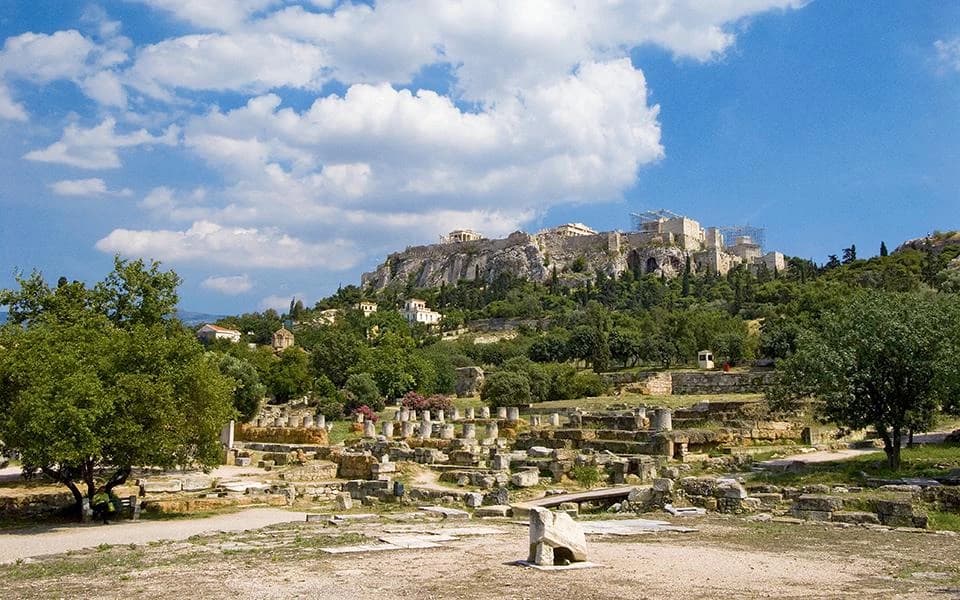
The Ancient Agora of Athens was the social, political and commercial hub of the city during Ancient Greece. This "meeting place" is the best kept example of an Agora. Agoras in Ancient Greece were public squares where the inhabitants would meet to discuss politics and their quotidian lives. It is also where elections, religious celebrations, athletic competitions and various types of shows were held. The first excavations in the Agora area took place between 1859 and 1912. During the following years, important remains, including large sculptures, were found in a deep trench when the railway tracks were being installed. Although most of the buildings in the Agora are not very well preserved, some of the most prominent edifices have been reconstructed extremely well like the Stoa of Attalos, an ancient department store, currently housing the Ancient Agora Museum. The Agora is also home to the Temple of Hephaestus, one of the best-preserved temples of Ancient Greece. It was built between 449 and 415 BCE. The Ancient Agora is one of the capital’s most special landmarks. Although most of the area’s constructions are badly damaged, the historic importance of this archaeological site makes it a must-see visit for all visitors.
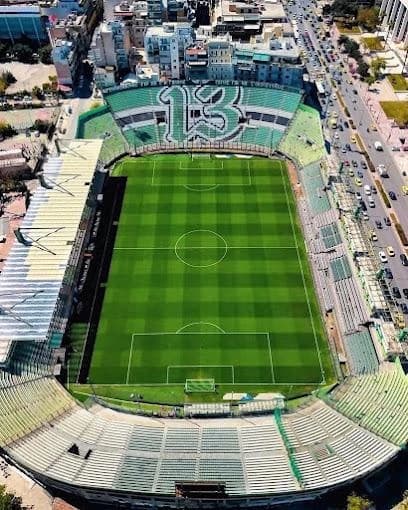
Apostolos Nikolaidis Stadium, commonly known as Leoforos Alexandras Stadium , is a football stadium and multi-sport center in Athens, Greece. It was inaugurated in 1922 and is the oldest football stadium in Greece currently active.
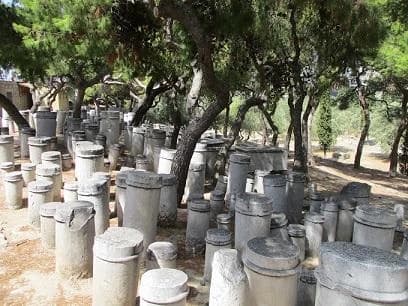
The Kerameikos Archaeological Museum is located in Kerameikos, Athens, Greece and was built in 1937. It houses many important early Geometric art pieces that date as far back as 860 BC. It was expanded in the 1960s by the Boehringer brothers of Boehringer Ingelheim fame.
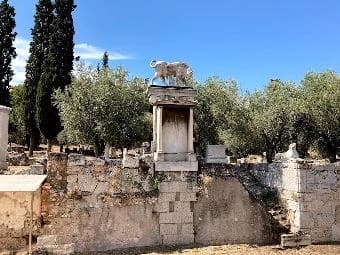
Kerameikos is an area of Athens, Greece, located to the northwest of the Acropolis, which includes an extensive area both within and outside the ancient city walls, on both sides of the Dipylon Gate and by the banks of the Eridanos River. It was the potters' quarter of the city, and was also the site of an important cemetery and numerous funerary sculptures erected along the Sacred Way.
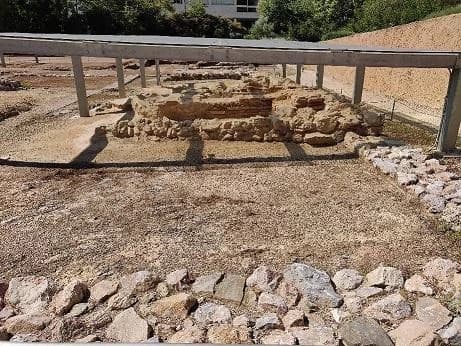
The Lyceum was a temple dedicated to Apollo Lyceus. It was best known for the Peripatetic school of philosophy founded there by Aristotle in 334 BC. Aristotle fled Athens in 323 BC, and the university continued to function after his lifetime under a series of leaders until the Roman general Sulla destroyed it during his assault on Athens in 86 BC. The remains of the Lyceum were discovered in modern Athens in 1996 in a park behind the Hellenic Parliament.
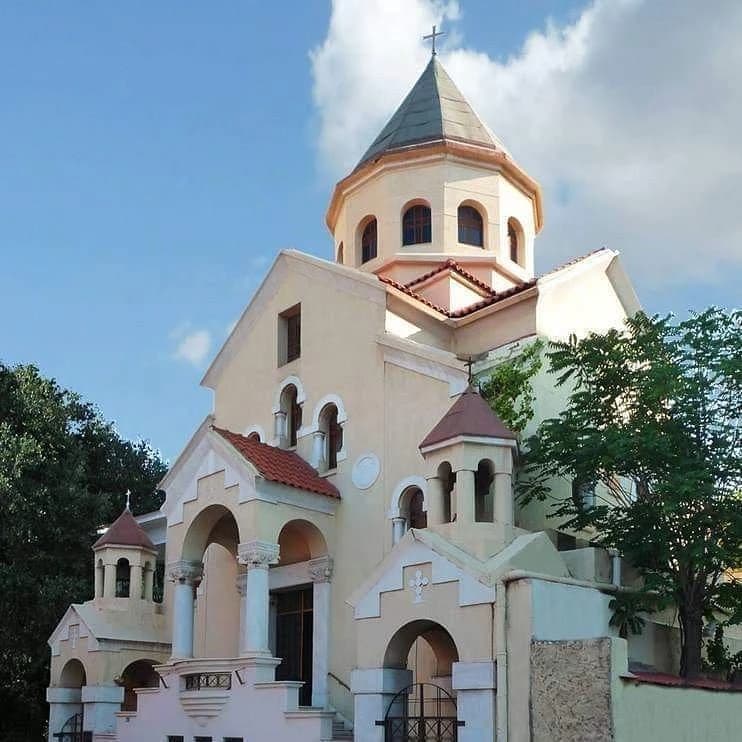
The St. Gregory the Illuminator Cathedral also called Armenian Church of St. Gregory the Illuminator is an Armenian Catholic cathedral located at Neos Kosmos in Athens, Greece. It functions as the seat of the Armenian Catholic Ordinariate of Greece a jurisdiction created for Catholics of the Armenian rite that was established in 1925 by Pope Pius XI and directly under the administration of the Holy See.
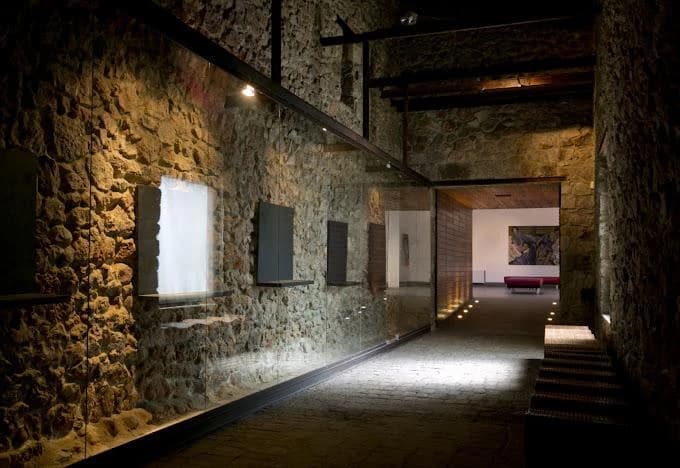
The Athinais Cultural Center is a "multi-purpose" conference complex in Athens, Greece. It hosts business events, cultural activities, and entertainment. It also contains an art gallery with a permanent exhibition of contemporary Greek art. The building was originally a silk factory, since renovated.
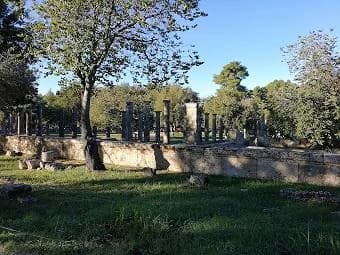
The Bouleuterion of Ancient Olympia was a building inside the archaeological site of Olympia. A bouleuterion was an assembly house for local legislatures and other meetings. Building complex comprising two main buildings, a square room, and a stoa.
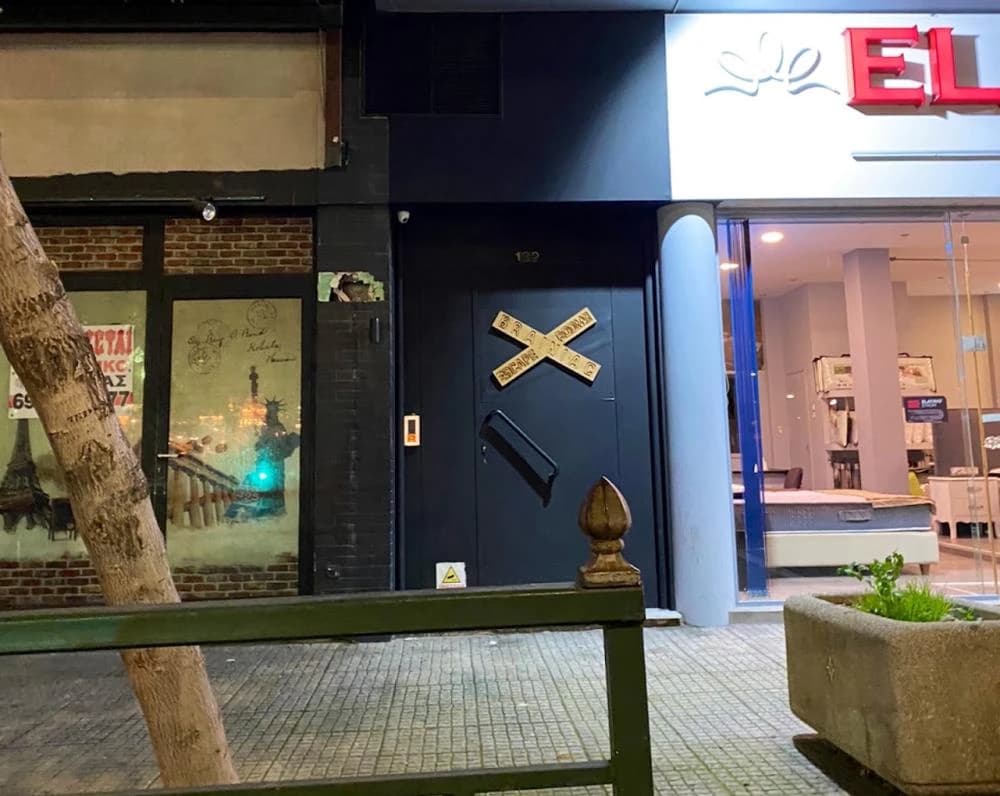
Brainiac Escape Rooms is company offers a complete escape adventure as rooms offer endless fear-horror, action and suspense, laughter and a variety of puzzles for all tastes.
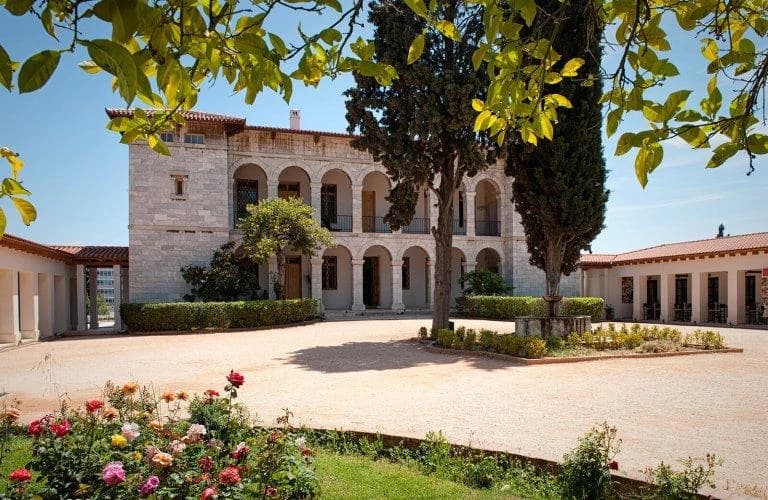
The Byzantine and Christian Museum, founded in 1914, features a small art collection specialized in religious artifacts, dating from the fourth to the twentieth century. The gallery is housed in a beautiful Byzantine-style villa constructed in 1848, which used to belong to a French Dame. The museum’s permanent collection is divided into three main sections; the first part is specialized in art dating from Antiquity to Byzantine period; the second section features Byzantine works of art and the third displays items dating from Byzantine to the Modern period. The gallery houses approximately 25,000 items, including religious artifacts, mosaics, sculptures, paintings and embroidery work from the vast Byzantine Empire. Two of the museum’s highlights are: a reconstruction of a fifth century Christin Basilica and a ninth century Byzantine church. Renovated in 2004, the Byzantine and Christian Museum displays one of the most impressive Byzantine Art collections in the world. It features extremely interesting exhibitions, for example one that explains how the Parthenon was transformed into a Christian Church during a certain period.
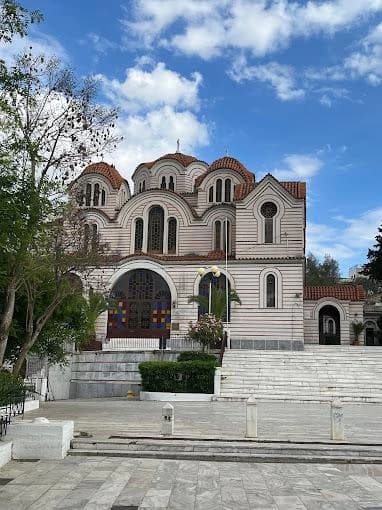
The church of St. Marina is located in Thissio district in Athens, on a hill near the National Observatory. Originally, the Church was carved in the rock, and inside it was covered with numerous wall paintings. It is now a baptistery. The foundation was laid in 1922. The construction, led by the talented architect Achilleos Georgiadis, was started in 1924 and finished in 1927. is made in an elegant Byzantine style.
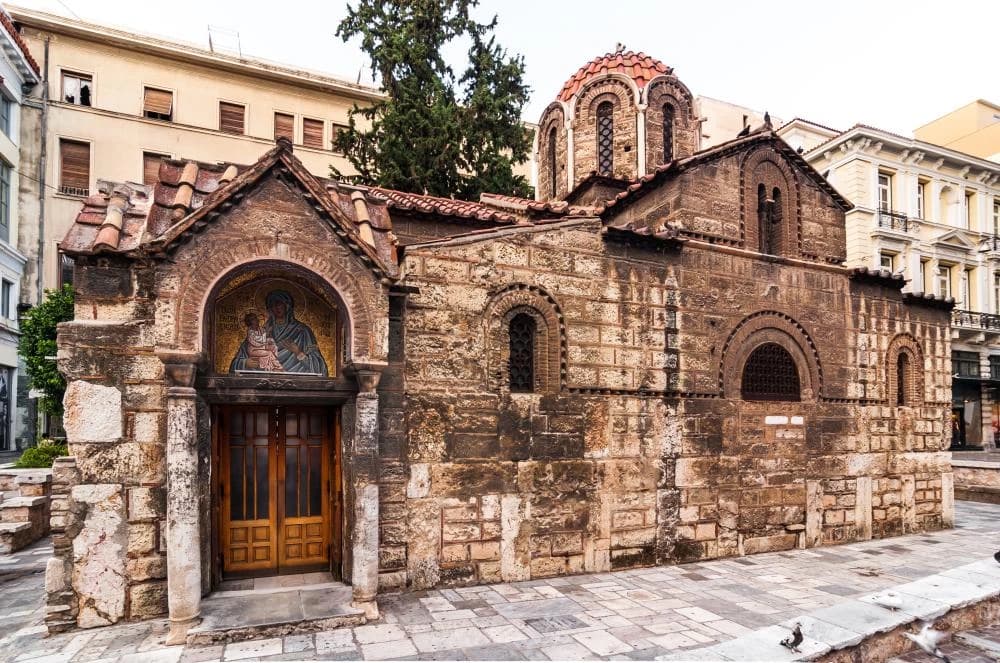
Panagia Kapnikarea is an 11th-century church dedicated to Panagia and is situated in the middle of the busy Ermou shopping strip, on the way from Syntagma to Monastiraki square. The church is dedicated to Panagia and has a unique name “Kapnikarea” which may refer to the Byzantine tax “kapnikon” or some say it derives from the word “kapnismeni” which in Greek means “smoked”, due to the marks of fire that are seen on the building. The church is filled with a rich history and during the Greek Independence War, it was damaged, like most other monuments in Athens. In 1834, the year of the construction of Ermou Street, authorities had planned to demolish the church. This was during the reign of King Otto, as it was not included in the urban designs of his architect, Leo von Klenze but it was saved after the intervention of the King of Bavaria, Ludwig. Today, the church belongs to the University of Athens and continues to stand out as a unique part of the city’s history, attracting thousands of locals and tourists who walk inside each day to light a candle, say a prayer and look around this sacred site.
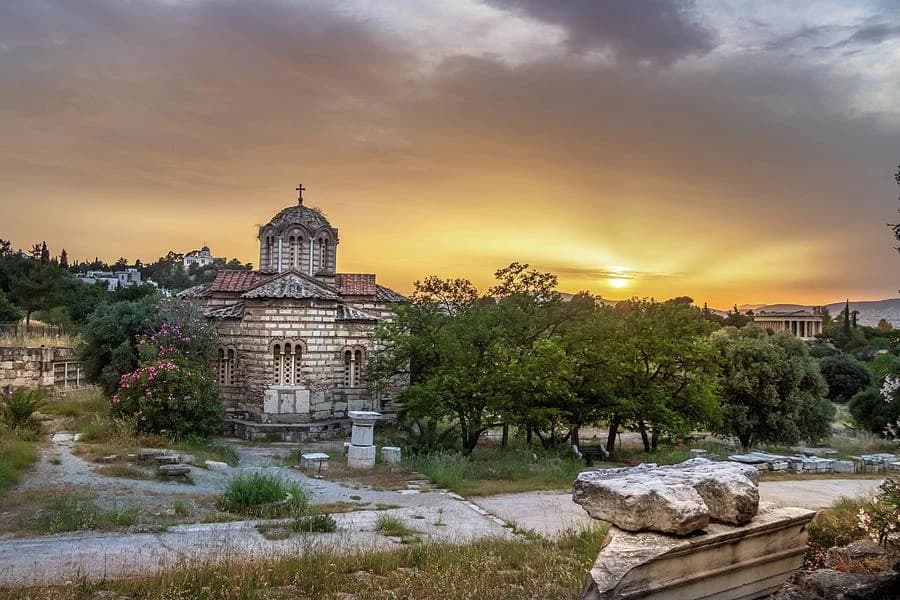
The Church of the Holy Apostles is located on the western side of the Ancient Agora of Athens and it dates from the middle 10th century. This church is particularly significant as this is the only monument in the Agora, other than the Temple of Hephaestus, to survive intact since its foundation. The architecture of the church is also significant as it marks the beginning of the so-called "Athenian type", combining the simple four-pier with the cross-in-square forms. The altar and floor were made from marble. The floor plan had a cross with apses on four sides and four columns supporting the dome. Many interesting wall paintings from the 17th century survive in this church. Constructed partly over a 2nd-century sanctuary of the Nymph's (nymphaion) and partly on a demolished Byzantine residence, the Church of the Holy Apostles is also known as Holy Apostles of Solaki. The Solakis were either the family who sponsored a later renovation of the church or a family who populated the area around the chapel in the 19th century. The last restoration of the church was between 1954 and 1957.
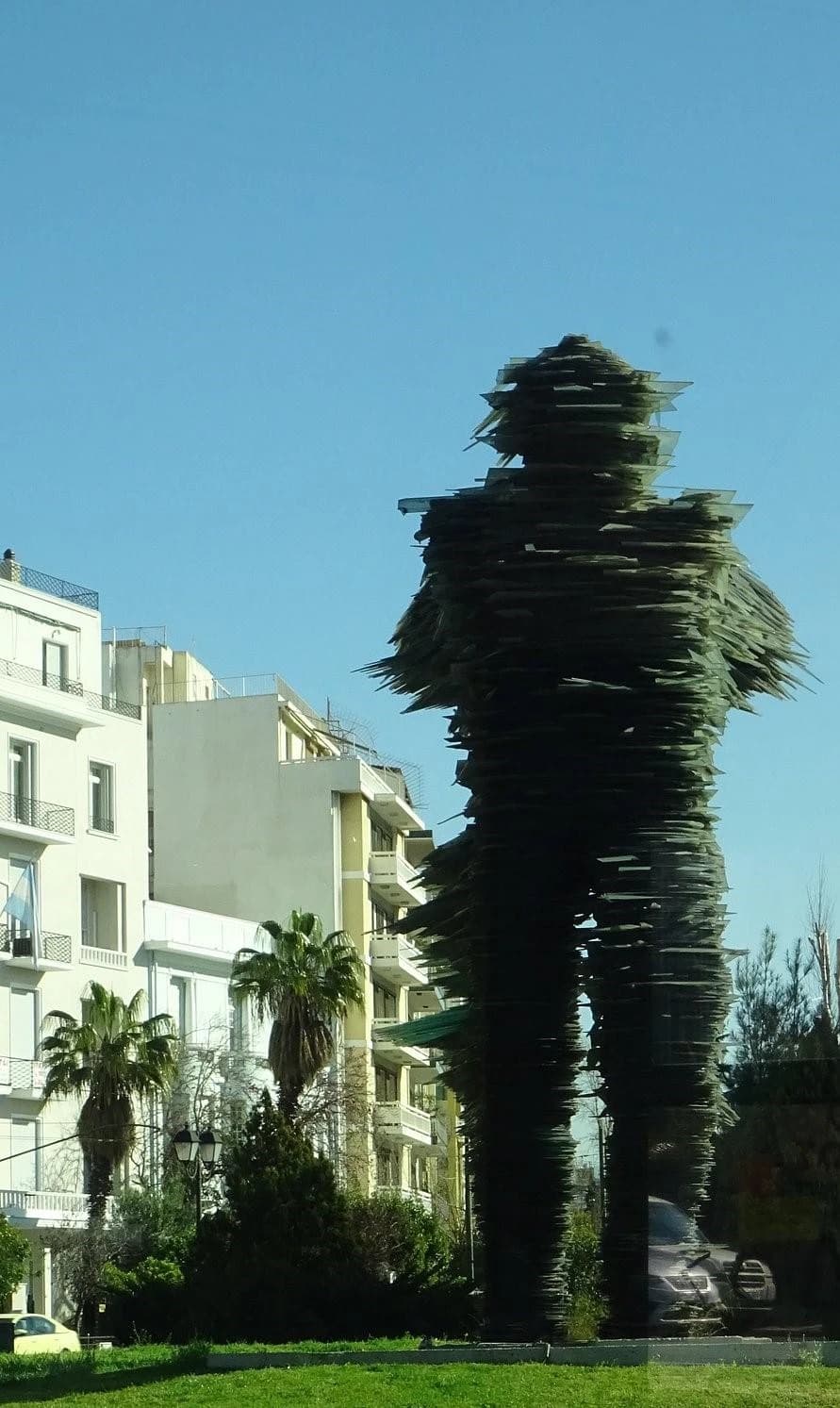
Dromeas (“Runner” in English) is a 12-meter-tall glass and iron sculpture created in 1994 by Athens artist Costas Varotsos. Dromeas, also called The Runner, is made of individual pieces of glass stacked atop each other to take the blurred shape of a runner in motion.
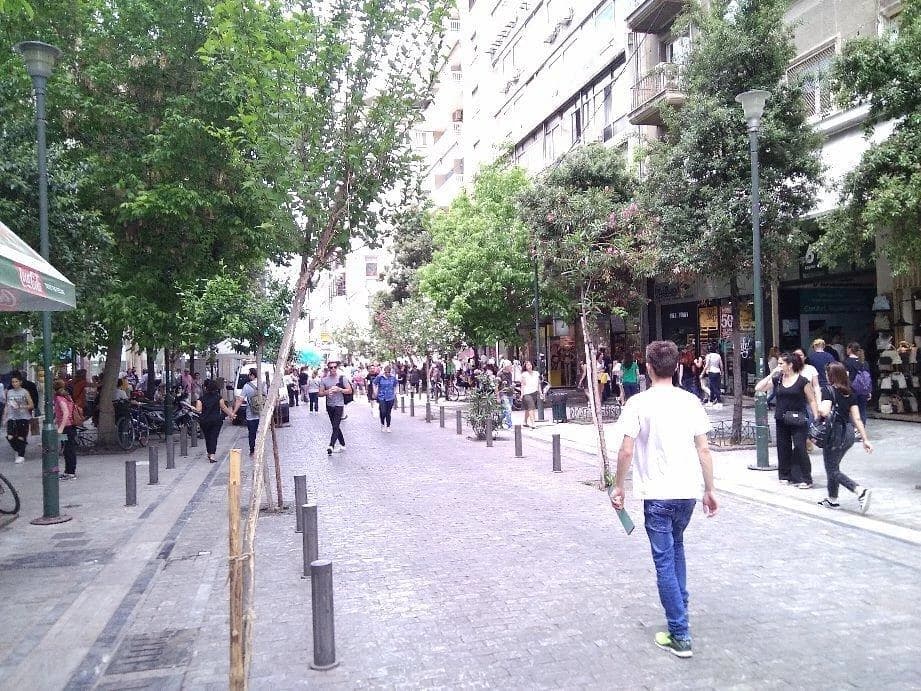
Ermou Street is a one and a half kilometer-long road in central Athens, Greece, connecting Kerameikos archaeological site with the Syntagma Square . Ermou street is a commercial avenue which has been turned into a pedestrian only street.
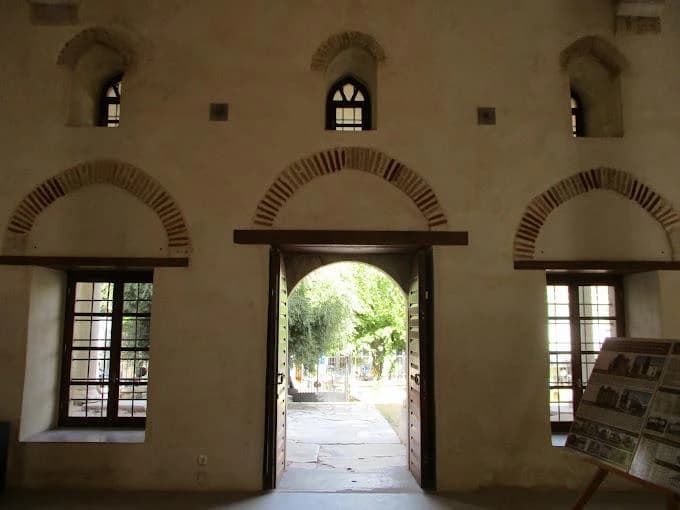
The Fethiye Mosque is a 17th-century Ottoman mosque in central Athens, Greece. Repurposed after Greek independence in 1834, it fell into disrepair, but after renovations it was reopened to the public in 2017 and is presently being used for cultural exhibitions.
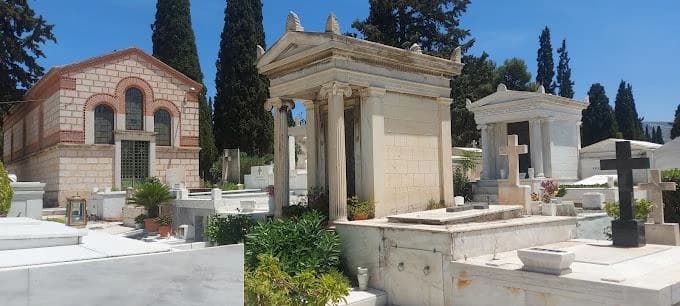
The First Cemetery of Athens is the official cemetery of the City of Athens and the first to be built. It opened in 1837 and soon became a prestigious cemetery for Greeks and foreigners. The cemetery is located behind the Temple of Olympian Zeus and the Panathinaiko Stadium in central Athens.
The First Greek Evangelical Church is a historic church in the center of Athens founded in 1858 and its history is linked to the modern history of the Greek nation. It is the oldest Protestant church in the country and as such, it understands its special role as a resource center that will serve the wider evangelical community in Athens, Greece, and the Balkans.
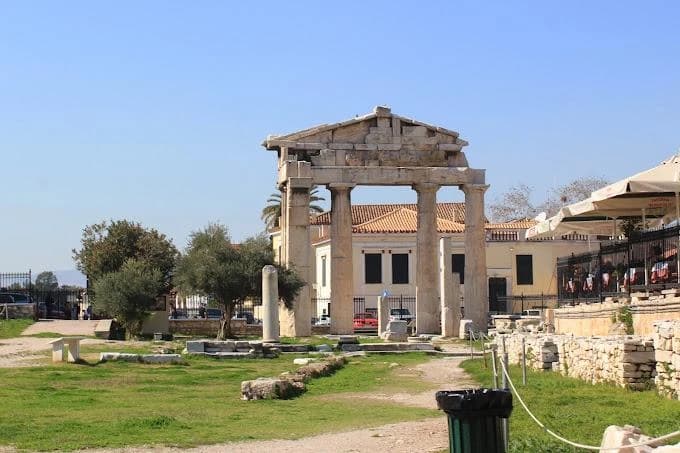
The Gate of Athena Archegetis is situated west side of the Roman Agora, in Athens and considered to be the second most prominent remain in the site after the Tower of the Winds. Constructed in 11 BCE by donations from Julius Caesar and Augustus, the gate was made of an architrave standing on four Doric columns and a base, all of Pentelic marble. A dedicatory inscription offers an insight into the time and circumstances of the monument's construction.
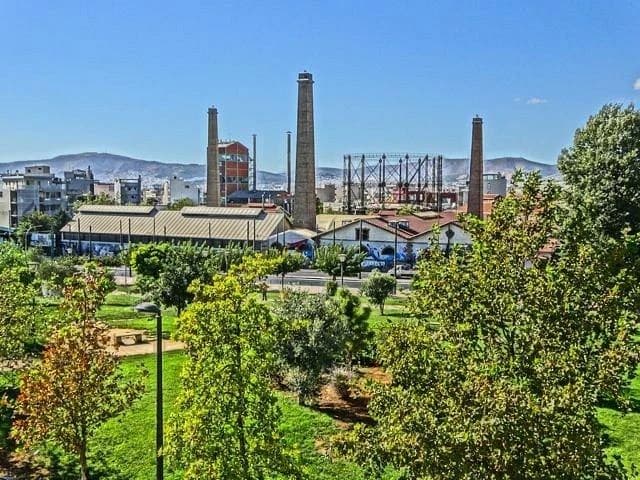
The trendy neighborhood of Gazi is known for its Technopolis, a former gas plant that houses an interactive museum on industrial gas, contemporary art spaces and a venue for concerts ranging from indie, jazz and world music. The mural-filled streets that surround Gezi Square include small Greek and international restaurants and gay bars.
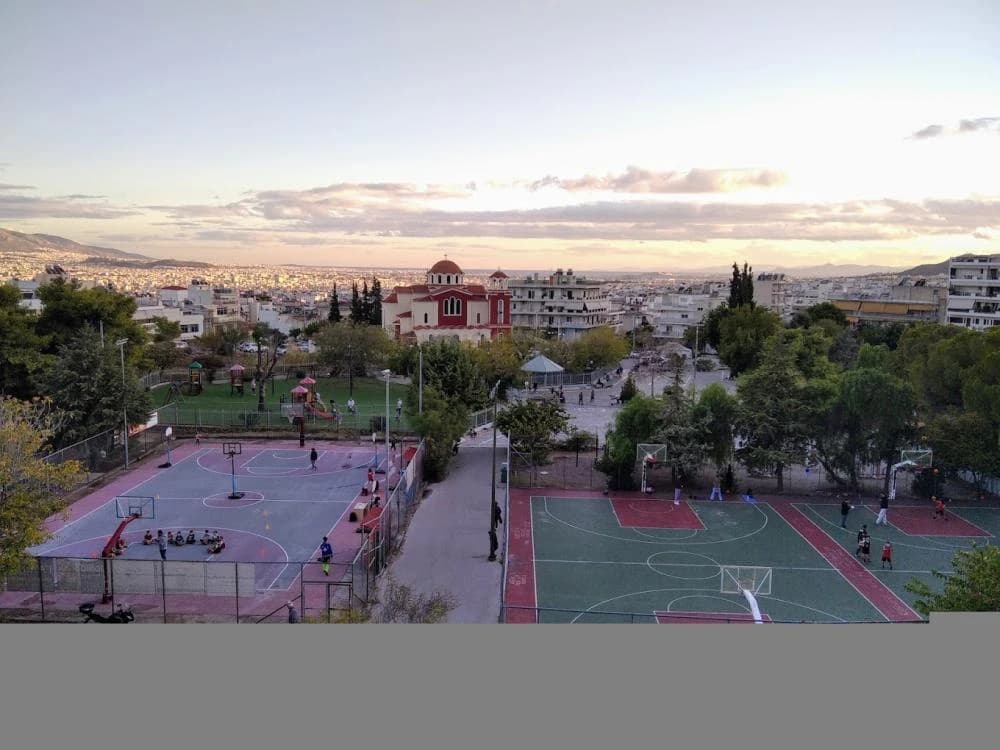
Grove Saint Demetrios is a park, recreation area ground, hill, interesting place, public garden located in Petroupoli . Great for workout and a fast picnic.Great place to run and excersize, several of trails with different difficulty levels, open air gym, taps with running water, playground for kids etc.
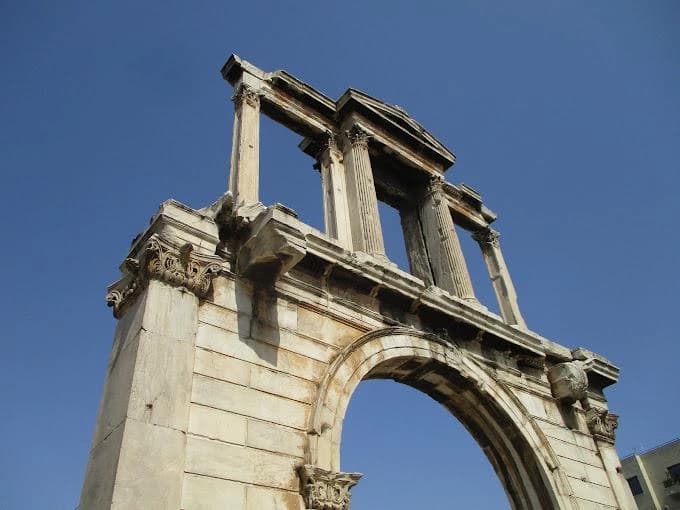
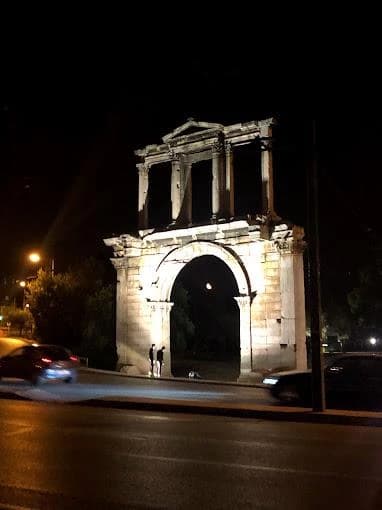
The Arch of Hadrian, most commonly known in Greek as Hadrian's Gate, is a monumental gateway resembling—in some respects—a Roman triumphal arch. It spanned an ancient road from the center of Athens, Greece, to the complex of structures on the eastern side of the city that included the Temple of Olympian Zeus.
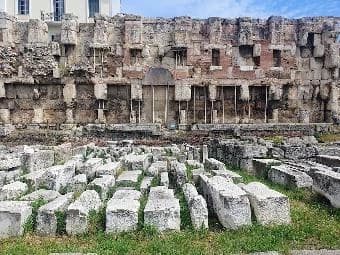
Hadrian's Library was created by Roman Emperor Hadrian in AD 132 on the north side of the Acropolis of Athens. The building followed a typical Roman forum architectural style, having only one entrance with a propylon of Corinthian order, an inner courtyard surrounded by columns and a decorative oblong pool in the middle. The library was on the eastern side where rolls of papyrus "books" were kept.
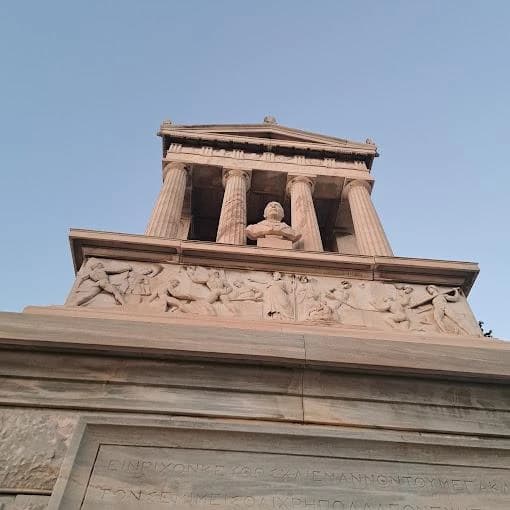
Heinrich Schliemann's tomb is in the First Athenian Cemetery and is the final resting place of the German merchant and archaeologist Heinrich Schliemann (1822-1890). Ziller's tombstone for Heinrich Schliemann, which dominates the entrance area of the cemetery, in the First Athenian Cemetery shows, down to the smallest detail.
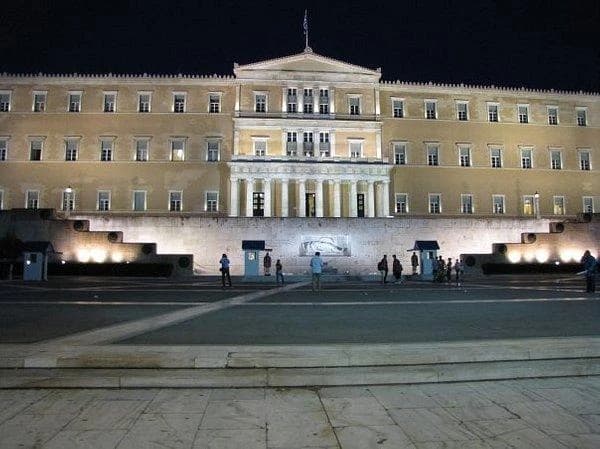
The Hellenic Parliament or Greek Parliament, formally known as the Parliament of the Hellenes and also known as the Hellenic Bouleterion, is the unicameral legislature of Greece, located in the Old Royal Palace, overlooking Syntagma Square in Athens.
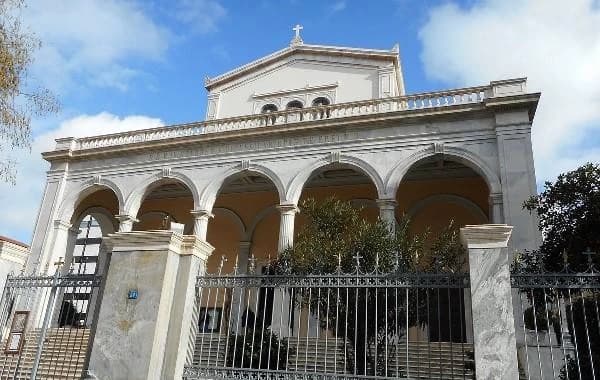
The Cathedral Basilica of St. Dionysius the Areopagite is the main Roman Catholic church of Athens, Greece, and the seat of the Roman Catholic Archbishop of Athens. The church is a three-aisle basilica in the neo-Renaissance style. The German architect Leo von Klenze drafted the plans for the cathedral at the behest of King Otto of Greece.
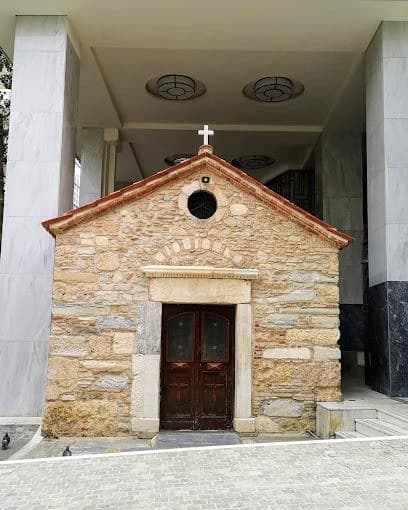
The Agia Dynami (Holy Power) church was built in the 16th century. Following the victory in the Greek War of Independence in the 1830s, the buildings around the church were demolished so the street could be widened to serve the growing needs of the city. In the 1950s, the area was again redeveloped .
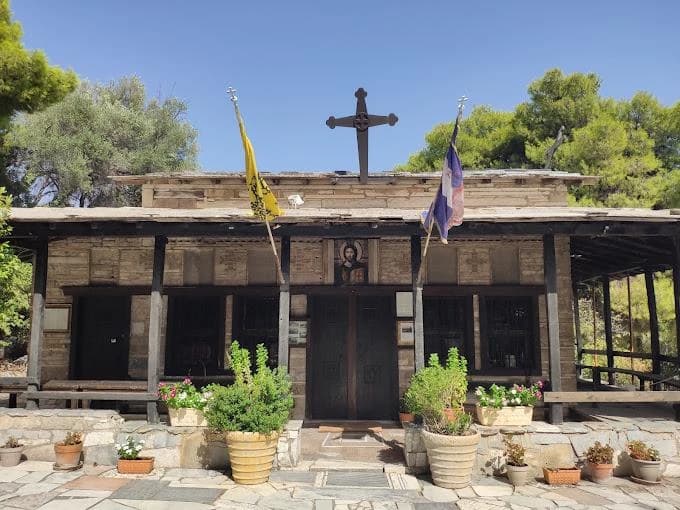
It is considered one of the most picturesque churches of Athens and is a frequently preferred destination by Athenians as an ideal spot for weddings, baptisms . The church, which is located in a wooded area at the base of Philopappos Hill, originally dates to the ninth century.
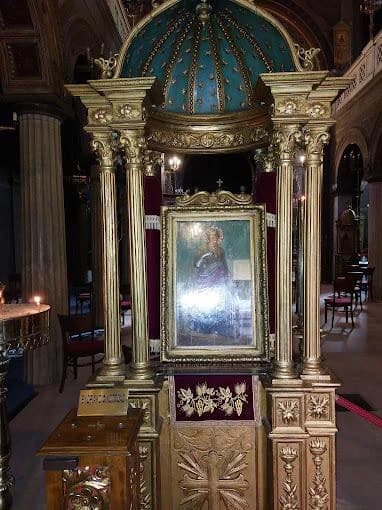
The Church of Saint Irene, also known as Hagia Irene or Hagia Eirene, is an Eastern Orthodox church in the city of Athens, Greece, built on the site of an older medieval church, located on Aiolou Street. built from the ruins of as many as seventy Byzantine churches in Athens that were demolished.It also contained material from ancient ruins from various sites of the city.
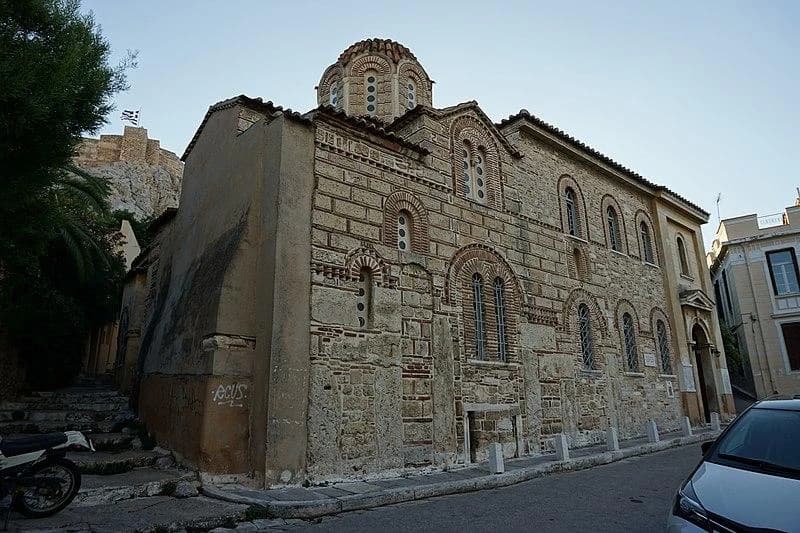
The Byzantine imperial church of St Nicholas Ragkava is situated in the north-east side of the Acropolis. It is one of the most beautiful and popular historical churches of the Plaka neighborhood of Athens. According to historical sources, the name Ragkavas belongs to an important family from Constantinople (Istanbul) and Athens, the most well-known member of which was the Byzantine emperor Michael A’ Ragkave (811-813).
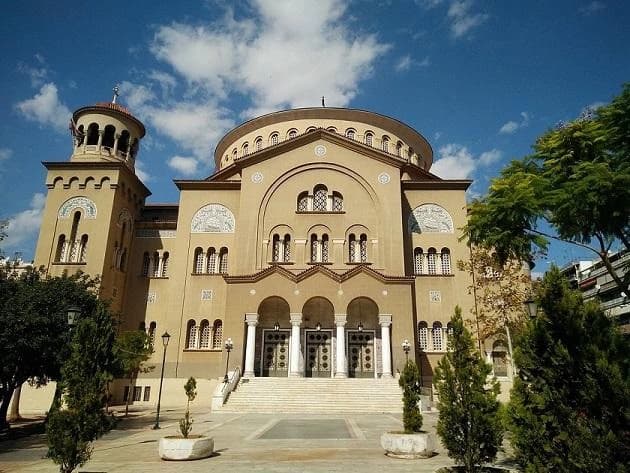
The church of Saint Panteleimon of Acharnai is a Greek Orthodox basilica in the center of Athens. It has a maximum length of 63 m and width 48 m and it is the biggest church of Greece. The church is in the downtown of the modern city of Athens, close to the high-traffic Acharnon Avenue .The foundations of the church were laid on 12 September 1910 by King George I of Greece and it was consecrated on 22 June 1930.
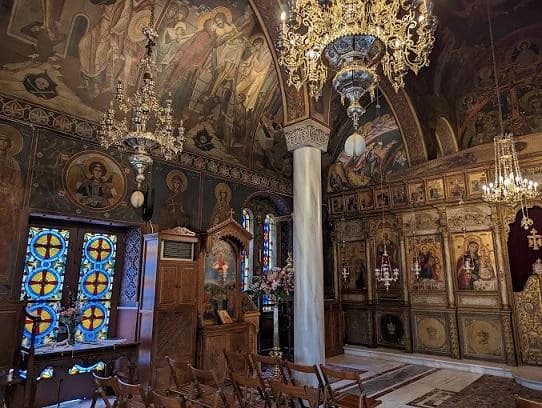
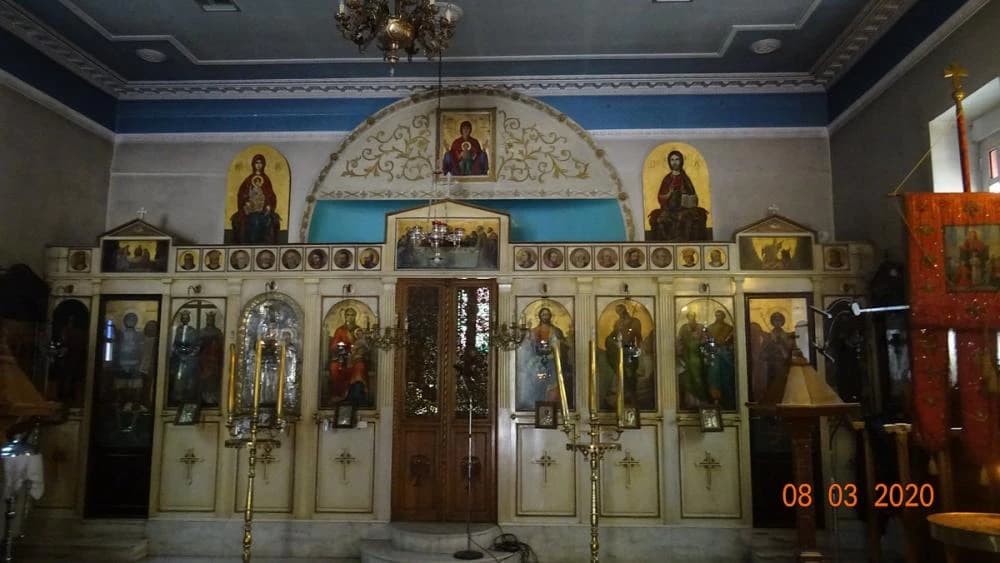
Sophia's Church of Acropolis is part of the Meropion Foundation (founded in 1914). A small Christian Orthodox church, blending a mix of architectural styles. Some of the icons (especially the one depicting Christ's humiliation on the left as you enter) are of extreme beauty.
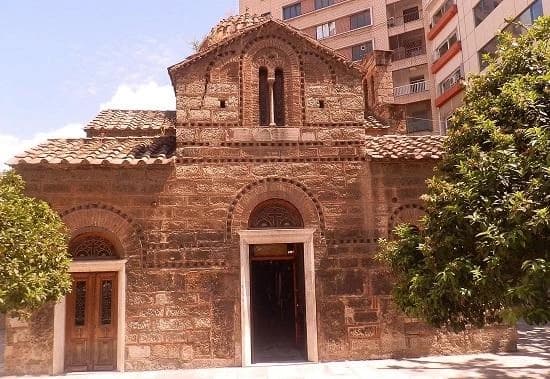
The church is near Klathmonos Square, in Evripidou and Skuleniou Street, in the center of Athens. It is an eminent Byzantine monument of Greece dated to the middle of the 11th century. It is a simple, distyle, cross-in-square church. The historical evidence on the church is a founder’s inscription walled above its entrance in the west.
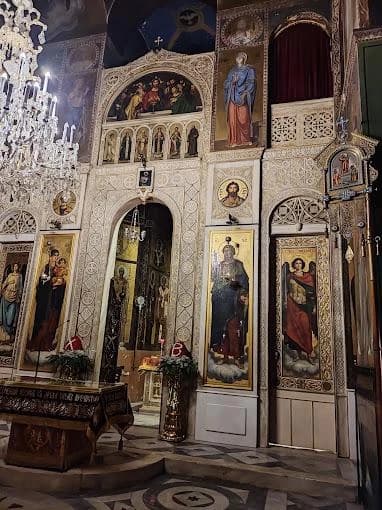
The Church of the Holy Trinity is a Byzantine-era church at Filellinon Street that serves the Russian Orthodox community of Athens, Greece. The church is known by a variety of names: the Russian Church or St. Nikodemos a name of modern origin that is a corruption of its original name Soteira Lykodimou. A number of graffiti in the church indicate that the present structure was built before 1044 (or even earlier, 1031).
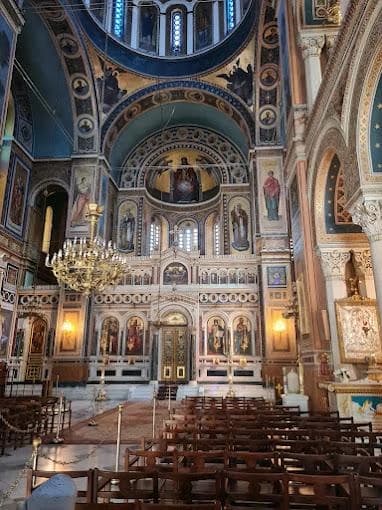
The Little Metropolis, formally the Church of St. Eleutherios or Panagia Gorgoepikoos, is a Byzantine church located at the Mitropoleos Square, next to the Metropolitan Cathedral of Athens. The church is built on top of the ruins of an ancient temple dedicated to the goddess Eileithyia. Various dates for its construction have been proposed in the past, from the 9th century under Empress Irene of Athens to the 13th century.
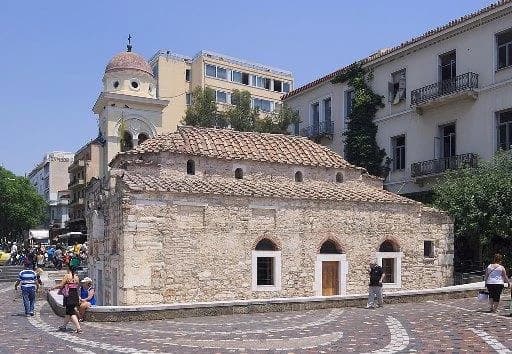
The Church of the Pantanassa or of the Dormition of the Theotokos is the 10th-century katholikon of a now-vanished monastery in Monastiraki Square, between Athinas and Mitropoleos streets, facing the Monastiraki station, in central Athens, Greece.
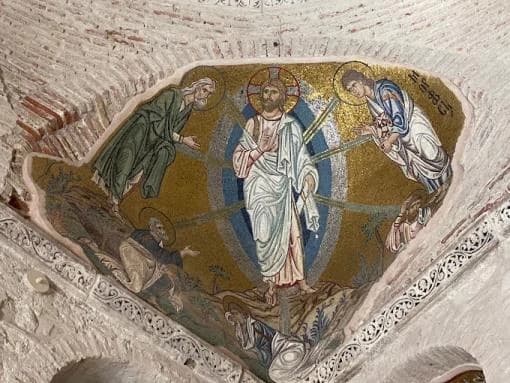
Daphni or Dafni is an eleventh-century Byzantine monastery eleven kilometers northwest of central Athens in the suburb of Chaidari, south of Athinon Avenue. It is situated near the forest of the same name, on the Sacred Way that led to Eleusis. The forest covers about 18 km², and surrounds a laurel grove.
Kolonaki Square is located in central Athens, Greece. Kolonaki itself is named after the small ancient column in the center of the square; the modern official name of this square is Plateia Filikis Etaireias named for the "Friendly Society" that supported Greek independence.
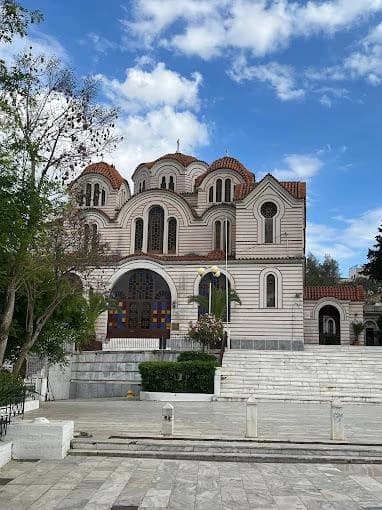
The building which is placed at 4, Korai St. was built in 1938 by Ethniki Insurance Company. Immediately after the invasion of German troops in Athens, in 1941, it was commanded by the German administration. The basements of the building were used during the German occupation as the Kommandatur detention facility. In the detention chambers, a large number of spike scriptures and inscriptions of people who passed through these spaces.
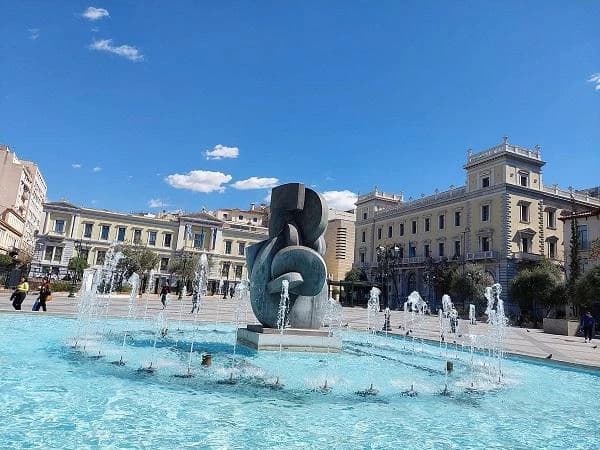
Kotzia Square is a square in central Athens, Greece. The square retains several characteristics of 19th-century local neoclassical architecture, such as the City Hall of the Municipality of Athens and the National Bank of Greece Cultural Center. It is named after Konstantinos Kotzias, former Mayor of Athens.
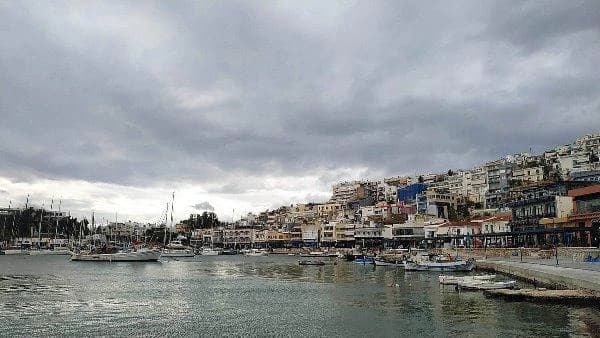
Mikrolimano is a heavenly beautiful nook and the most photographed location in Athens that will appeal to everyone who likes discovering awesome places, freshly cooked fish, Greek coffee, and vibrant nightlife. It is located northeast of the Piraeus peninsula, bordering on the Neo Faliro coastal area. The harbor has a centuries-old history.
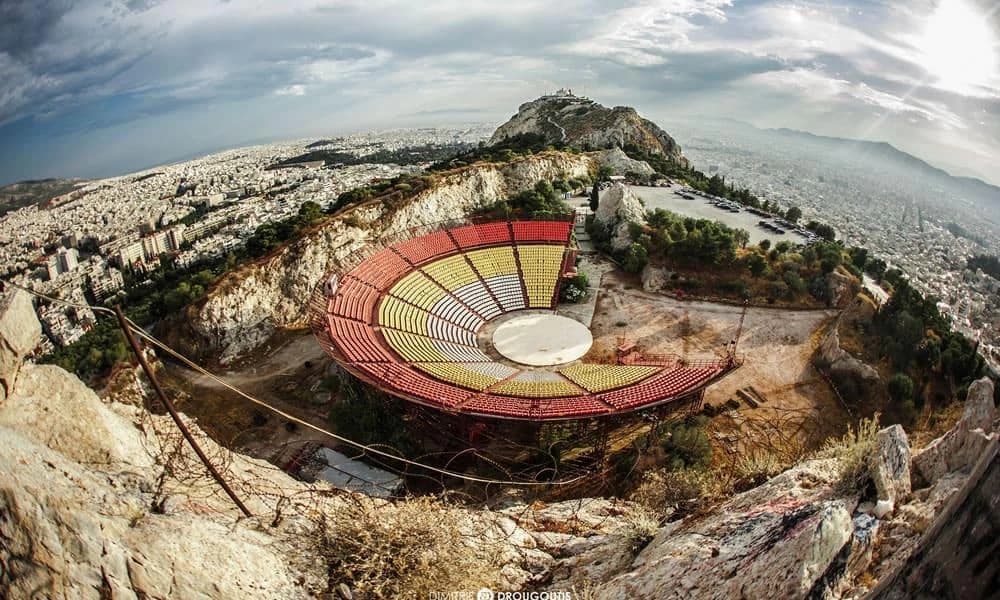
Mount Lycabettus (or Lykavittos) stands 278 meters (over 900 ft) tall and is the highest peak in Athens with superb views of the capital. It is situated in the Kolonaki neighborhood. Greek mythology tells the story that the goddess Athena yearned her temple on the Acropolis to be closer to the sky, so she seized a large rock to place on top of the Acropolis, and while she was carrying it, she received a news that startled her and dropped the 278 meter-rock creating Mount Lycabettus. Lycabettus probably means “Mountain of Wolves” in ancient Greek, as it is believed that the natural elevation was once inhabited by wolves. During the Classical period, the hill was covered by dense vegetation and the top was crowned by a temple in honor of the Greek god Zeus. The hill was deserted after the Turkish occupation. Between 1880 and 1915, the area was re-planted and is now a hill full of native trees and plants. The views of Athens, and particularly the Acropolis, are stunning from the very top of Lycabettus hill. The small Orthodox chapel of St. George, a charming white traditional Greek temple, sits at the top of the Lycabettus. There are various ways to access this tourist attraction. You can either walk up a winding road surrounded by pine trees, by car (not to the top), or on the funicular.
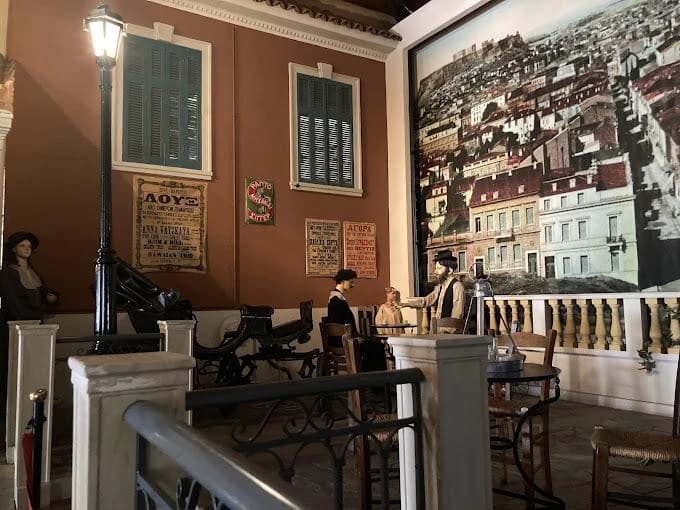
The Melina Merkouri Cultural Centre is a municipal cultural organization in Athens, Greece. It is housed in an impressive old hat factory in Thisseio. The Centre has two permanent exhibitions, the one called "Travelogue of Athens", which presents the neighborhoods of Athens at the beginning of the 20th century, and the other "The Charidimos Shadow Theater", with figures and materials of the famous shadow theater artist.
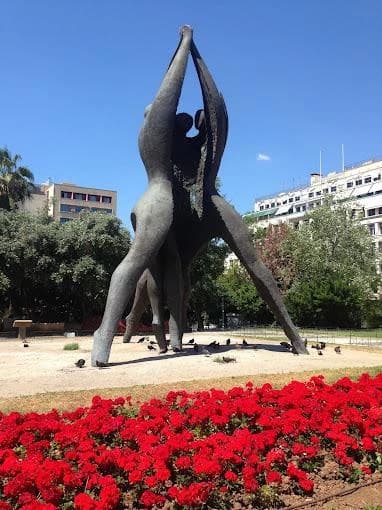
A symbolic portrayal of the official ending of the civil war. Created by the Greek sculpture Vassilis Doropoulos . The sculpture was created in 1987 and unveiled in 1989, upon the voting of a law officially ending the Civil War. It consists of three figures embracing each other with one hand the other reaching for the sky.
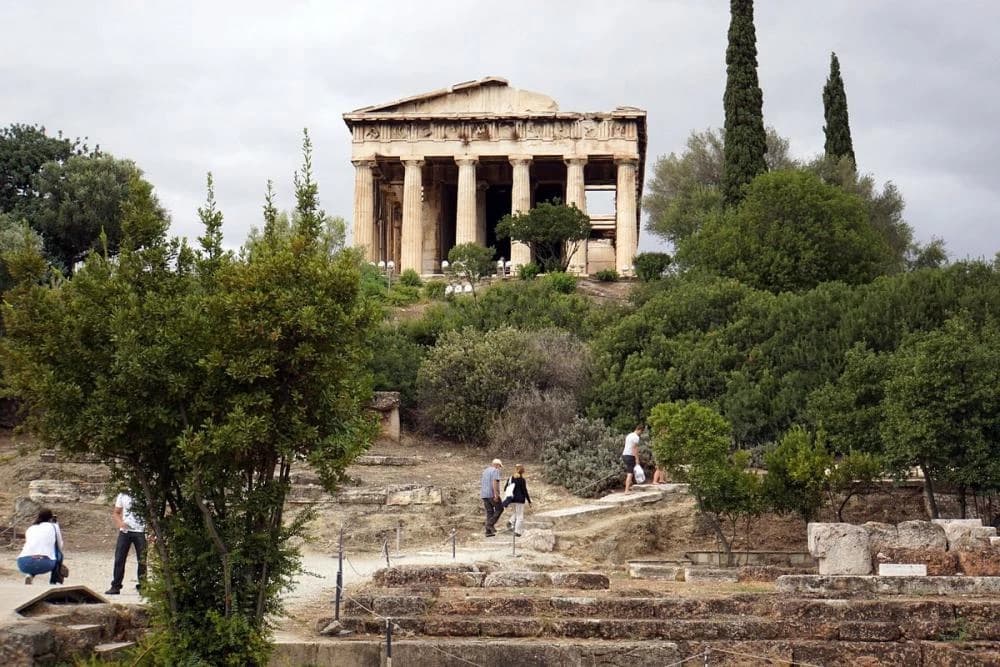
A metroon was an ancient Greek temple dedicated to a mother goddess. They were often devoted to Cybele, Demeter, or Rhea. The Athenian Metroon was located on the west side of the city's Agora, in the Old Bouleuterion, which formerly housed the city council. At the end of the 5th century BC, the New Bouleuterion was built and the council's former home converted into a temple to Cybele.
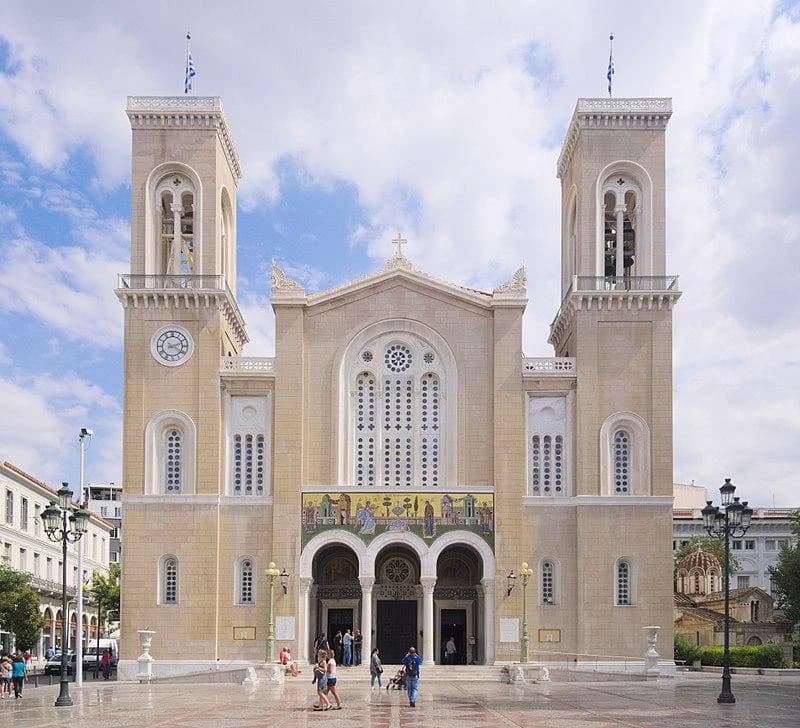
The Metropolitan Cathedral of the Annunciation, popularly known as the Metropolis or Mitropoli, is the cathedral church of the Archbishopric of Athens and all of Greece. Construction of the cathedral began on Christmas Day, 1842 with the laying of the cornerstone by King Otto and Queen Amalia. Construction started under the architect Theophil Hansen and was continued by Dimitris Zezos, Panagis Kalkos and François Boulanger.
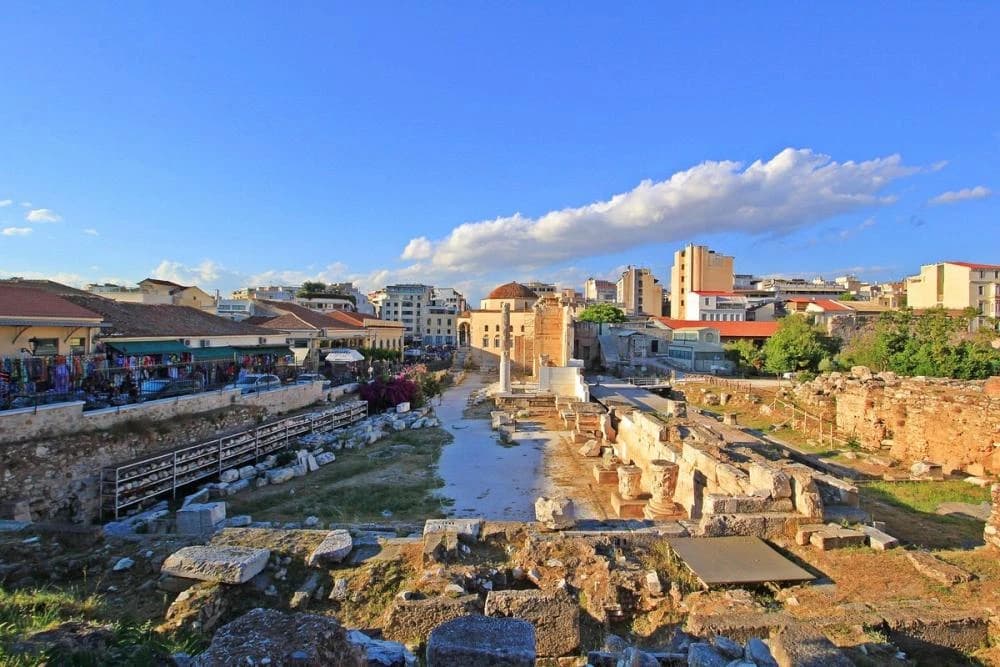
Monastiraki is a flea market neighborhood in the old town of Athens, Greece, and is one of the principal shopping districts in Athens. The area is home to clothing boutiques, souvenir shops, and specialty stores, and is a major tourist attraction in Athens and Attica for bargain shopping. The area is named after Monastiraki Square .
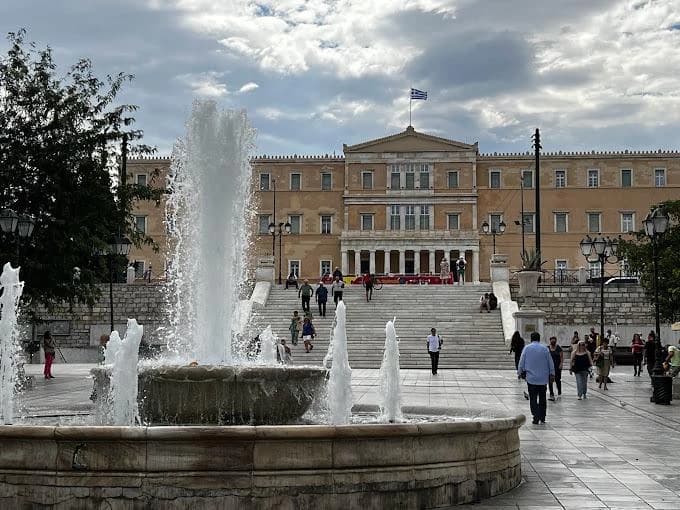
The Tomb of the Unknown Soldier is a war memorial located in Syntagma Square in Athens, in front of the Old Royal Palace. It is a cenotaph dedicated to the Greek soldiers killed during war. It was sculpted between 1930 and 1932 by sculptor Fokion Rok. The tomb is guarded by the Evzones of the Presidential Guard.
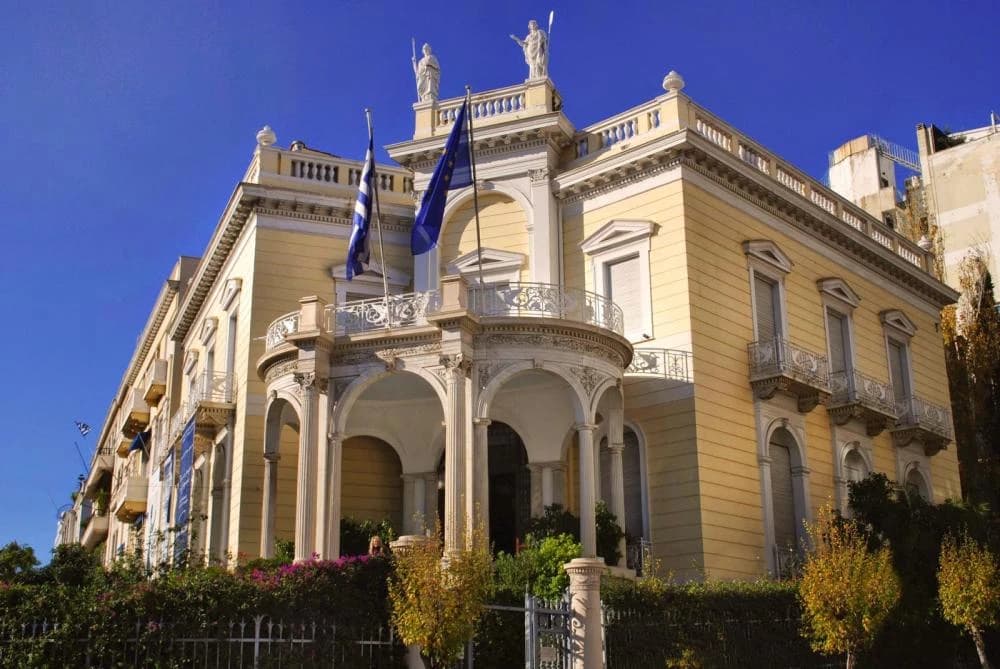
The Museum of Cycladic Art in Athens, inaugurated in 1986, features a 5,000-year-old artwork collection from the Cyclades Islands. It also displays countless pieces of art from Cyprus and Ancient Greece. The museum houses a collection of over 3,000 works of art from the Cyclades, Cyprus and Ancient Greece. This evidence shows the various cultures that bloomed from the fourth century BC till the sixth century AD in the Aegean Sea islands and East Mediterranean. The museum has four floors where the items are displayed by themes: Cycladic culture: The museum’s first floor features over 350 sculptures, vessels and figurines made of stone, marble, metal, bronze and clay. These objects are characteristic of Cycladic culture from the Early Bronze Age. Ancient Greek Art: The second-floor and fourth floor house nearly 400 artifacts dating between 2000 BC and the fourth century AD. All the pieces of art, including weapons, jewelry, vases, glass-made objects are from central Aegean and represent the spreading of Classical culture in the islands. Cypriot Art: The third floor is dedicated to the relics found in Cyprus dating from the Chalcolithic to the Modern periods. It has over 500 objects made of stone, gold, silver, bronze, clay and marble. Scenes of daily life during Ancient times: The fourth floor displays 142 objects from Antiquity. They are all labeled with an explanation of what each item was used for. Visitors will get a good idea of how daily life was for the Ancient Greeks.
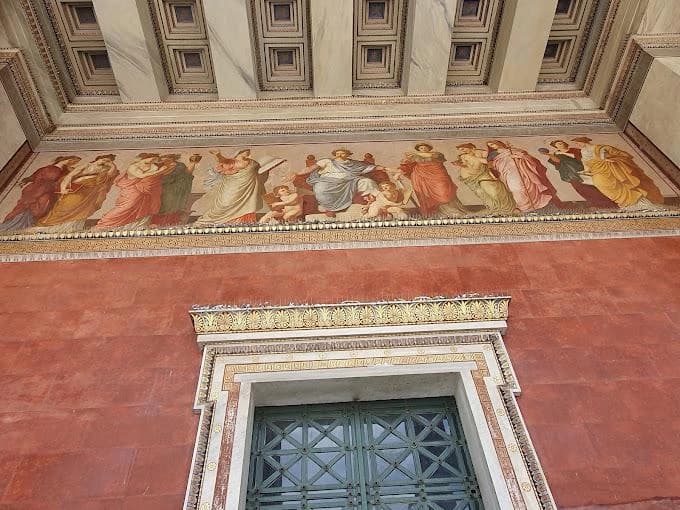
The National and Kapodistrian University of Athens, usually referred to simply as the University of Athens, is a public university in Zografou, a suburban town in the Athens agglomeration, Greece. It has been in continuous operation since its establishment in 1837 and is the oldest higher education institution of the modern Greek state and the first contemporary university in both the Balkan Peninsula and the Eastern Mediterranean.
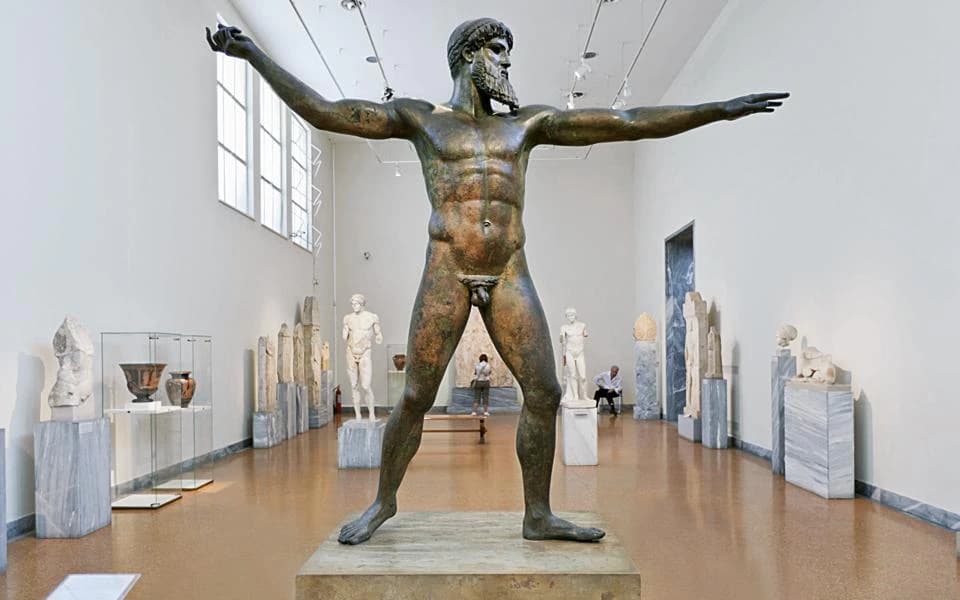
The National Archaeological Museum, founded at the end of the 19th cent. is, not only the largest archaeological museum in Greece, but its collection of Ancient Greek art is considered one of the finest in the world. The National Archaeological Museum of Athens, built between 1866 and 1889, was initially named the Central Museum. It was first established to display the numerous findings dating from the beginning of Prehistory to Late Antiquity excavated in Athens and its surroundings. In later years, it housed objects from all over the country. During World War II, the imposing neoclassical building was closed, and its pieces were placed in wooden boxes and buried to avoid the German troops from looting them. Once the war was over, the museum was reopened in 1945. The collection is displayed along the museum’s two floors and is divided into various exhibitions, including the Prehistory Collection, the Sculpture Collection, the Vase and Minor Objects Collection and the Metallurgy Collection. It also houses a varied art collection from Ancient Egypt. Visitors will get a good idea of the Ancient Greek civilization by visiting this vast museum which includes pots carved out of stone, bronze objects, jewelry, mummies, small ceramic objects, ivory, marble and glass objects. There are also several gold funerary masks.
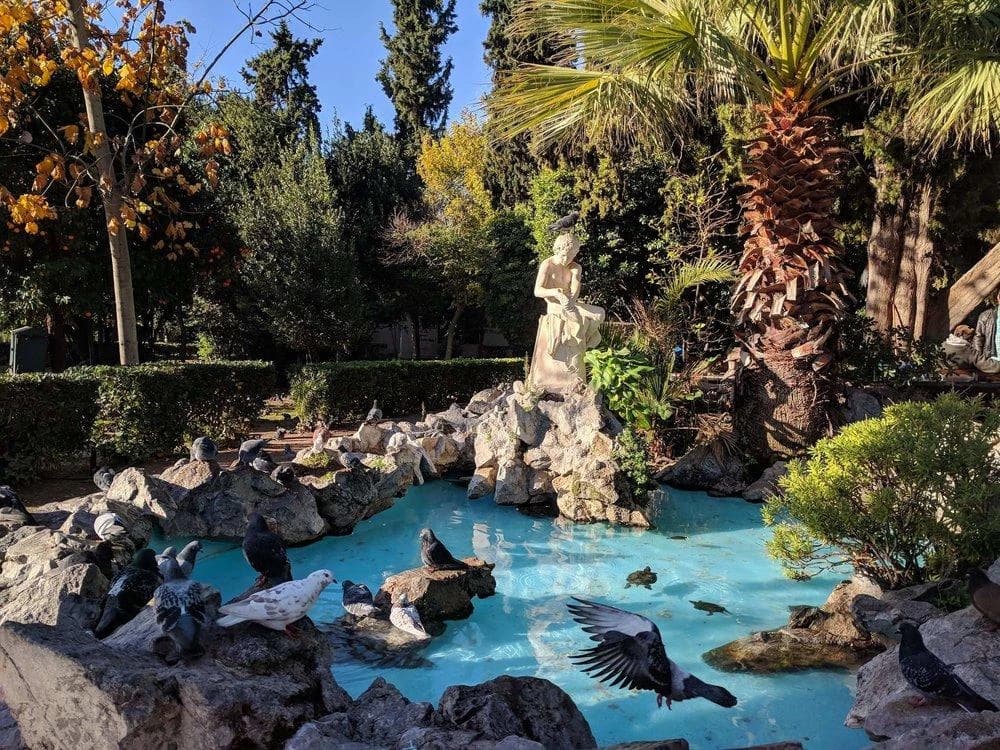
Right in the heart of Athens stands the famous National Garden of Athens, a beautiful area to escape the noisy city center and relax in a lush green environment. The National Garden of Athens, located behind the Parliament and Syntagma Square, is a green oasis in the heart of the city that covers a vast area of about 16 hectares. It continues to the south to the Zappeion grounds, across from the Panathenaic Olympic Stadium of the 1896 Olympic Games. The National Garden was created between 1838 and 1840 by order of Queen Amalia, the first queen of Greece. The German agronomist Frederick Schmidt was responsible for planting this garden. He imported more than 500 plant species from Greece and around the world, including many tropical plants. Initially, it was named Royal Garden because it was fenced and only the royal family had the right to walk there. The people were only allowed to stroll around in Zappeion, another small park next to the Royal Garden where you can find Zappeion Hall (or Zappeion Megaron) - the first building to be erected for the revival of the Olympic Games in the modern world. However, after the restoration of democracy in Greece in 1975, the Royal park was named National Garden and it opened to the public.
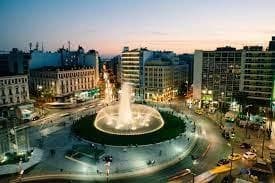
Omonoia Square is a central square in Athens. Forming the centre of Omonoia. It marks the northern corner of the downtown area defined by the city plans of the 19th century, and is one of the city's principal traffic hubs. It is served by Omonoia metro station.
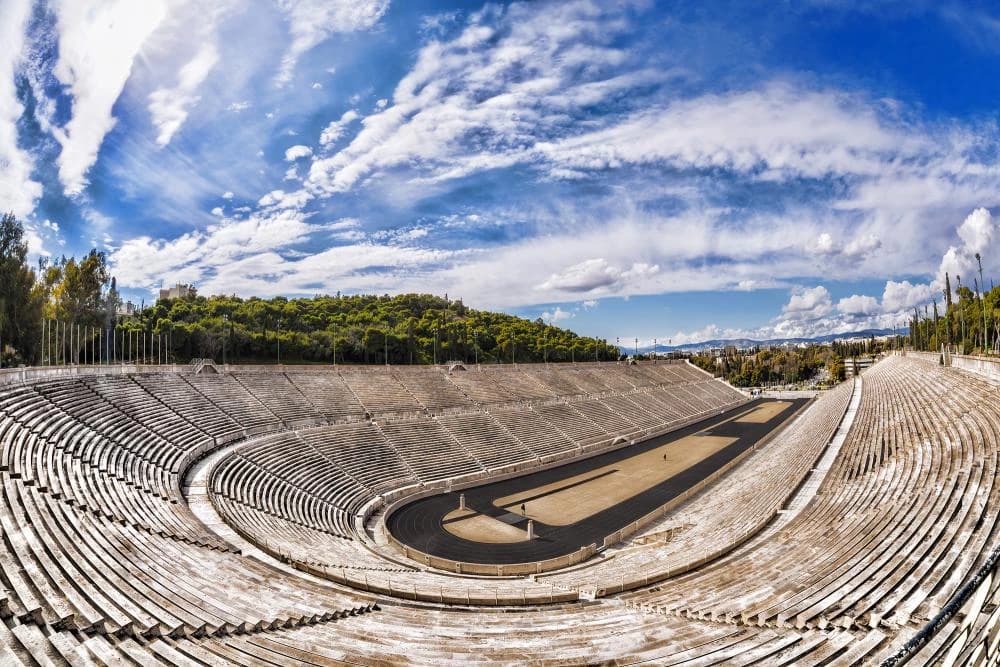
The Panathenaic Stadium is one of the most visited attractions in Athens. It is currently a multi-function stadium that was initially built as a race track in 330 BC for the Panathenaic Games. Dedicated to Athena, goddess of wisdom and war, the Panathenaic Games was a popular event that took place once every four years, in which the inhabitants of Athens organized a religious festival with a sports competition and other cultural events. The Athenians also celebrated the Lesser Panathenaic festival once a year which were shorter and included less games and ceremonies. In 144 AD, the Roman senator Herodes Atticus commissioned the stadium to be completely rebuilt in white marble. For many centuries the Panathenaic Stadium was practically abandoned, until the remains of the venue were dug out during the nineteenth century and restored to host the Olympic Games in 1896. The Panathenaic Stadium, also known as Kallimarmaro, is one of the most popular visits in the Greek capital. The running track is opened for public and v isitors can also walk along the marble stands where the Athenians once cheered the sportsmen on centuries ago.
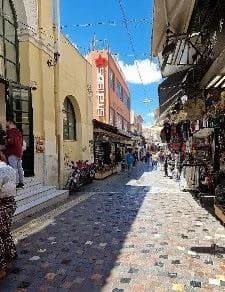
A bustling touristy street full of stalls selling souvenirs and clothes. You'll find here everything from posters and stamps to ceramic art, books and furniture. There are also many jewellery shops and lovely cafés.
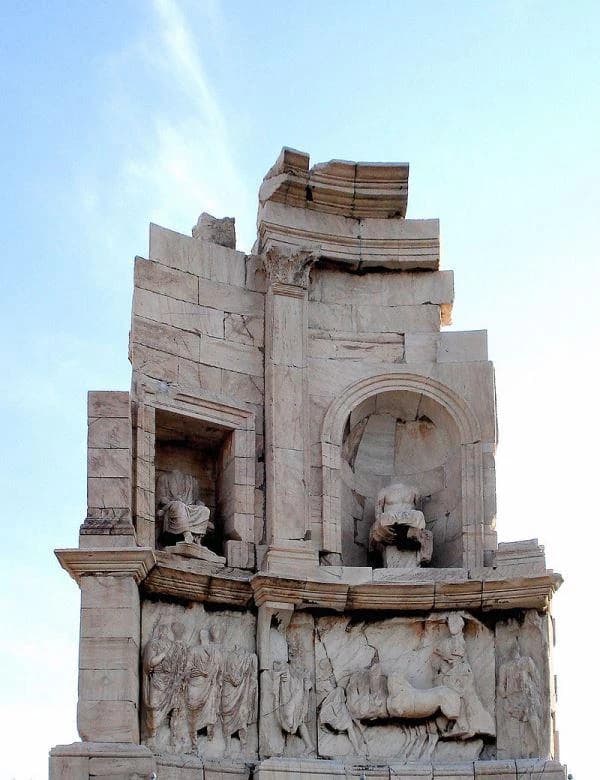
The Philopappos Monument is an ancient Greek mausoleum and monument dedicated to Philopappus, a prince from the Kingdom of Commagene. It is located on Mouseion Hill in Athens, Greece, southwest of the Acropolis. Philopappos died in 116,. As a dedication to honor the memory of Philopappos, Balbilla his sister with the citizens of Athens erected a tomb structure on Muses Hill near the Acropolis of Athens.
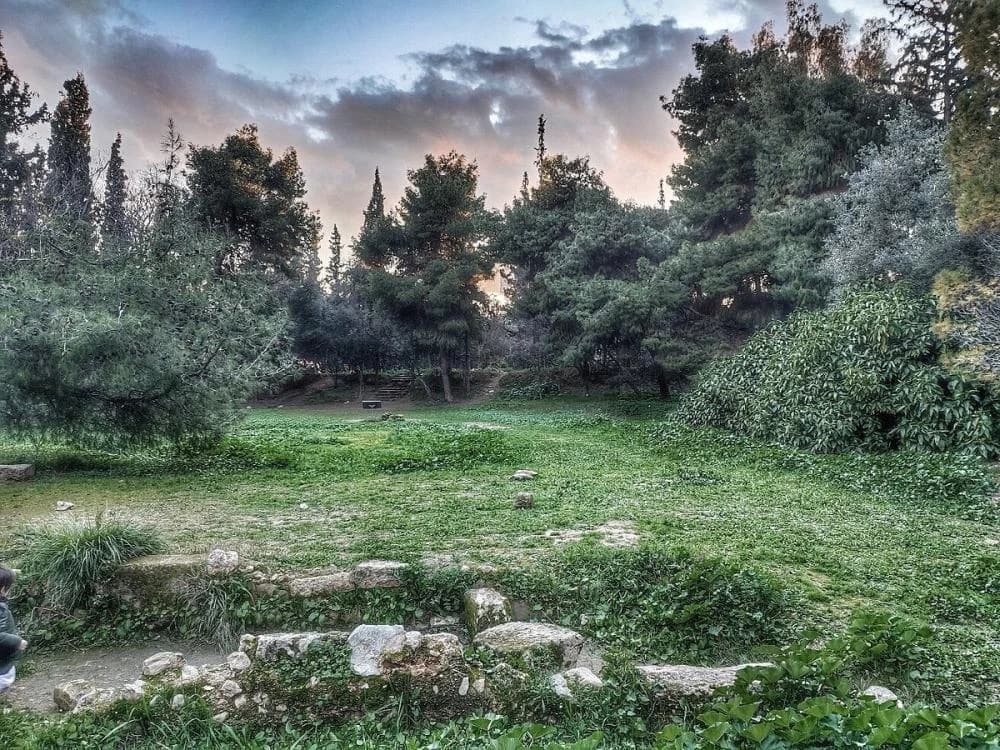
The Academy Park is a big plot of land located in the Kolonus neighborhood of Athens. It was here the great philosopher, Plato, decided to build one of the most famous universities (we can even say the first university) of the ancient world, the Academy of Plato. The Academy Park, is a gorgeous contrast from the modern Athenian urban environment.
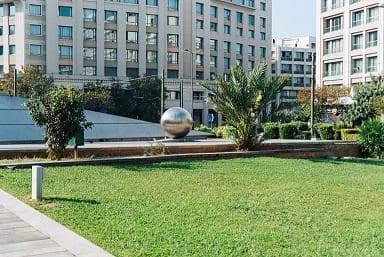

The Pnyx is a hill in central Athens, the capital of Greece. Beginning as early as 507 BC, the Athenians gathered on the Pnyx to host their popular assemblies, thus making the hill one of the earliest and most important sites in the creation of democracy.
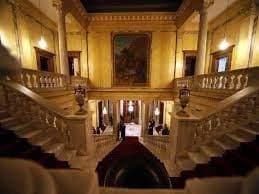
The Presidential Mansion in Athens, Greece, is the official residence of the president of the Hellenic Republic. It served previously as the Royal Palace, until the abolition of the monarchy by the 1973 referendum. The decision to construct the building which currently is used as the Presidential Mansion was made in 1868. Building began in 1891 and was completed six years later in 1897.
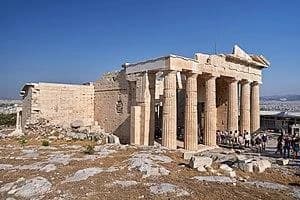
The Propylaia is the classical Greek Doric building complex that functioned as the monumental ceremonial gateway to the Acropolis of Athens. Built between 437 and 432 BCE as a part of the Periklean Building Program, it was the last in a series of gatehouses built on the citadel.
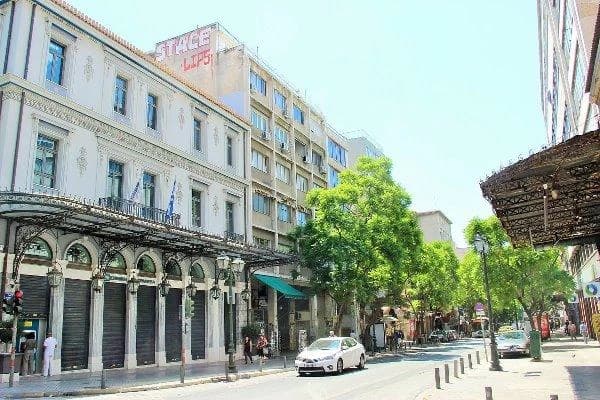
Psyri or Psiri is a gentrified neighbourhood in Athens, Greece, today known for its restaurants, bars, live music tavernas, and small number of hotels. Until the early 1990s, Psyri, one of the oldest quarters of Athens, , but it has now become one of the most fashionable and trendy choices in the centre of Athens for accommodation, entertainment and food hospitality.
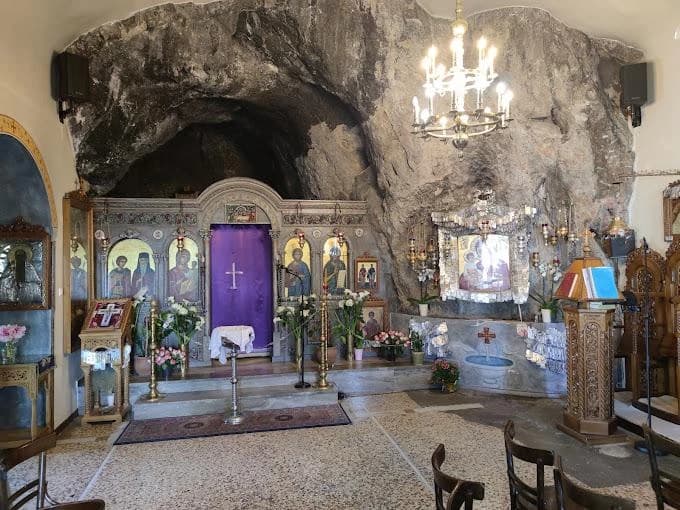
The chapel of Agios Isidoro was built between the 15th and 16th. into a cave, it's atop Mount Lycabettus . with Byzantine icons, gardens & views of Athens.
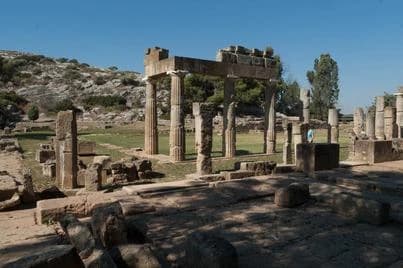
The Brauroneion was the sanctuary of Artemis Brauronia on the Athenian Acropolis, located in the southwest corner of the Acropolis plateau, between the Chalkotheke and the Propylaea in Greece. It was originally dedicated during the reign of Peisistratos. The sanctuary on the Acropolis was of an unusual trapezoidal shape and did not contain a formal temple. Instead, a portico or stoa served that function.
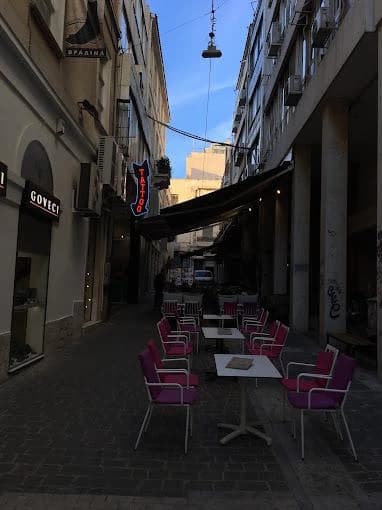
Athinas street is quite a unique street in the centre of Athens. It is in some ways the heart and soul of the centre of the city. It used to be full of underworld figures dealing in all sorts of activities, There are countless shops selling everything imaginable.
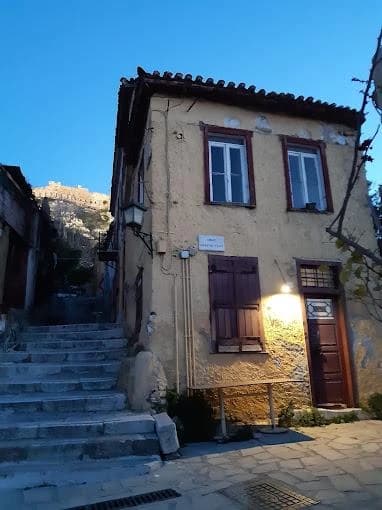
The Plaka Stairs leading upto the Acropolis are a great set of steps that are a must go destination if you're in the Plaka District. an ancient route ,the stairs are lined with some really good restaurants and taverns ,there's some tucked away old churches and of course you have great views.
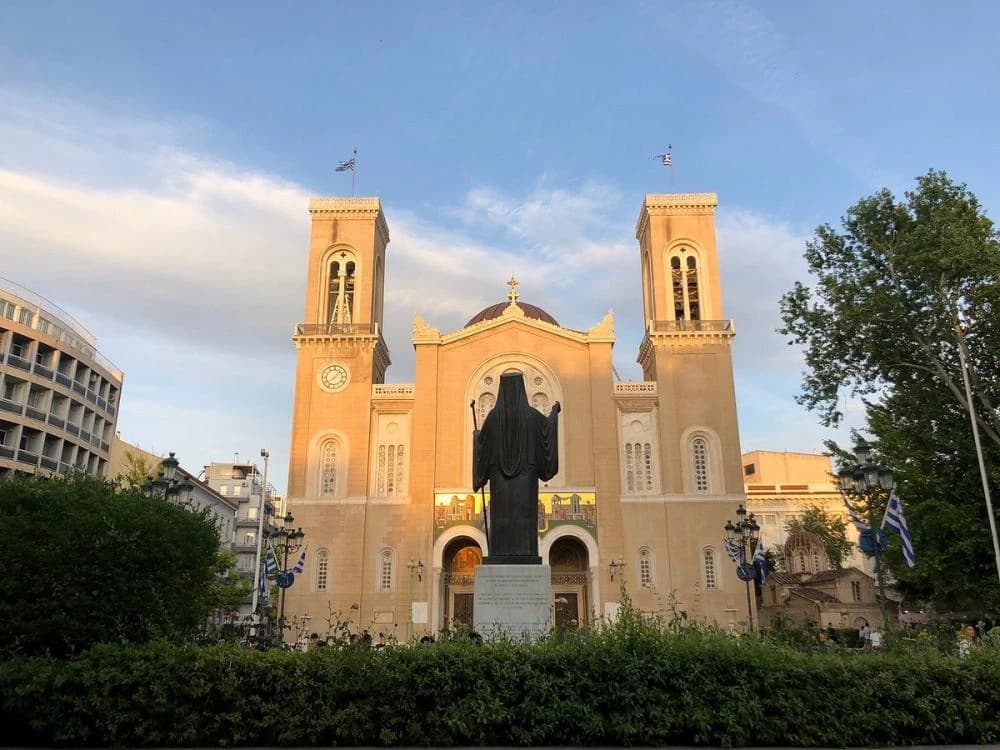
The statue of Archbishop Damaskinos is located in Mitropoleos Square, near the Metropolitan Cathedral of Athens, Greece. 3.5m high bronze statue of Archbishop Damaskinos, who was instrumental in saving Greek Jews from deportation during the Nazi occupation of Greece. Depicted in robes his right is held up high whilst in the left hand, he holds a staff.
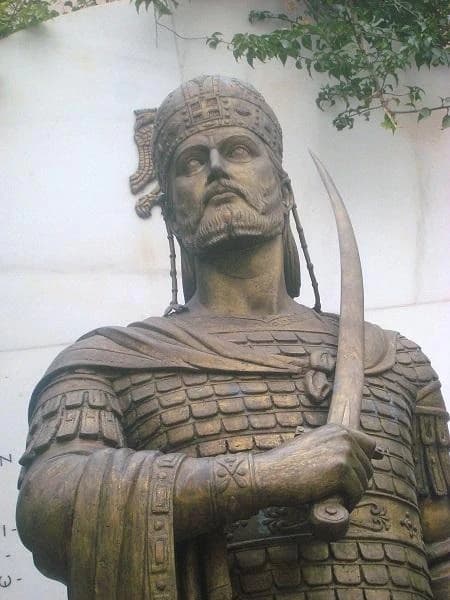
The statue of Constantine XI Palaiologos stands in the Mitropoleos Square, Athens, Greece. A 2.5m high copper statue of the last Byzantine emperor, Constantine XI Palaiologos. The statue is a copy of his 1978 statue of Constantine in Mystras. Constantine is depicted in full armour, holding his sword proudly across his chest.
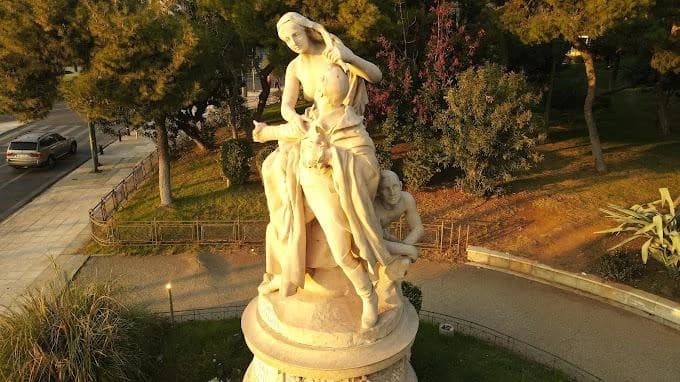
The Lord Byron Statue is a 5 minute walk from the Akropoli metro station, just past Hadrian's Arch. A sculpture shows Greece represented by a seated female who is crowning a young Byron with a palm branch. This is a symbol of immortality .
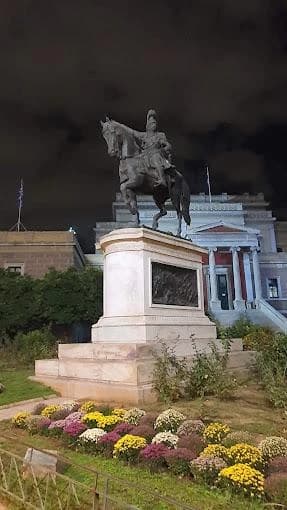
Theodoros Kolokotronis' impressive statue is located on Stadiou Avenue in the center of Athens one of the best-known heroes of the Greek Revolution.The statue is imposing and dominates the homonymous square. It is one of the most important works of Greek sculpture and even the first statue of a mounted man in Modern Greek sculpture.
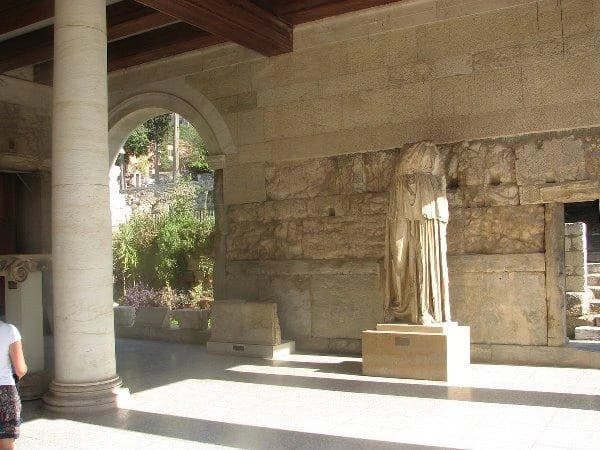
The Stoa of Attaloswas a stoa (covered walkway or portico) in the Agora of Athens, Greece. It was built by and named after King Attalos II of Pergamon, who ruled between 159 BC and 138 BC. The current building was reconstructed from 1952 to 1956 by the American School of Classical Studies at Athens and currently houses the Museum of the Ancient Agora.
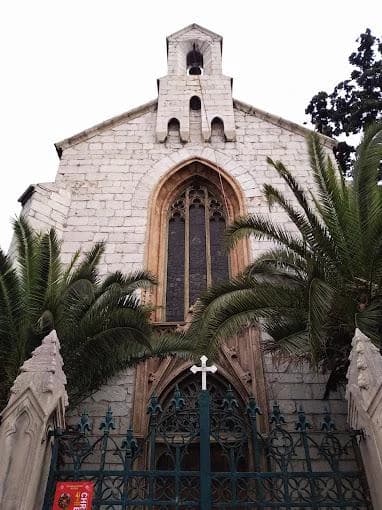
St. Paul's Anglican-Episcopalian Church (central Athens). is a beautiful building ,constructed in the 1840's ,the architectural style is Neo Gothic and the church serves the English speaking community in Athens
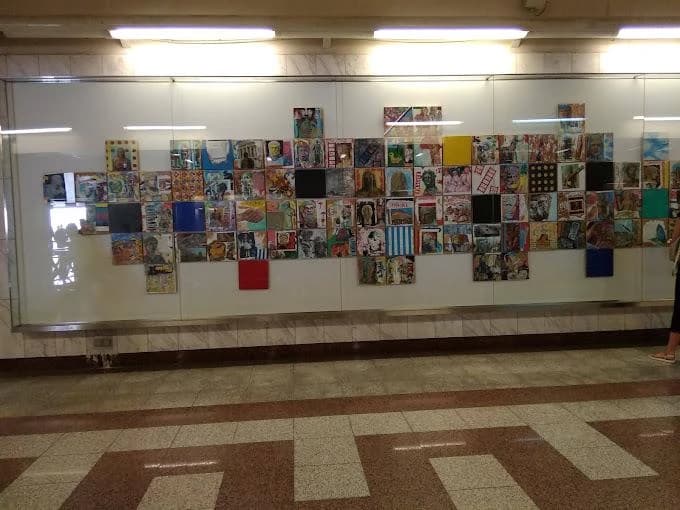
Syntagma is a station on the Athens Metro, located at Syntagma Square in the center of Athens, Greece. It serves as the transfer point between Line 3, Line 2 and the Athens Tram. When the Metro first opened, on 28 January 2000, the station was the terminal station for both the new lines.
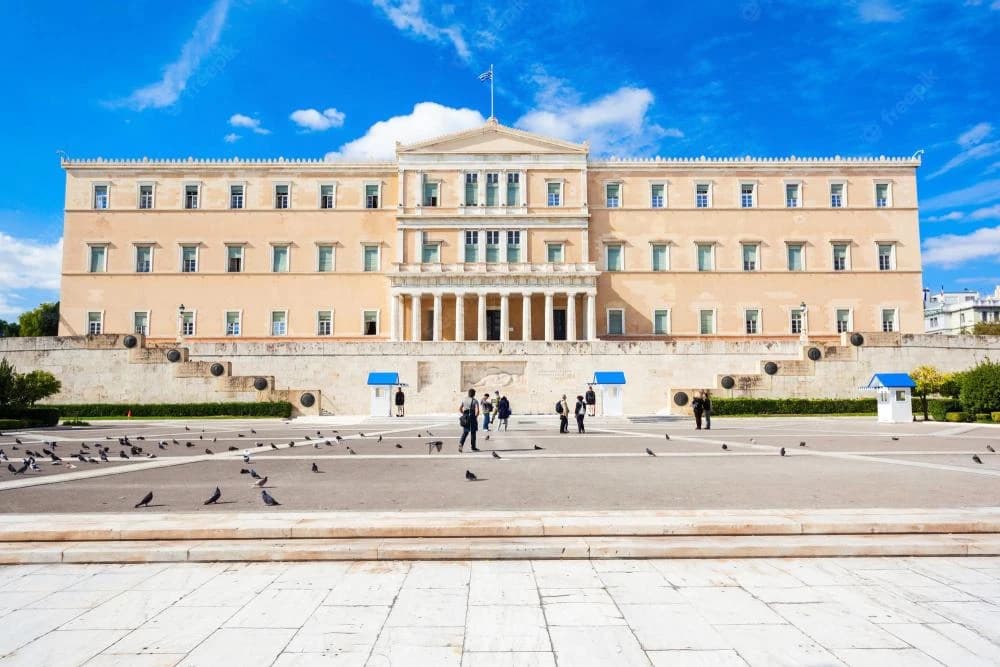
Situated in the center of Athens, Syntagma Square is not only located in the heart of Greece’s capital, it is also an important historical public area. Syntagma Square is also known as Constitution Square, as it is where the Athenians rose up against King Otto of Greece on 3 September 1843 to demand a constitution. The square is presided over by the Hellenic Parliament, an imposing building erected between 1836 and 1842 as the Royal Palace for the first king of Greece, King Otto. In front of the Parliament building is the Tomb of the Unknown Soldier, watched over day and night by the “Evzones”, two Presidential Guards dressed in a curious traditional uniform. Tourists can see the changing of the guard every hour on the dot, but the most splendid ceremony takes place on Sundays at 10am. On one of the sides of Syntagma Square is the grandiose Hotel Grande Bretagne. This 5-star hotel was built in 1842 and transformed into a hotel in 1874. Celebrities usually stay in this historic landmark. At the top of Syntagma Square is Ermou Street, one of the city’s main shopping streets. It is usually one of the liveliest arteries in Athens. Syntagma Square is one of the most popular parts of the city. It is also the starting point of most of the city’s demonstrations and it also houses concerts and festivals.
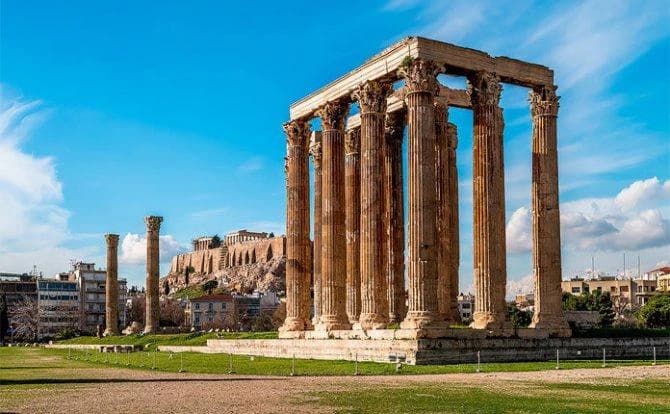
Also called the Olympieion, the Temple of Olympian Zeus was a grandiose temple built between the sixth century BC and second century AD. It was built in honor of the Greek god Zeus. The Temple of Olympian Zeus, 500 meters southeast of the Acropolis, was once an impressive construction made entirely of white marble from Mount Pentelicus. The monument had 104 15-meter Corinthian columns. Nowadays, only 15 remain standing, and one intact column lies on the ground. The design of this colossal temple began during the period of Peisistratos, in the sixth century B.C. For various reasons, it was not finished until nearly seven centuries later, in 132 AC, under the Roman Emperor Hadrian. When the impressive temple was completed, the Emperor Hadrian commissioned a statue made of gold and marble in the shape of the Greek god Zeus and another of himself to place inside the temple. On the northeast corner of the monument is Hadrian’s Arch, a remarkable 18-meter marble arch that once separated the old city (city of Theseus) and the new city (city of Hadrian). It was built in 131 AC to commemorate the Roman Emperor. Although an earthquake destroyed most of the temple during the Middle Ages, the remains still demonstrate the vastness of the monument and its importance in Ancient Greece.
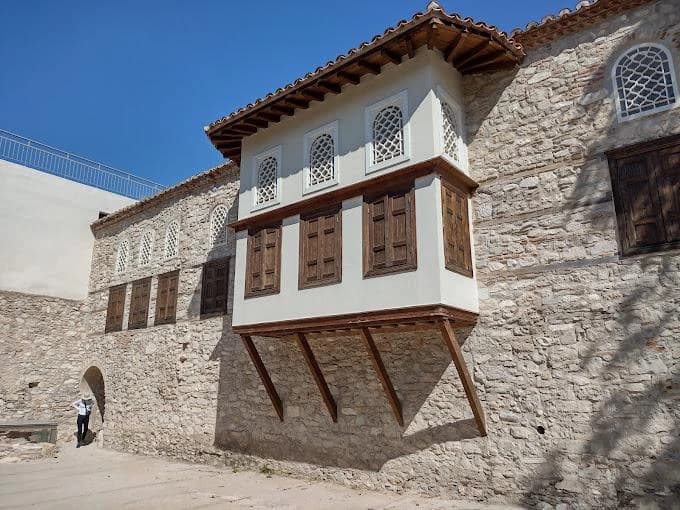
Centrally-located in the Plaka neighborhood, the Benizelos Mansion, also known as the House of Saint Philothei, is the oldest surviving house in Athens, built between the 16th and 17th centuries. This two-story house is an excellent example of a konaki, a noble urban home with architecture found in Ottoman occupied cities.
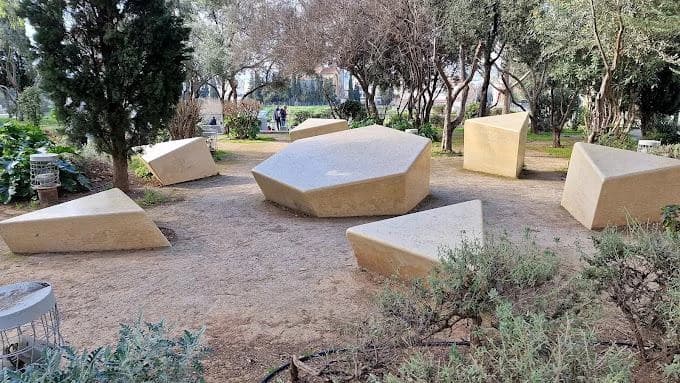
Athens’ memorial to the victims of the Holocaust takes the shape of a broken Star of David, hewn from Egyptian marble. The creation of Greek-American sculptor Deanna Maganias, it points to the villages and cities across Greece where hundreds of thousands of Jews were gathered and deported under Nazi German occupation.
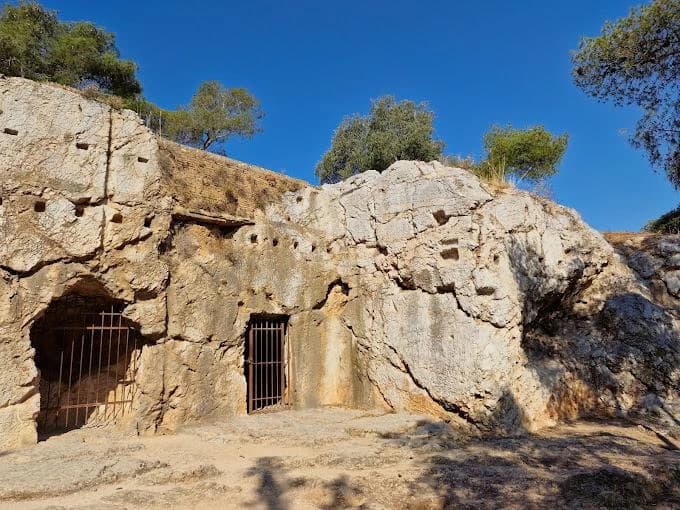
The prison of Socrates in Athens is on Filopappou Hill, one of the best places in Athens with views of the Acropolis and of the whole city of Athens. Built in the 5th century BC. The use of the rooms is yet unknown. Its cave-like structure and its proximity to the Athenian Agora must have led to the legend that the building is none other than the Prison of Socrates, or an ancient bath.
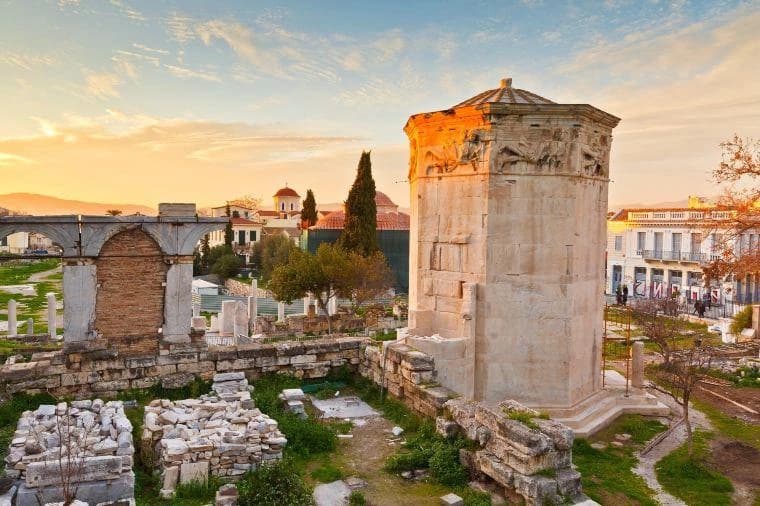
The Roman Agora was the ancient public square raised during the Roman period in Athens. It was one of the main meeting points in the city and it once housed the central market. The Roman Agora is found on the north side of the Acropolis, in the charming neighborhood of Plaka. It is located a short walk away from the Ancient Agora, which is larger and more spectacular. The experts believe that the Roman Agora was first founded between 19 BC and 11 BC. It was commissioned by the first Roman Emperor Augustus and then enlarged by the Emperor Hadrian. During its golden age, the Agora was a type of courtyard that measured 100 square meters. It was home to the central market, which had been moved from the Ancient Agora. The open space was surrounded by a marble Ionic colonnade and the patio was also completely covered in marble. There were two propyleas (gateways), the main one was on the west and the other was on the east. Currently, only a small portion of the columns are still standing, and the remains of the public outhouse. The “Tower of the Winds”, found on the western side of the Agora, is practically intact. This polygonal monument sheathed in marble slabs was built during the second century BC and was used as a water clock and sundial. The building remained intact because it was transformed into a chapel during the sixth century.
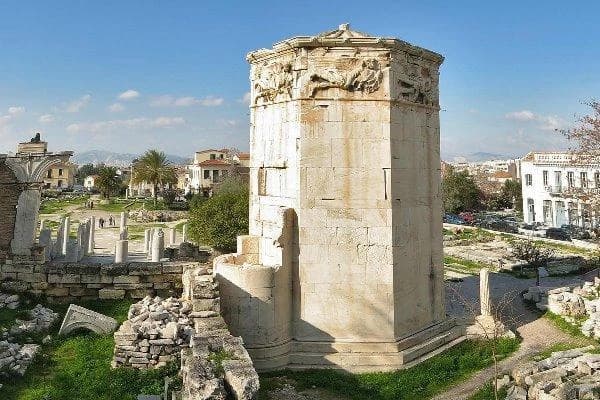
Tower of the Winds, also called Horologium, Greek Horologion (“Timepiece”), building in Athens erected about 100–50 BC by Andronicus of Cyrrhus for measuring time. Still standing, it is an octagonal marble structure 42 feet (12.8 m) high and 26 feet (7.9 m) in diameter. Each of the building’s eight sides faces a point of the compass and is decorated with a frieze of figures in relief representing the winds that blow from that direction.
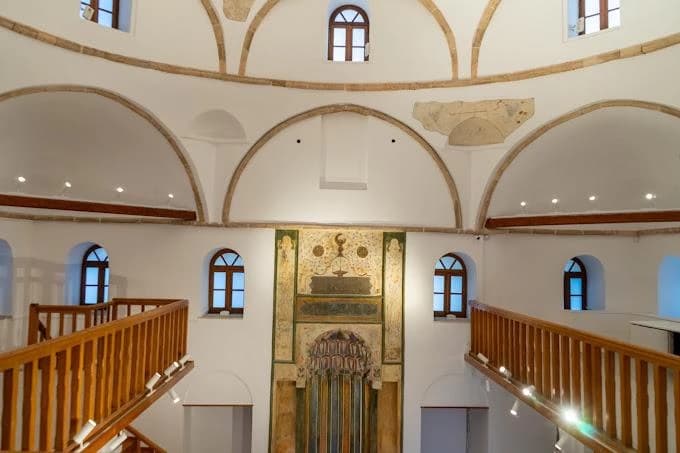
Tzistarakis Mosque is an Ottoman mosque, built in 1759, in Monastiraki Square, central Athens, Greece. It is now functioning as an annex of the Museum of Greek Folk Art. The mosque was built in 1759, by the Ottoman governor (voevoda) of Athens, Mustapha Agha Tzistarakis. According to tradition, Tzistarakis used one of the pillars of the Temple of Olympian Zeus to make lime for the building.
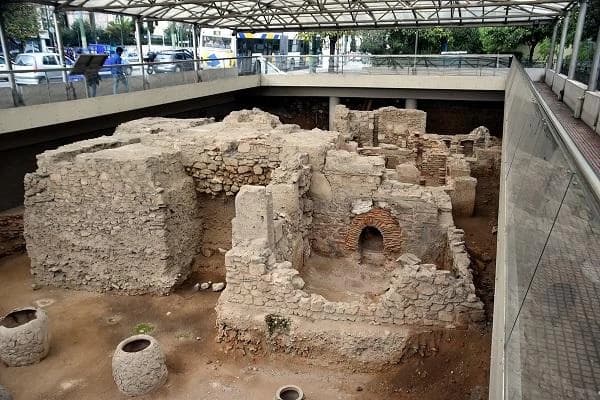
The Ancient Bath is an old Roman bath house which is located along the side of the road as you pass the National Garden, near the parliament building. These baths date from the late 3rd or early 4th century AD and were expanded in the 5th century.
 local
localLanguages:
 Ελληνικά
 English
Profile verified
 local
localLanguages:
EnglishProfile verified
 local
localLanguages:
ΕλληνικάEnglishProfile verified
 local
localLanguages:
 עברית
עבריתProfile verified
 pro
proLanguages:
English Español
Profile verified
 pro
proLanguages:
 Français
 Italiano
Profile verified
 pro
proLanguages:
 日本語English
Profile verified
 pro
proLanguages:
Ελληνικά Українська
Profile verified
 pro
proLanguages:
EnglishProfile verified
 local
localLanguages:
English Türkçe
Profile verified
 pro
proLanguages:
ΕλληνικάEnglishProfile verified
 pro
proLanguages:
EnglishProfile verified
 local
localLanguages:
EnglishProfile verified
 local
localLanguages:
ΕλληνικάEnglishProfile verified
 local
localLanguages:
EnglishEspañolProfile verified
 local
localLanguages:
EnglishProfile verified
 local
localLanguages:
ΕλληνικάEnglishProfile verified
 local
localLanguages:
EnglishProfile verified
 local
localLanguages:
ΕλληνικάEnglishProfile verified
 local
localLanguages:
ΕλληνικάEnglishProfile verified
 pro
proLanguages:
EnglishEspañolProfile verified
 pro
proLanguages:
EnglishProfile verified
 local
localLanguages:
EnglishProfile verified
 pro
proLanguages:
EnglishProfile verified
 pro
proLanguages:
EnglishFrançaisProfile verified
Find private local guides worldwide. Connect with real people, real stories — not just scripted tours



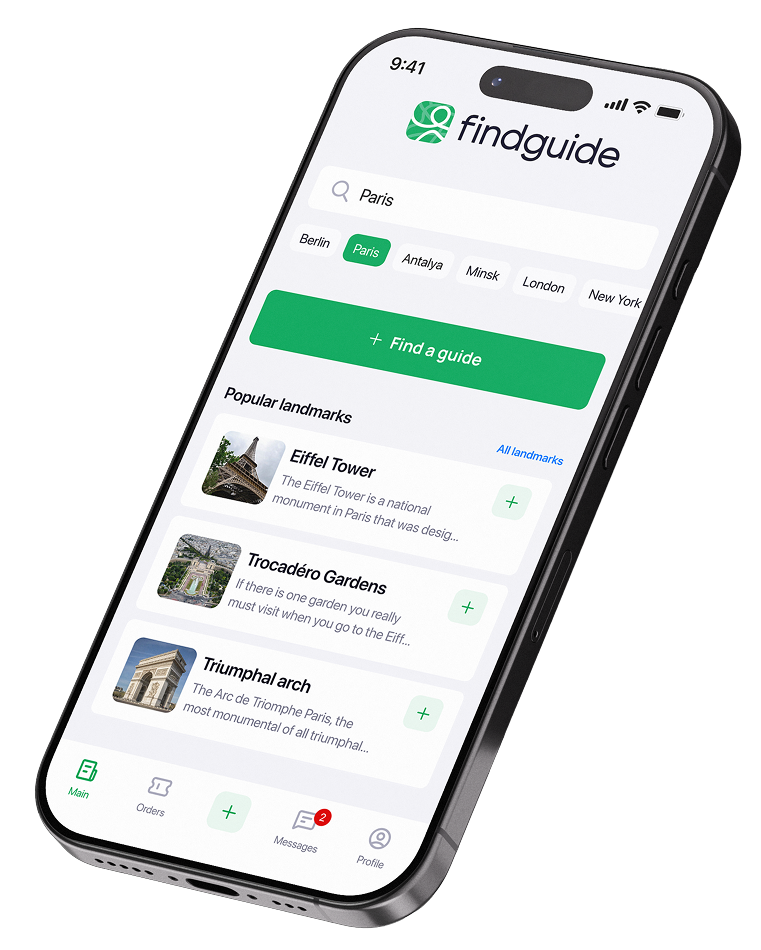

Find a personal guide in just 1 minute and create your dream itinerary!

FindGuide is a platform for finding private and local guides around the world. You can choose a guide in advance who will show you the city from a local perspective, not just the standard tourist route.
Enter the city or country you're interested in into the search bar, choose a guide you like, and send them a request. All bookings are made directly on the platform.
We offer walking, food, historical, driving, private, and family tours in more than 100 destinations.
Yes, all guides go through moderation and verification. You can read reviews from other travelers, check the guide’s rating, and view their profile with photos and experience descriptions.
Tour prices vary depending on the destination, duration, and format. You see the cost upfront — no hidden fees.
Yes, the app is completely free for tourists. You can place your tour requests for local guides and access expert travel content totally free of charge.


