
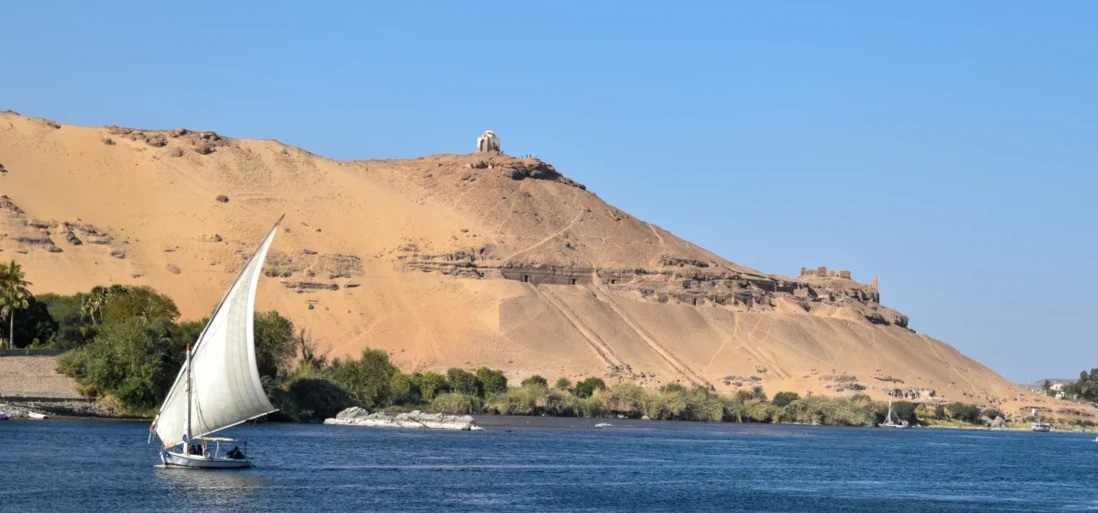
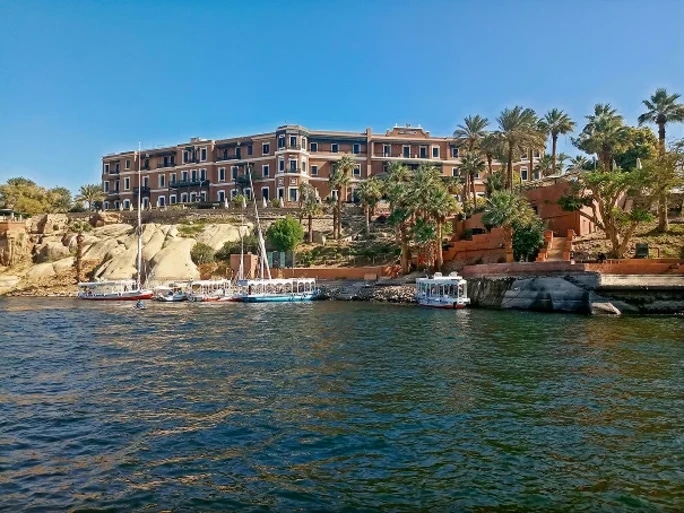
Discover the best of Aswan with a private guide. Visit the stunning Philae Temple, cruise the majestic Nile River, and explore colorful Nubian villages to experience local culture and traditions. Enjoy personalized insights, hidden gems, and unforgettable moments along Egypt’s southern gem.
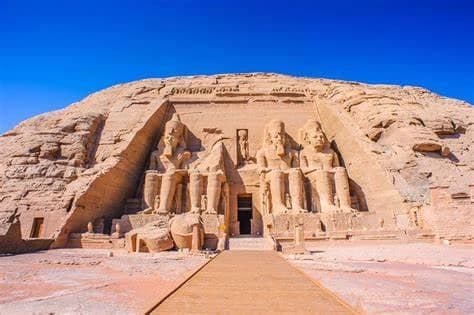
Abu Simbel is a historic site comprising two massive rock-cut temples in the village of Abu Simbel , Aswan Governorate, Upper Egypt,.The complex was relocated in its entirety in 1968 to higher ground to avoid it being submerged by Lake Nasser, the Aswan Dam reservoir. As part of International Campaign to Save the Monuments of Nubia.
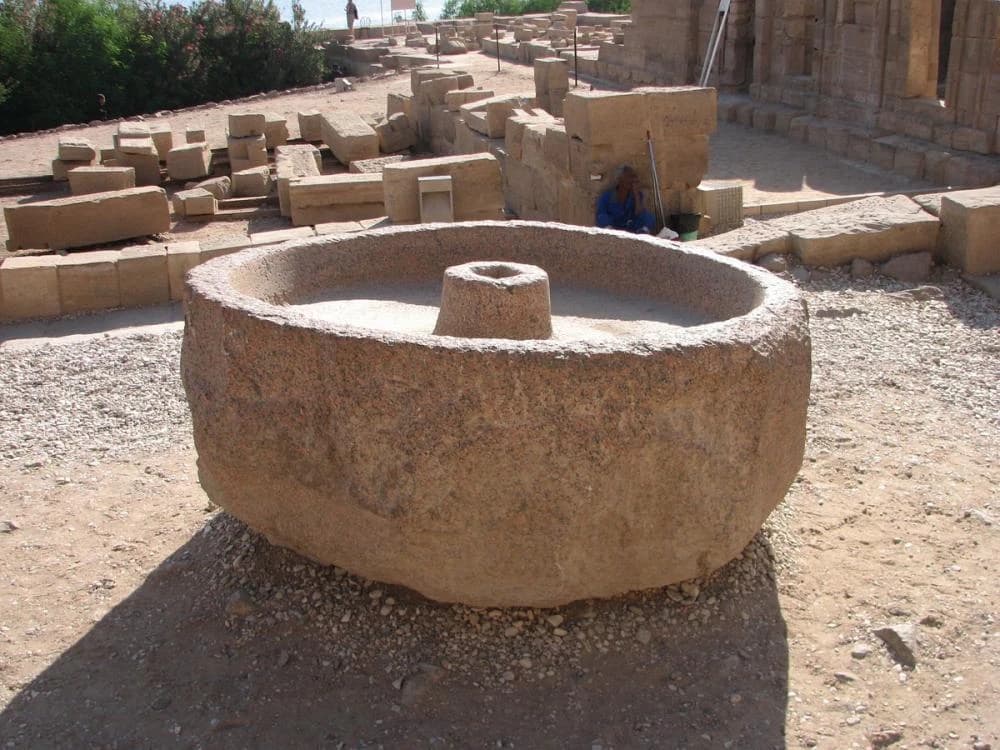
Agilkia Island is an island in the reservoir of the Old Aswan Dam along the Nile River in southern Egypt.in the 1960sReconstructed under the Unesco plan to save ancient Egypt, The island features the Temple of Isis, the Kiosk of Trajan, the Gte of Diocletian and the Kiosk of Nectanebo.
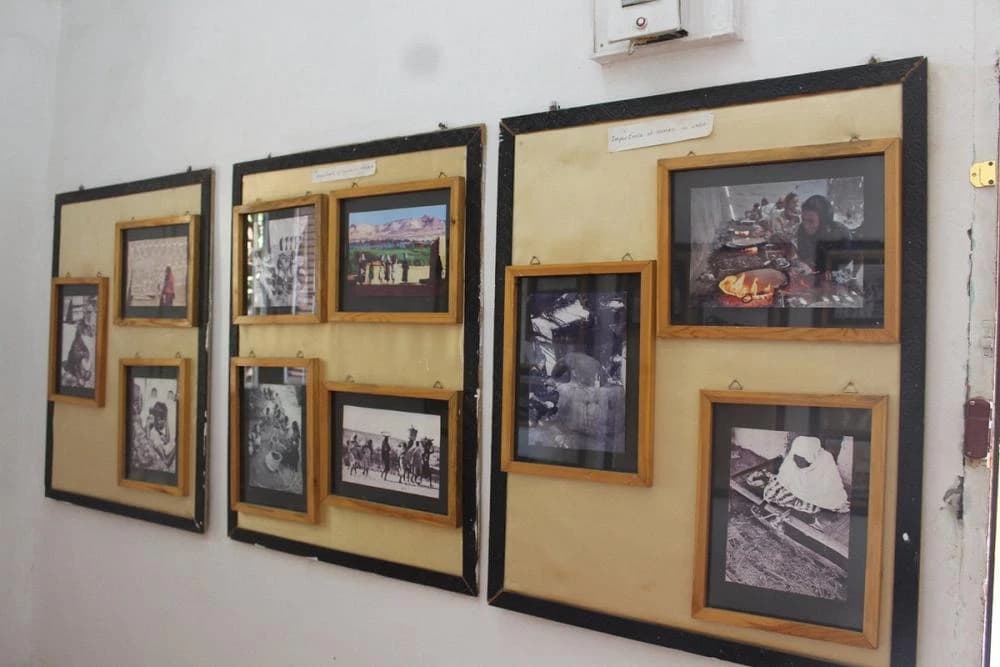
Center of information about life in nubia(nature and culture)it is an ethno-biological museum which consists of three parts1-traditional nubian house 2- museum shows fauna in nubia rocks and stones. 3-the roof terrace where drinks,lunch,quick meals are.
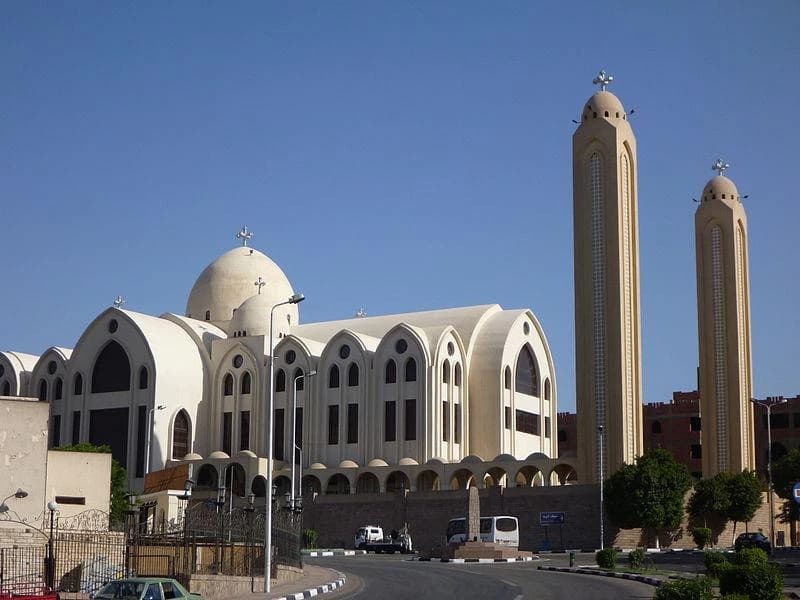
Archangel Michael's Coptic Orthodox Cathedral, Aswan (Egypt), The Copts form the majority of Christians in Egypt. This Cathedral is relatively new, having been consecrated in 2006. Its modern Coptic architecture is stunning! A huge white building with two towers and domes is getting its finishing touches in stages.
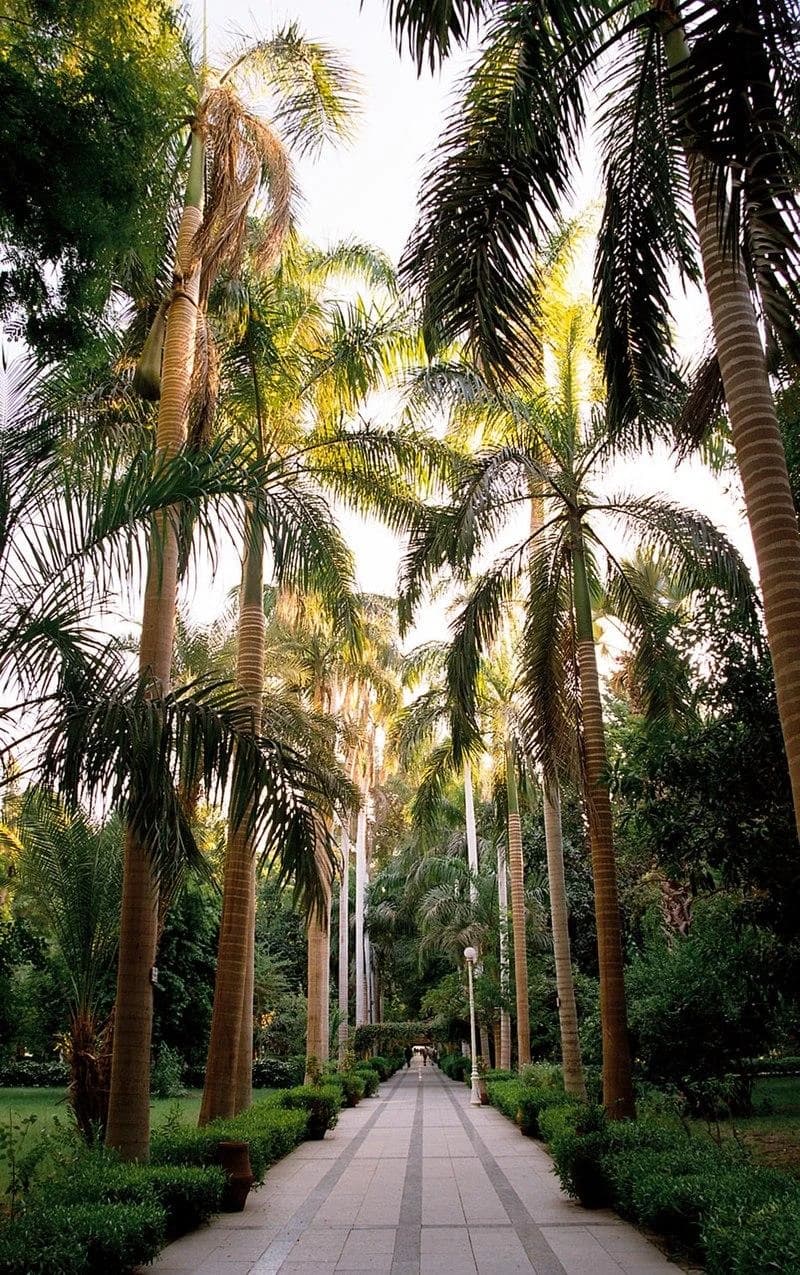
The island, as a whole, constitutes the Aswan Botanical Garden. One can view the many types of subtropical, exotic, and rare plantings and trees such as the Royal Palm tree and the Sabal Palm tree. The collection was begun by Lord Kitchener and cared for since.
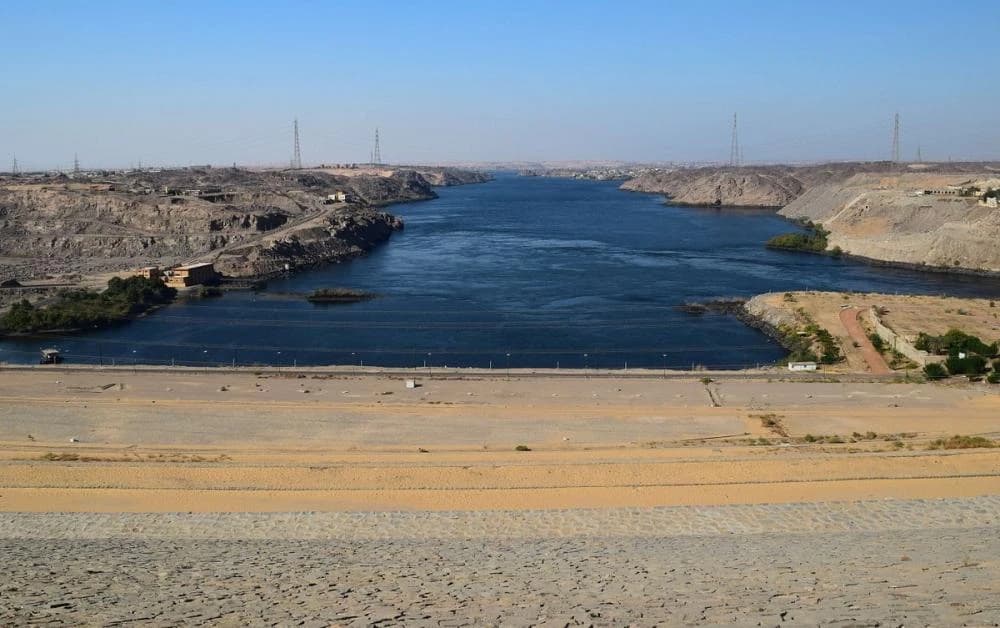
The Aswan Dam, or more specifically since the 1960s, the Aswan High Dam, is one of the world's largest embankment dams, which was built across the Nile in Aswan, Egypt, between 1960 and 1970. Its significance largely eclipsed the previous Aswan Low Dam.
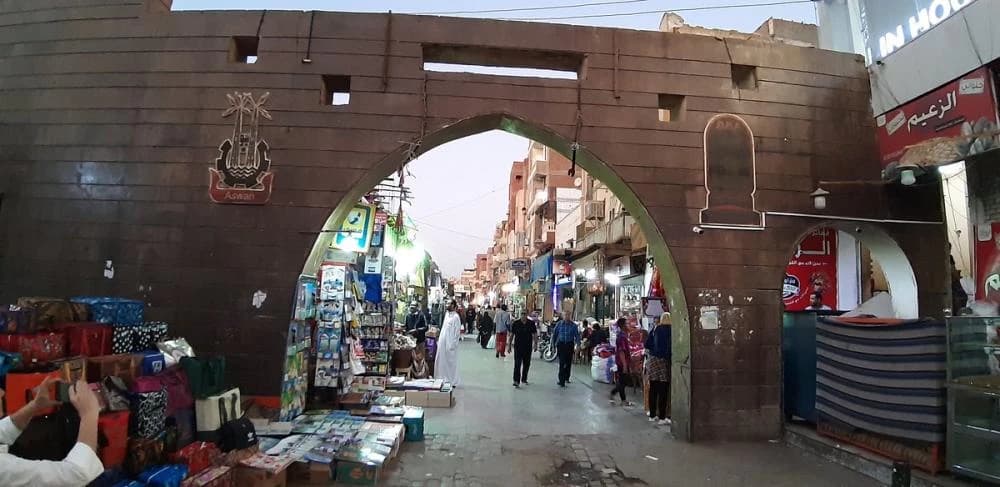
This outdoor market is a central feature of Aswan, is a colorful bazaar, known locally as the Sharia Market, and it is the cheapest place to buy souvenirs in Aswan. The bazaar is located four blocks from the Nile and runs about 7 buildings parallel to the river, and includes a lot of Egyptian and African goods.
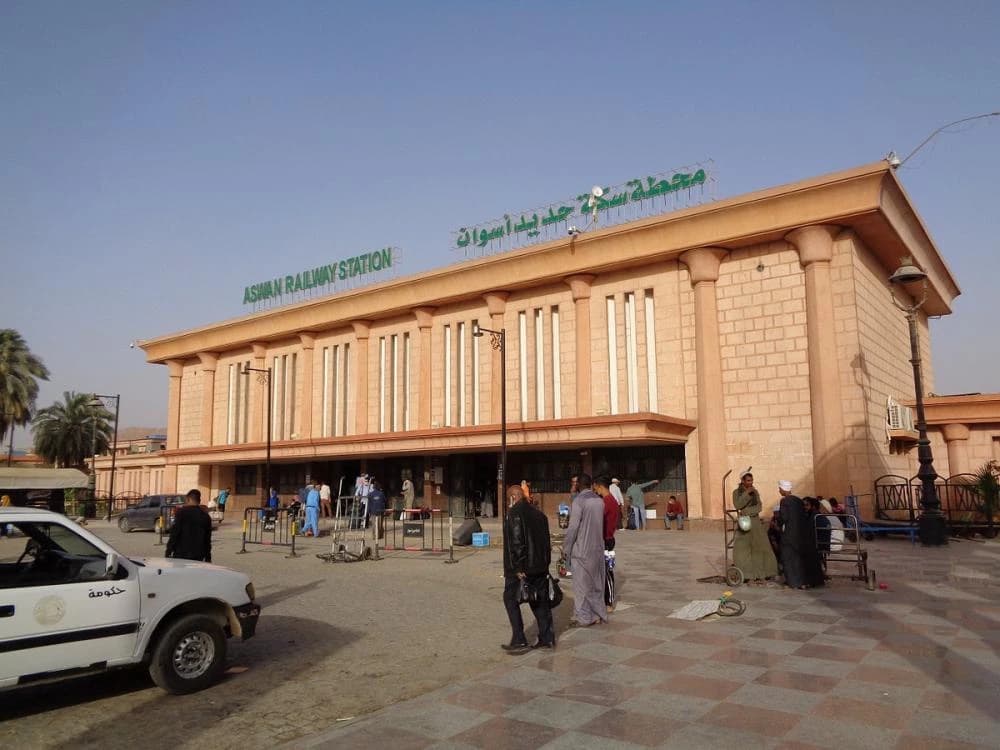
The railway station is in the centre of town, at the entrance of Sharia As Souq bout 150 metres from the river bank.
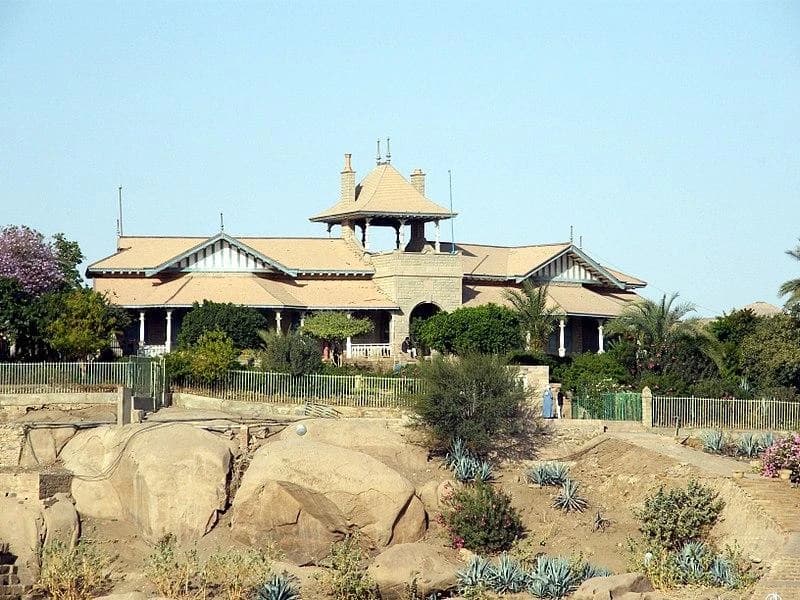
Aswan Museum is a museum in Elephantine, located on the south-eastern side of Aswan, Egypt. It was set up in 1912 by the British Egyptologist Cecil Mallaby Firth. The museum features artifacts from Nubia,. In 1990, a new department was inaugurated. It displayed findings that were discovered on Elephantine island itself,
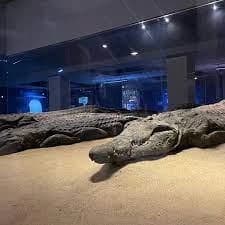
The museum is located on the banks of the Upper Egyptian city of Aswan. it displays 22 mummified crocodiles of various sizes out of forty to have been unearthed in Aswan. A collection of crocodile coffins and wooden sarcophagi, along with crocodile foetuses and eggs, are also on display, in addition to stelae and statues depicting the crocodile-god Sobek, bearing a human body and the head of a crocodile.
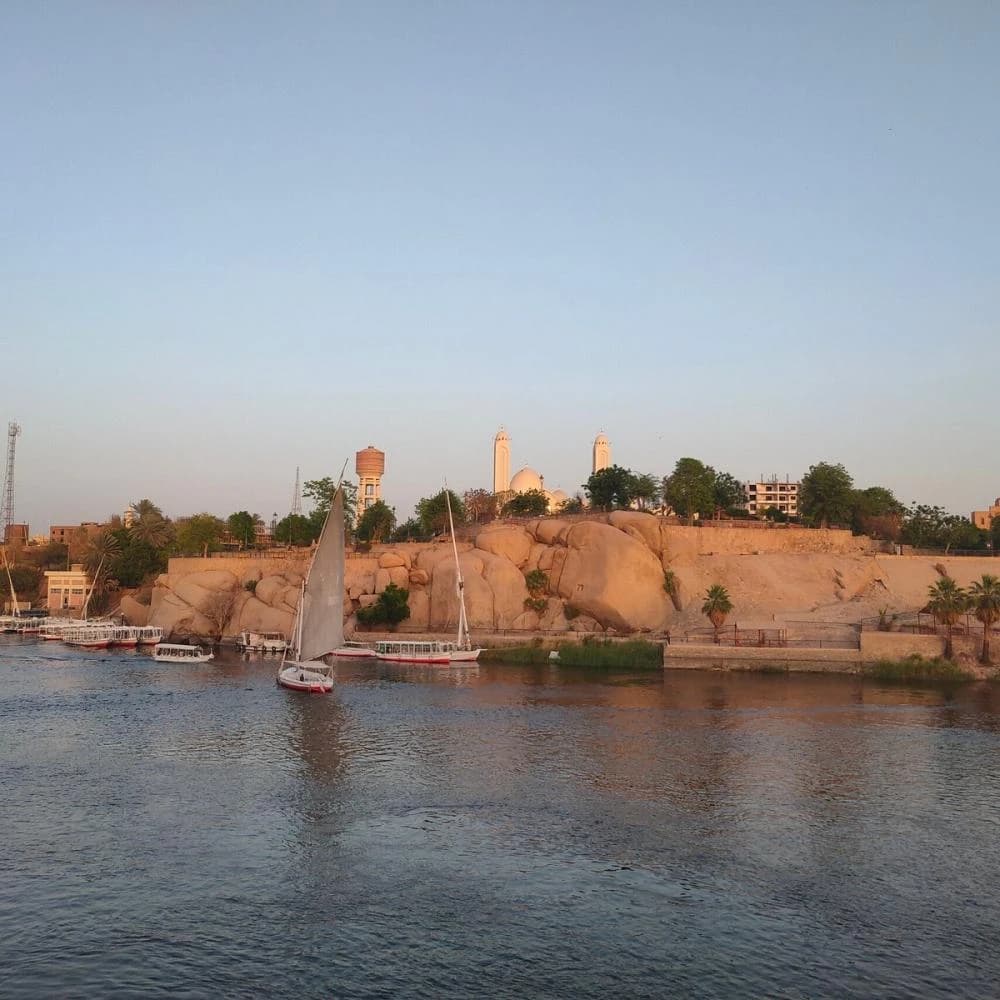
Elephanitine Island is in the middle of Nile. It houses Nubian villages, nice gardens and a museum with the villa of Sir Willcocks who designed the first Aswan dam.
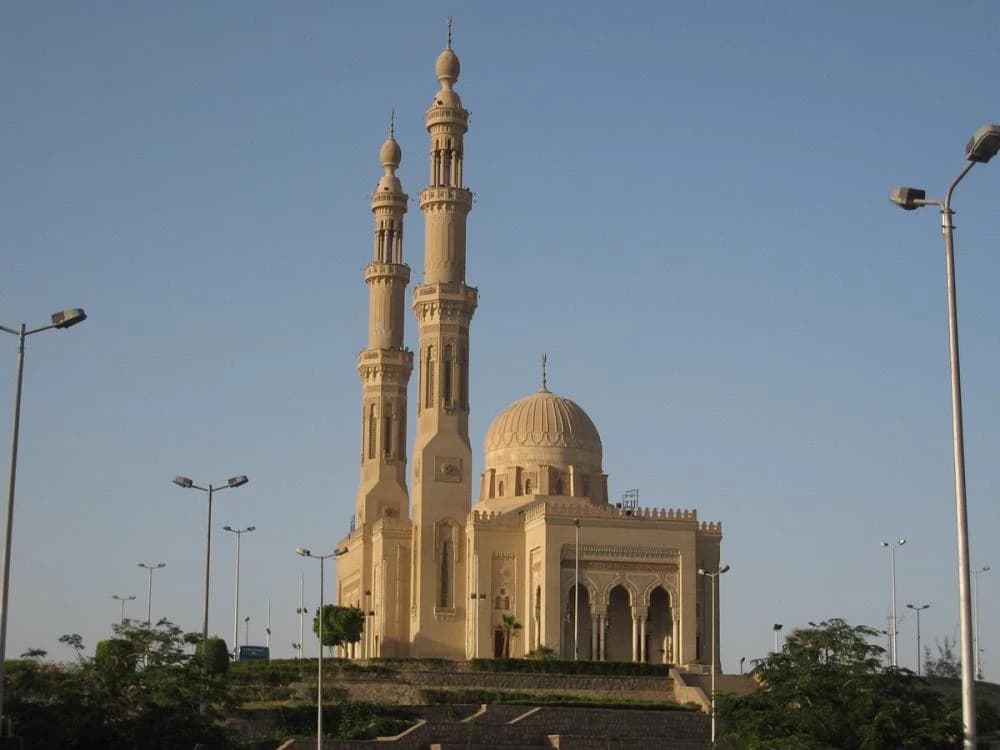
El-Tabia Mosque is a mosque in Aswan, Egypt. The mosque is surrounded by scenic gardens. Located amidst a park on a hill in the center of Aswan, It reveals a typical architecture of central-dome mosques having an arched entrance, flanked in this case by two minarets, and the prayer hall beneath a central dome.
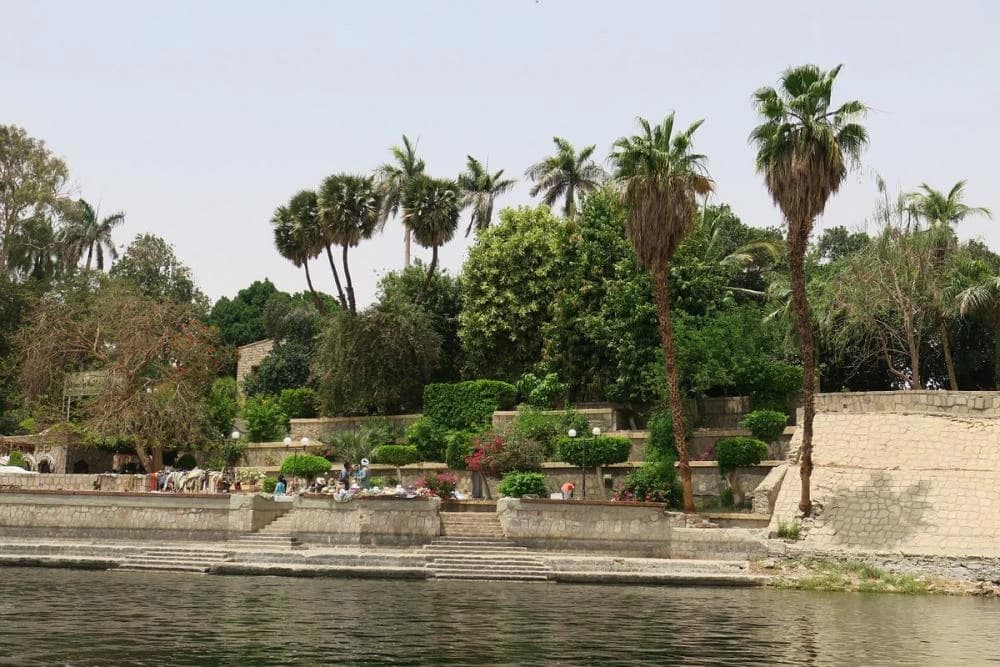
El Nabatat Island or Kitchener's is a small, oval-shaped island in the Nile at Aswan, Egypt. It is less than a kilometer long and its width is less than ½ a kilometer. The Aswan Botanical Garden is located on the island. named after Lord Kitchener who owned it. He was gifted the island, when he served as Consul-General in Egypt from 29 September 1911 to June 1914.
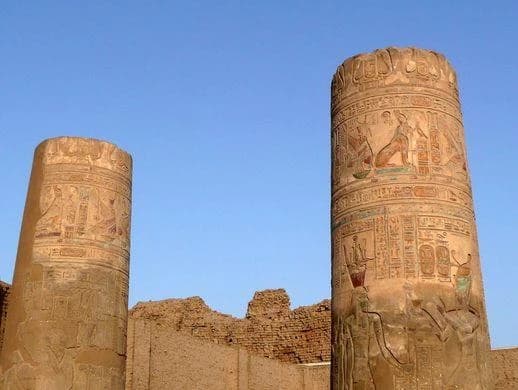
The Temple of Kom Ombo is an unusual double temple in the town of Kom Ombo in Aswan Governorate, Upper Egypt. It was constructed during the Ptolemaic dynasty, 180–47 BC. Some additions to it were later made during the Roman period.
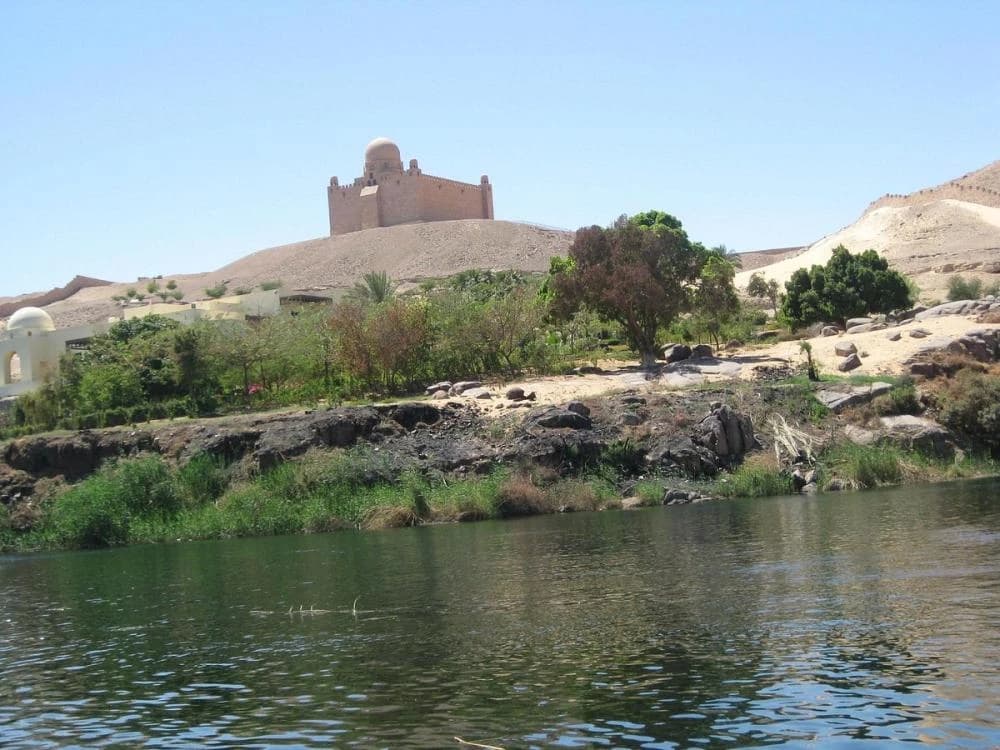
The Mausoleum of Aga Khan is the mausoleum of Aga Khan III, Sir Sultan Muhammed Shah, who died in 1957. The mausoleum is located at Aswan along the Nile of Egypt, since Egypt was formerly the centre of power of the Fatimids, an Ismaili Shia dynasty. The construction of the mausoleum began in 1956.
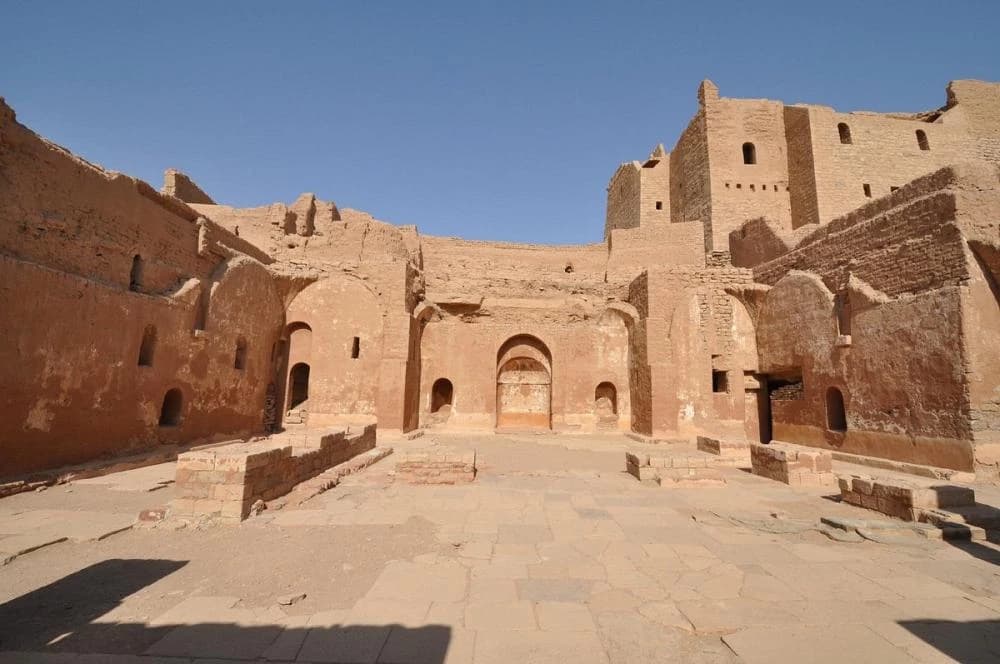
Saint Simeon Monastery is located in the vicinity of Aswan, on Elephantine Island in the Nile River . Saint Simeon Monastery was built by a monk during the 7th century and was subsequently dedicated to a 4th century local saint by the name of Anba Hedra. By the time work on the monastery was completed in the 10th century, it provided accommodation for around 300 monks, and it had room for roughly 100 pilgrims.
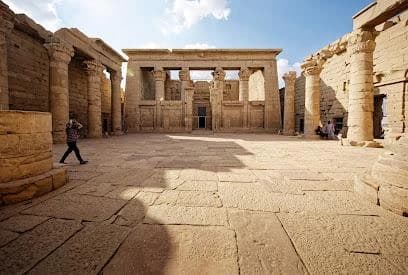
New Kalabsha is a promontory located near Aswan in Egypt. The Temple of Kalabsha (or Temple of Mandulis) is the major structure in New Kalabsha. The entire Roman Period temple to the sun god Mandulis was relocated here in 1970. It was built by Emperor Augustus and was the largest free-standing temple of Egyptian Nubia. During relocation, the temple was cut into 13,000 blocks.
A three-storey building on 146,000 sq metres of land, the Nile Museum exhibits antique items that tell of the waterway's history and photos that illustrate river projects and the development of irrigation techniques since Ottoman rule. Sections are allocated within the museum for the 11 Nile Basin countries to exhibit their historical, Nile-related items. It also includes a conference hall and a library.
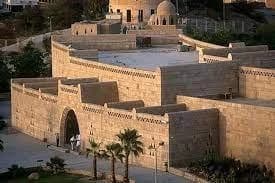
The Nubian Museum is an archaeological museum located in Aswan, Upper Egypt. It was built following the International Campaign to Save the Monuments of Nubia, to a design by architect Mahmoud El-Hakim . Dedicated to Nubian culture and civilization, it was inaugurated on November 23, 1997, and was awarded the Aga Khan Award for Architecture in 2001.
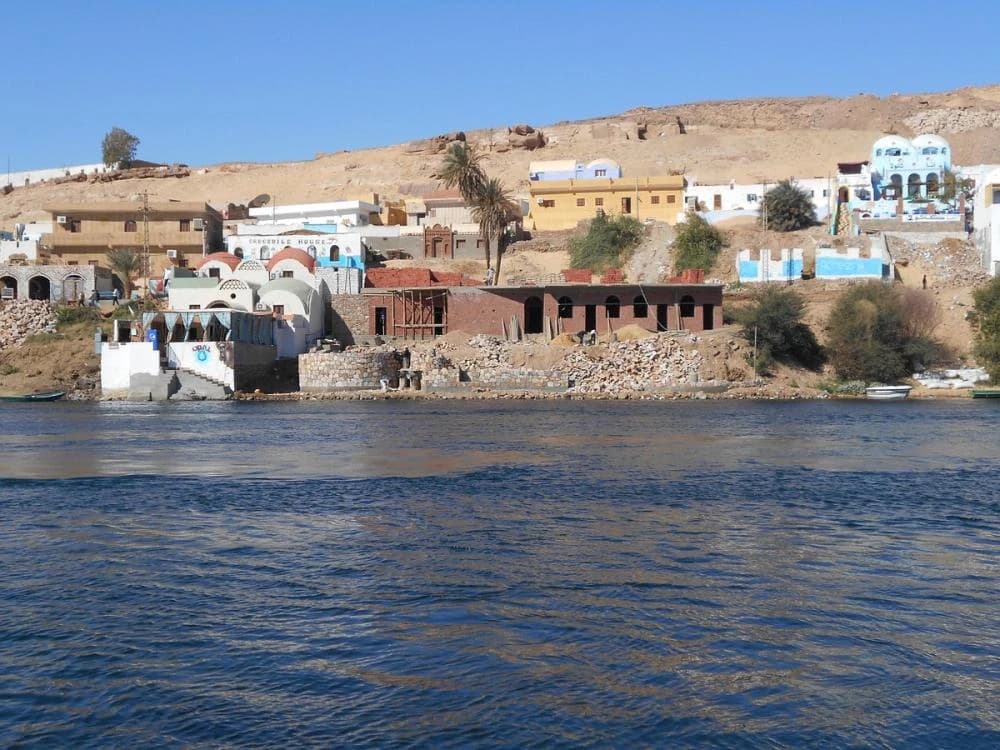
Nubia is a region along the Nile river encompassing the area between the first cataract of the Nile (just south of Aswan in southern Egypt).It was the seat of one of the earliest civilizations of ancient Africa, the Kerma culture, which lasted from around 2500 BC until its conquest by the New Kingdom of Egypt under Pharaoh Thutmose I around 1500 BC, whose heirs ruled most of Nubia for the next 400 years.
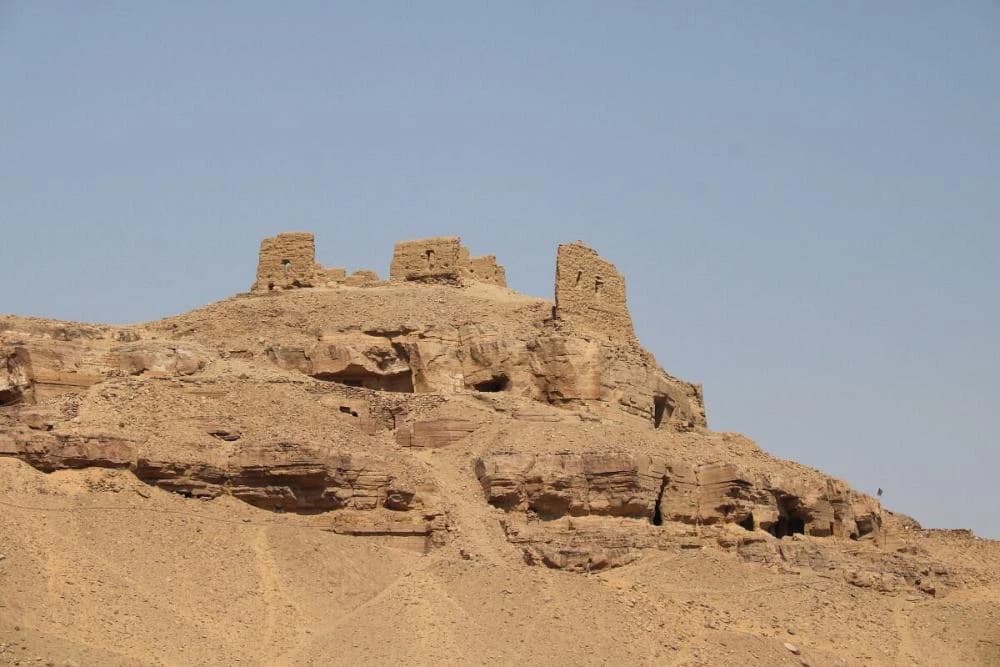
Qubbet el-Hawa or "Dome of the Wind" is a site on the western bank of the Nile, opposite Aswan, that serves as the resting place of ancient nobles and priests from the Old and Middle Kingdoms of ancient Egypt. The necropolis in use from the Fourth Dynasty of Egypt until the Roman Period.
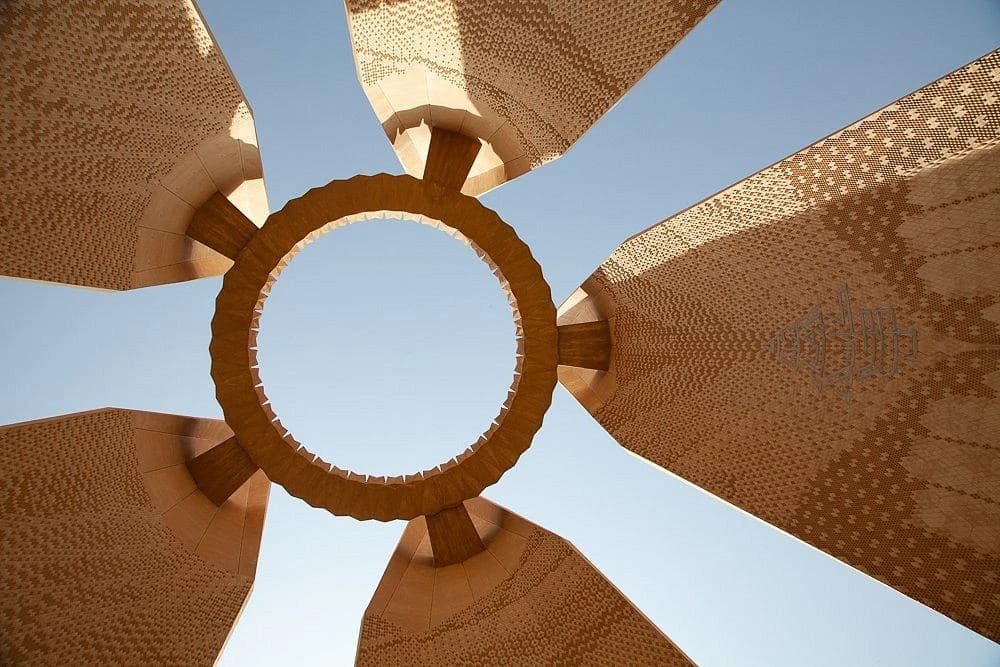
This large monument is located near the Aswan High Dam and honors Russian-Egyptian friendship. The USSR was instrumental in the dam’s construction during the 1960s, providing financial support, technicians, and heavy equipment. The monument is in the shape of a Lotus flower which is a symbol of ancient Egypt.
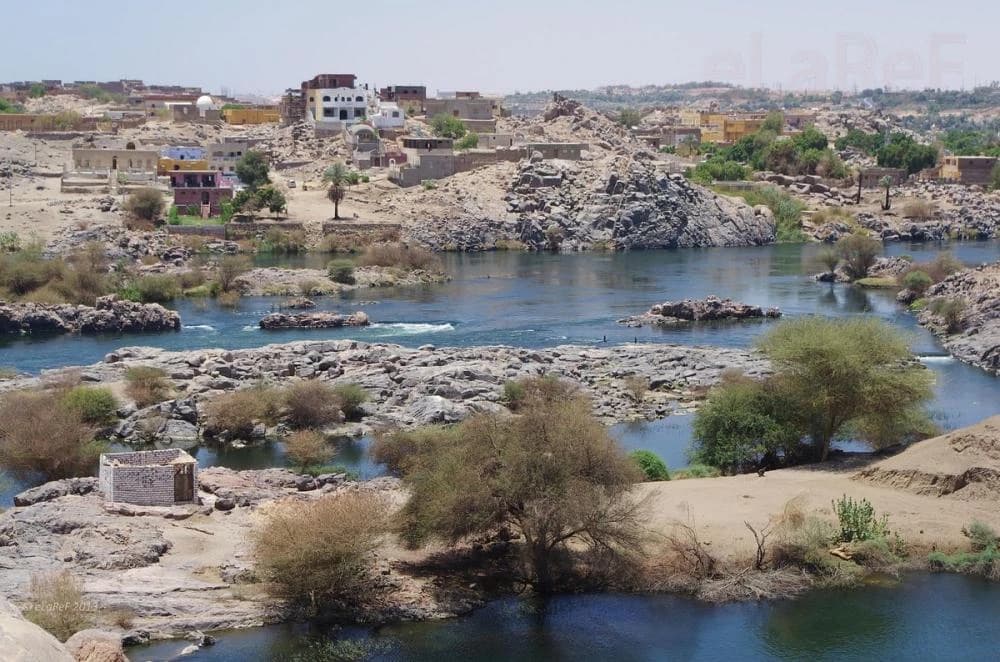
Sehel Island is located in the Nile, about 2 miles (3.2 km) southwest of Aswan in southern Egypt. It is a large island, is the primary large island below the Nile's First Cataract and the Aswan Low Dam (1902).The island was known in ancient tiles as Setet, and there are many archaeological sites, including sacred places, such as the temple of Anuket, the Egyptian water goddess, and goddess of the Nile's cataracts.
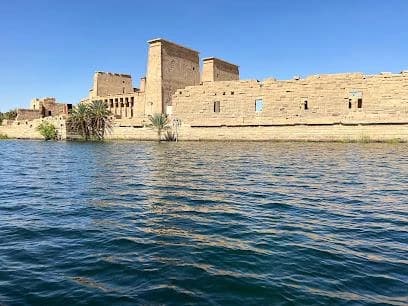
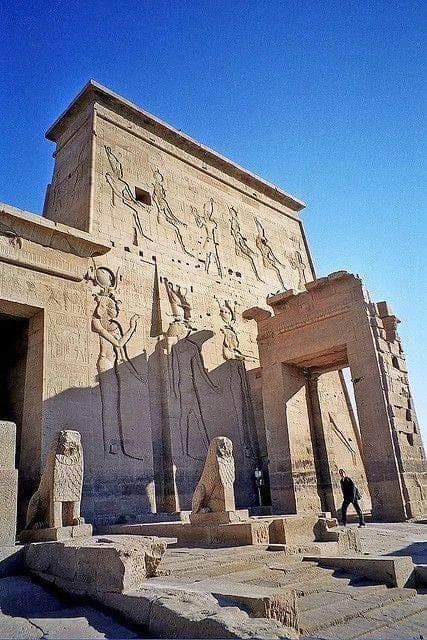
The temple of Philae (also Hut-chenti, house of the beginning) is a temple complex in Upper Egypt, about eight kilometers south of Aswan. The temple complexes stand on the island of Agilkia after they were dismantled from 1977 to 1980 on the actual site, the now flooded island of Philae, and rebuilt about 600 meters northwest on the higher ground of Agilkia.
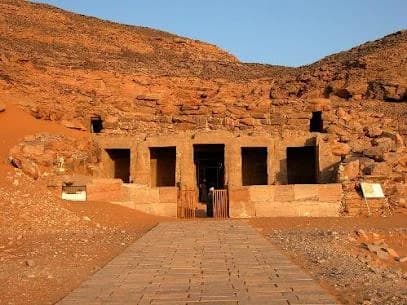
The Temple of Amada, the oldest Egyptian temple in Nubia, was first constructed by Pharaoh Thutmose III of the 18th .As part of the International Campaign to Save the Monuments of Nubia, along with Abu Simbel, Philae and other Nubian archaeological sites, Amada was relocated in the 1960s and inscribed on the UNESCO World Heritage List in 1979.
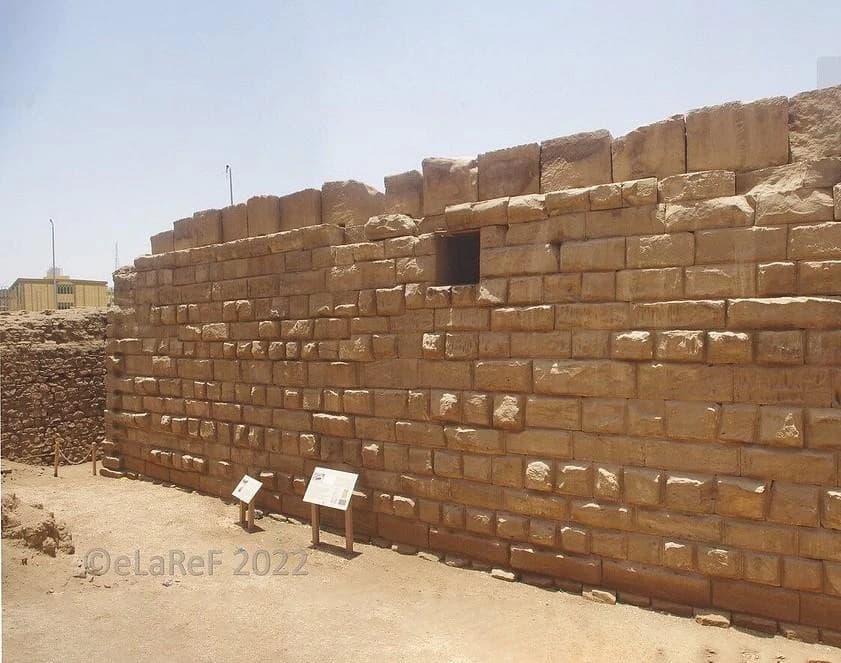
The Temple of Isis is located on the eastern bank of Aswan Governorate, next to the eastern fence of the city. Part of the temple was built during the reigns of Ptolemy III and Ptolemy IV but was later on converted into a church,
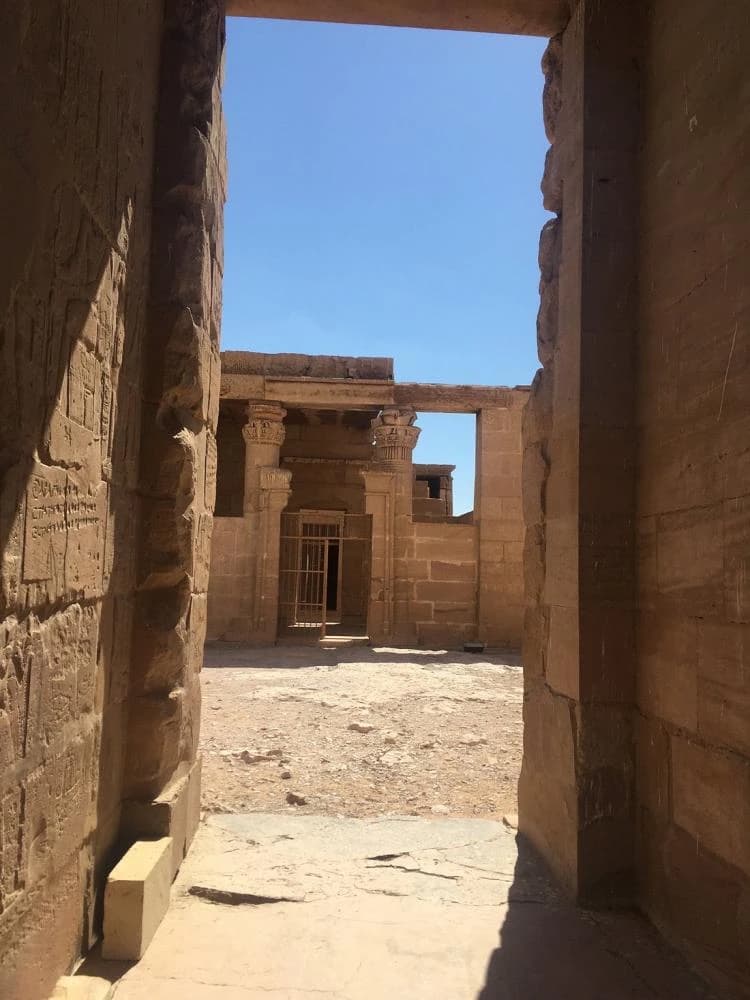
Dacca is an Egyptian temple in Lower Nubia, 56 kilometers south of Aswan. It was dedicated to Tote, Satis, Anúquis, Sélquis, among others. At first it was a chapel with only one room, whose erection began in the third century BC. by the Cushite king Arcamani. It was built on works from the Middle Kingdom (2055–1650 BC),
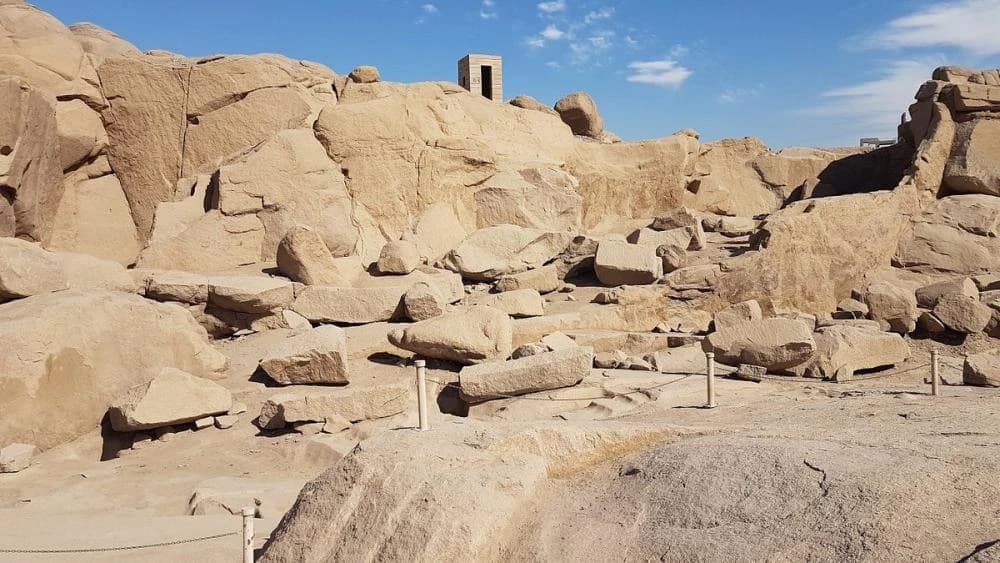
The unfinished obelisk is the largest known ancient obelisk and is located in the northern region of the stone quarries of ancient Egypt in Aswan, Egypt. It was studied in detail by Reginald Engelbach in 1922.The obelisk and wider quarry were inscribed on the UNESCO World Heritage List in 1979 .
 pro
proLanguages:
 English
 Italiano
Profile verified
 pro
proLanguages:
English Deutsch
Profile verified
 pro
proLanguages:
EnglishProfile verified
 pro
proLanguages:
EnglishItalianoProfile verified
 local
localLanguages:
English العربية
Profile verified
 local
localLanguages:
EnglishالعربيةProfile verified
 pro
proLanguages:
 日本語
日本語Profile verified
 pro
proLanguages:
EnglishProfile verified
 pro
proLanguages:
EnglishالعربيةProfile verified
 pro
proLanguages:
DeutschProfile verified
 pro
proLanguages:
EnglishالعربيةProfile verified
 pro
proLanguages:
EnglishProfile verified
 pro
proLanguages:
EnglishProfile verified
 local
localLanguages:
EnglishProfile verified
 pro
proLanguages:
EnglishالعربيةProfile verified
 pro
proLanguages:
 MagyarEnglish
Profile verified
 local
localLanguages:
English Español
Profile verified
 local
localLanguages:
English Français
Profile verified
 pro
proLanguages:
EnglishProfile verified
 local
localLanguages:
EnglishالعربيةProfile verified
 pro
proLanguages:
EnglishالعربيةProfile verified
 local
localLanguages:
EnglishالعربيةProfile verified
 local
localLanguages:
EnglishProfile verified
 local
localLanguages:
English Русский
Profile verified
 pro
proLanguages:
EnglishProfile verified
 local
localLanguages:
 中文English
Profile verified
 local
localLanguages:
EnglishالعربيةProfile verified
 local
localLanguages:
EnglishالعربيةProfile verified
 pro
proLanguages:
EnglishProfile verified
 pro
proLanguages:
EnglishProfile verified
 pro
proLanguages:
EnglishالعربيةProfile verified
 local
localLanguages:
 עבריתEnglish
Profile verified
 local
localLanguages:
 PolskiEnglish
Profile verified
 pro
proLanguages:
 NederlandsPolski
Profile verified
 pro
proLanguages:
EspañolProfile verified
 pro
proLanguages:
EnglishProfile verified
 local
localLanguages:
EnglishEspañolProfile verified
 local
localLanguages:
EnglishFrançaisProfile verified
 local
localLanguages:
EnglishEspañolProfile verified
 local
localLanguages:
EnglishالعربيةProfile verified
 pro
proLanguages:
EnglishEspañolProfile verified
 local
localLanguages:
EnglishالعربيةProfile verified
 pro
proLanguages:
EnglishProfile verified
 pro
proLanguages:
EnglishProfile verified
 pro
proLanguages:
EnglishالعربيةProfile verified
 pro
proLanguages:
EnglishProfile verified
 pro
proLanguages:
EnglishالعربيةProfile verified
 pro
proLanguages:
EnglishالعربيةProfile verified
 pro
proLanguages:
EnglishProfile verified
 local
localLanguages:
中文EnglishProfile verified
 pro
proLanguages:
EnglishProfile verified
 local
localLanguages:
EnglishالعربيةProfile verified
 pro
proLanguages:
EnglishProfile verified
 pro
proLanguages:
EnglishFrançaisProfile verified
 pro
proLanguages:
EnglishProfile verified
 local
localLanguages:
EnglishالعربيةProfile verified
 local
localLanguages:
EnglishFrançaisProfile verified
 pro
proLanguages:
EnglishالعربيةProfile verified
 pro
proLanguages:
中文EnglishProfile verified
 local
localLanguages:
EnglishProfile verified
 pro
proLanguages:
EnglishالعربيةProfile verified
 pro
proLanguages:
EnglishEspañolProfile verified
 local
localLanguages:
EnglishEspañolProfile verified
 pro
proLanguages:
EspañolالعربيةProfile verified
 pro
proLanguages:
EnglishEspañolProfile verified
 local
localLanguages:
EnglishالعربيةProfile verified
 pro
proLanguages:
EnglishProfile verified
 local
localLanguages:
EnglishEspañolProfile verified
 pro
proLanguages:
EnglishFrançaisProfile verified
 pro
proLanguages:
EnglishالعربيةProfile verified
 pro
proLanguages:
EnglishProfile verified
 local
localLanguages:
中文EnglishProfile verified
 pro
proLanguages:
EnglishProfile verified
 pro
proLanguages:
EnglishProfile verified
 pro
proLanguages:
EnglishItalianoProfile verified
 local
localLanguages:
EnglishProfile verified
 pro
proLanguages:
NederlandsEnglishProfile verified
 local
localLanguages:
EnglishالعربيةProfile verified
 pro
proLanguages:
EnglishالعربيةProfile verified
 pro
proLanguages:
 PortuguêsEnglish
Profile verified
 local
localLanguages:
EnglishEspañolProfile verified
 pro
proLanguages:
EnglishProfile verified
 local
localLanguages:
EnglishالعربيةProfile verified
 local
localLanguages:
PortuguêsEnglishProfile verified
 pro
proLanguages:
EnglishProfile verified
 pro
proLanguages:
EnglishالعربيةProfile verified
 pro
proLanguages:
EnglishProfile verified
 pro
proLanguages:
EnglishالعربيةProfile verified
 local
localLanguages:
EnglishالعربيةProfile verified
 local
localLanguages:
EnglishProfile verified
 local
localLanguages:
EnglishEspañolProfile verified
 local
localLanguages:
PortuguêsEnglishProfile verified
 pro
proLanguages:
EnglishالعربيةProfile verified
 local
localLanguages:
EnglishالعربيةProfile verified
 local
localLanguages:
EnglishالعربيةProfile verified
 pro
proLanguages:
EnglishProfile verified
 local
localLanguages:
EnglishItalianoProfile verified
 pro
proLanguages:
 ΕλληνικάPolski
Profile verified
 local
localLanguages:
EnglishالعربيةProfile verified
 pro
proLanguages:
EnglishProfile verified
 local
localLanguages:
EnglishEspañolProfile verified
 local
localLanguages:
EnglishالعربيةProfile verified
 local
localLanguages:
EnglishالعربيةProfile verified
 local
localLanguages:
EnglishProfile verified
 local
localLanguages:
EnglishالعربيةProfile verified
 pro
proLanguages:
EnglishFrançaisProfile verified
 pro
proLanguages:
EnglishProfile verified
 pro
proLanguages:
EnglishProfile verified
 pro
proLanguages:
EnglishالعربيةProfile verified
 pro
proLanguages:
EnglishالعربيةProfile verified
 local
localLanguages:
日本語PortuguêsProfile verified
 pro
proLanguages:
EnglishالعربيةProfile verified
 pro
proLanguages:
EnglishProfile verified
 pro
proLanguages:
 Čeština
 Slovenčina
Profile verified
 local
localLanguages:
 한국어日本語
Profile verified
 local
localLanguages:
EnglishItalianoProfile verified
 pro
proLanguages:
EnglishEspañolProfile verified
 pro
proLanguages:
EnglishالعربيةProfile verified
 pro
proLanguages:
Português中文Profile verified
 local
localLanguages:
EnglishProfile verified
 local
localLanguages:
EnglishProfile verified
 pro
proLanguages:
EnglishProfile verified
 pro
proLanguages:
EnglishالعربيةProfile verified
 local
localLanguages:
EnglishProfile verified
 pro
proLanguages:
EnglishالعربيةProfile verified
 pro
proLanguages:
EnglishProfile verified
 pro
proLanguages:
日本語Profile verified
 pro
proLanguages:
EnglishProfile verified
 local
localLanguages:
EnglishProfile verified
 local
localLanguages:
EnglishProfile verified
 pro
proLanguages:
日本語Profile verified
 local
localLanguages:
中文Profile verified
 local
localLanguages:
EnglishالعربيةProfile verified
Find private local guides worldwide. Connect with real people, real stories — not just scripted tours




Ismael Khalifa
06.10.2025
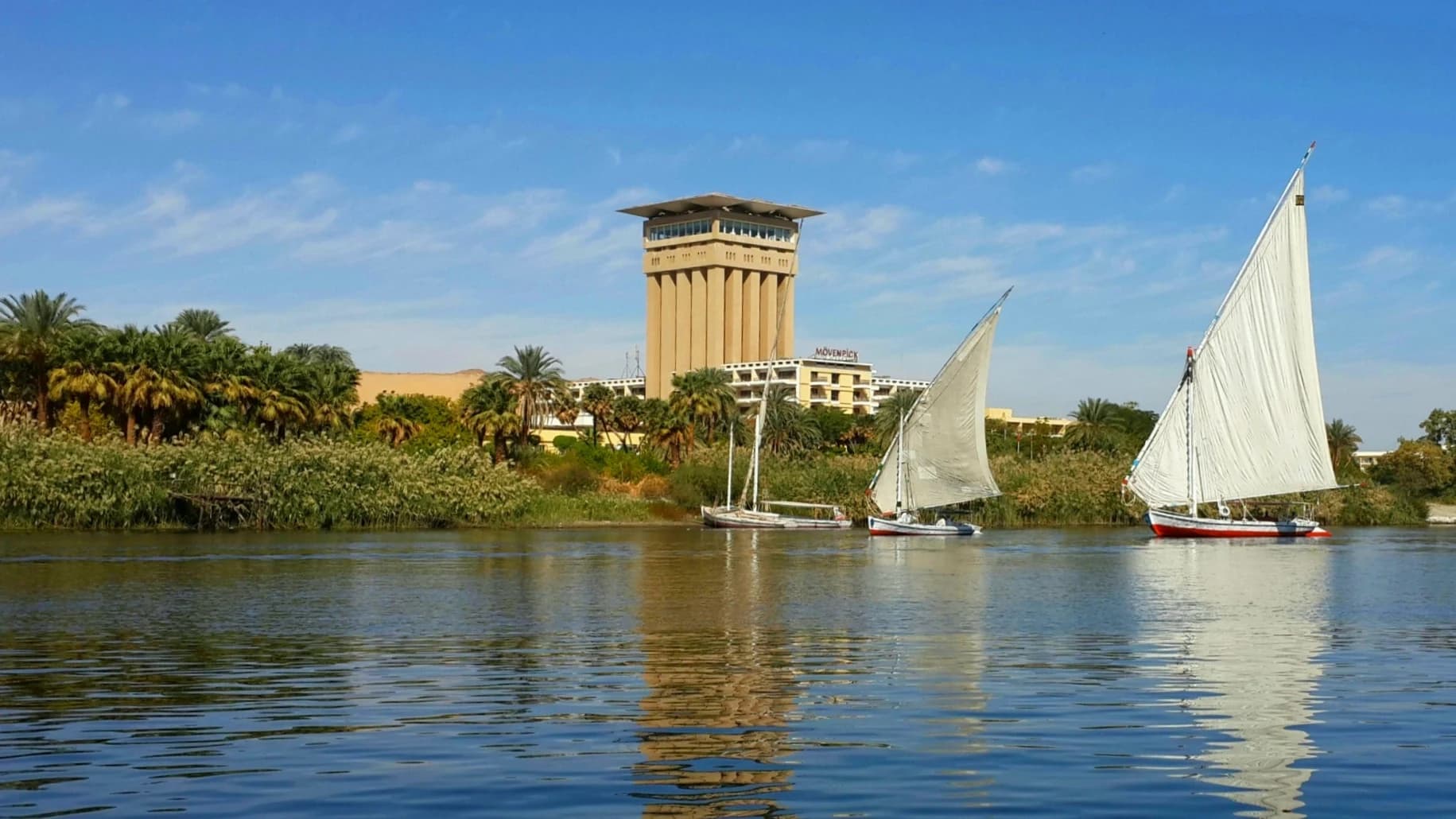
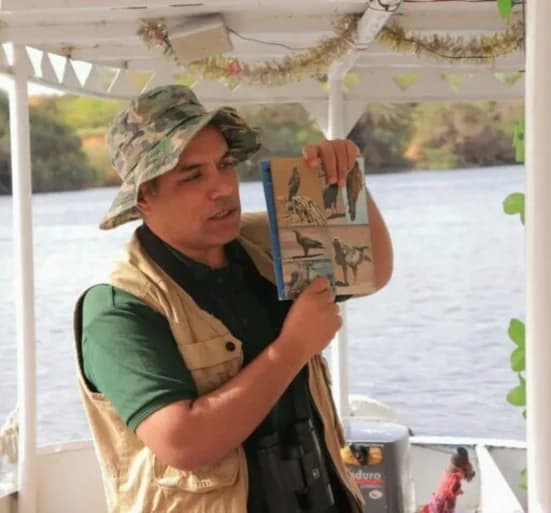
Escape the winter chill in Aswan, a sun-drenched birding paradise. As migratory flocks from Europe and Asia arrive, this ancient city where the Nile meets the desert becomes a vibrant sanctuary. With perfect weather and stunning scenery, Aswan offers
Mahmoud Sayed Makky
02.10.2025
Aswan, the jewel of southern Egypt, is a city where ancient history, Nubian culture, and modern achievements meet on the banks of the Nile. A full-day tour in Aswan offers travelers the chance to explore its most iconic landmarks in one unforgettable
Find a personal guide in just 1 minute and create your dream itinerary!

FindGuide is a platform for finding private and local guides around the world. You can choose a guide in advance who will show you the city from a local perspective, not just the standard tourist route.
Enter the city or country you're interested in into the search bar, choose a guide you like, and send them a request. All bookings are made directly on the platform.
We offer walking, food, historical, driving, private, and family tours in more than 100 destinations.
Yes, all guides go through moderation and verification. You can read reviews from other travelers, check the guide’s rating, and view their profile with photos and experience descriptions.
Tour prices vary depending on the destination, duration, and format. You see the cost upfront — no hidden fees.
Yes, the app is completely free for tourists. You can place your tour requests for local guides and access expert travel content totally free of charge.


