
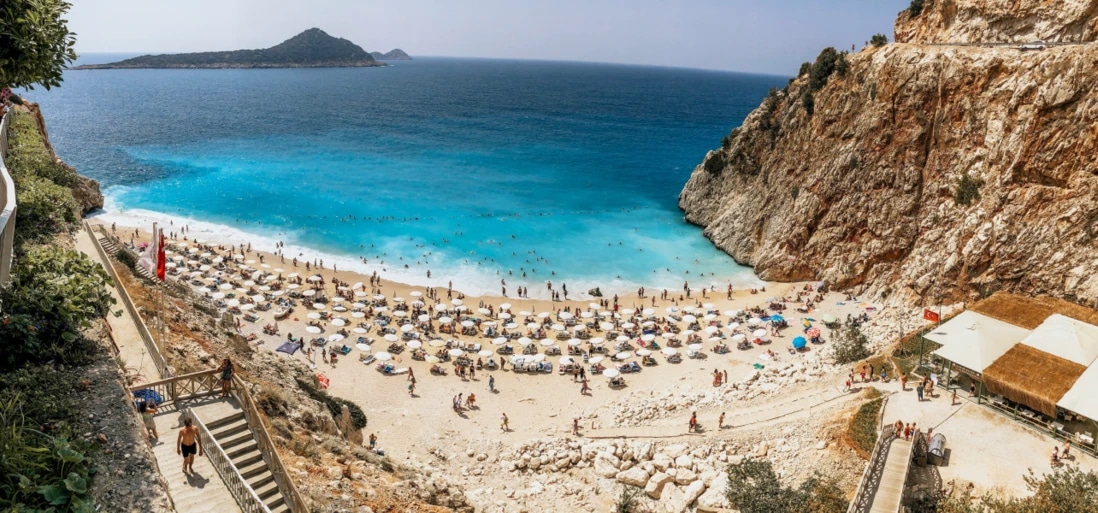
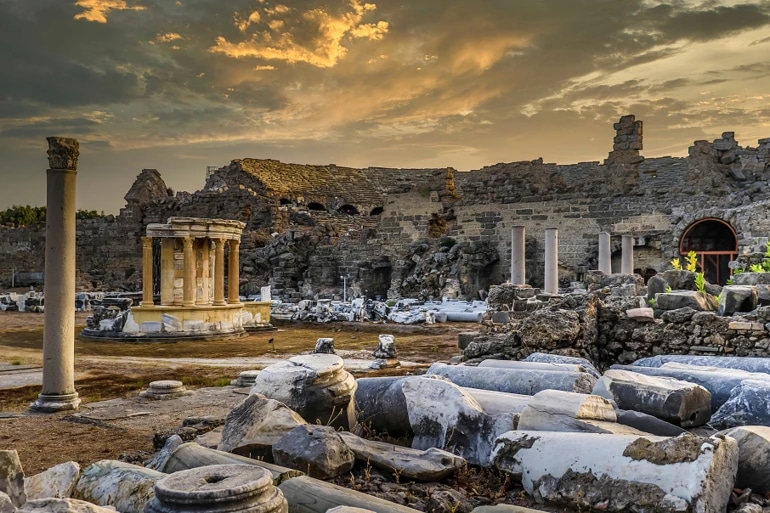
Explore Antalya’s mix of history and natural beauty with a personal guide. Walk through Kaleiçi’s narrow streets, visit ancient ruins, and find secluded beaches along the Mediterranean coast. Enjoy Antalya beyond the tourist trail. Arrange a private tour around your interests
The Antalya Museum is one of the largest archaeological museums in Turkey. Here, you’ll admire the exhibitions including masterpieces from the Lycia, Roman and Byzantine civilizations. The Antalya Museum has 2 floors and 14 exhibition halls displayed over 30,000 square meters. The sculptures and other artifacts are exhibited both indoors and in open air galleries. The “Hall of Gods” exhibition hall is the most popular part of the museum, where you’ll admire the 2nd century statues and busts of Greek gods and goddesses including Zeus, Athena and Aphrodite. The “Natural History and Prehistory” exhibition hall displays a collection of artifacts from the fossils of extinct life forms from the many antique ages to the findings from the Bronze age. The “Emperor's” exhibition hall displays an impressive collection of the statues of Trajan, Hadrian and Septimus Severus, famous Roman Emperors from the 2nd and 3rd centuries AD. The Museum is also home to a collection of coins, underwater artifacts, treasures, jewelry, icons, Ottoman art, calligraphy, folk costumes and beautiful rugs.
The Clock Tower, which dates to 1901 and makes up the ancient walls of the Old Town, is the iconic face of Antalya. It is the last survivor of the 80 towers that once surrounded the ancient city. The rising stone structure looms over the surrounding cityscape as a reminder of its rich history. This tower has been constructed of rough stone and has a foundation that incorporates the older part of the city's walls. Each wall had a clock face, making it easy to tell the time when coming from any direction. There are arches and crenellations above the clock faces, done in beautiful Arabic style. Although visitors can only view the tower from outside, a visit will provide you with an excellent chance to appreciate the city center's history. Hadrian's Gate is only about 400 meters from the tower. You will also see a lot of activity near the clock tower that includes bazaars.
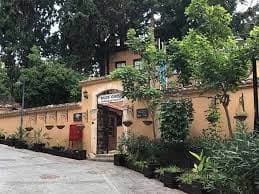
The Suna Museum of Ethnography is located in two historical buildings in Antalya,dating from the 19th century. Various works are exhibited in two parts of the museum, which are divided into upper and lower mansions according to their location. In the Lower Mansion, there are Turkish - Islamic artifacts, while in the Upper Mansion, some objects related to the daily life of people in Antalya during Ottoman Period are exhibited. Visitors can see famous İznik and Çanakkale ceramics, engravings on canvas depicting Antalya in XVII-XIX centuries, traditional furnishing and other objects. Some inscriptions from the Seljuk and Ottoman periods, cannons with cannonballs and tombstones are pieces that can be seen in the garden of the mansions.
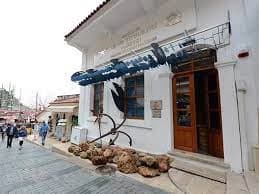
The Marine Biology Museum is right next to the Toy Museum in Kaleiçi. Opened in 2014, the museum was established by Antalya Metropolitan Municipality to introduce sea life, especially protected species, to people, encourage them to adopt marine culture and look after our natural heritage. The museum aims to educate students of all ages, from kindergarten students to scientists, about Turkey’s marine biological diversity, and our fish and fishery culture. While there is a limited number in our country, many examples of marine biology museums exist in the world with dried or preserved sea creatures intact in the fixative solution as well as skeletons of marine mammals or larger-bodied sea creatures. The Yacht Harbor at the old Post Office building (nearly a 100 m2 area) gives information about Turkey’s sea life including nine species of sharks, 10 species of flat shark, 150 species of bony fish, sponges, corals, shrimp, lobster and crabs, shellfish, octopus, squid and cuttlefish, starfish and sea urchins, (approximately 500 species of sea creatures) on display, as well as protected species and endemic species of the Red Sea.
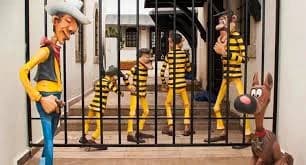
The Antalya Toy Museum, established by the Antalya Metropolitan City, exhibits about 1.500 toys from vintage auctions around the globe. The museum shows toys that were produced in the U.S., Germany and Japan immediately after the Industrial Revolution and real handcrafted toys from Anatolia. The museum’s oldest toy comes from the 1800s. Samples of toys produced in the very first post-revolutionary factories were collected by the Turkish writer Sunay Akın. The museum, which makes a connection between the past and the present, helps children’s mental and physical development in connection with the artifacts.
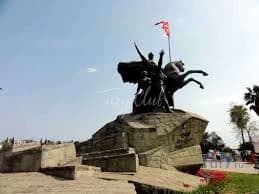
Republic Square is the city's main square and one of the most popular attractions. One of the most appealing things about the square is its proximity to the harbor, offering excellent views. Here you can find the Ataturk Monument, created in 1964, and is also known as the National Ascension Monument. The monument represents, with a sudden rising base and figures right on the edge, the unity, and leadership of Ataturk leading Turkey through a series of victories leading up to the foundation of the Turkish Republic. The monument is made of 12 tonnes of bronze and is six meters high. The base is a concrete shell with concrete columns under the bronze figures, inside the base, supporting the 12 tonnes of bronze. Figures featured at the top include Ataturk mounted on a horse, along with a boy and girl representing the country's youth and the trust that they have received. And when you look at the base, you'll see the dates for several important military victories listed, including the revolutions giving the new state its modernity.
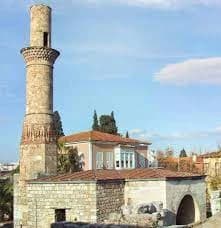
The Broken Minaret Mosque, standing in the streets of Kaleiçi, was originally built as a Roman temple in the 2nd century AD, and thus did not originally have a minaret at all. In the 7th century, it was converted into a Byzantine church in honor of the Virgin Mary, but it was heavily damaged in the 8th century during the Arab invasions. In the 10th century it was repaired again. The church was converted into a mosque when the Great Seljuq Empire acquired Antalya. It was then when the actual minaret was added. In 1361 - when the crusader king of Cyprus took Antalya from the Seljuks - it became a church again, only to become reconverted into a mosque during the rule of Sehzade Korkut. The mosque was destroyed in a fire of 1846, but the minaret survived, as the Kesik Minare. In 2019 the top cone and roof were restored. The structure officially reopened as a mosque in 2021 on the 5th of March, the day Antalya was conquered by the Seljuk Empire. It welcomed worshippers for the first time in nearly 125 years.
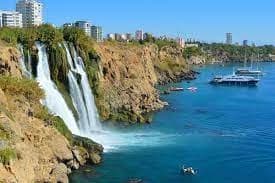
The Duden Waterfalls are one of the most visited sights around Antalya city center. It is the impressive and eye-catching part of the Duden River which runs about 10 km. from the north of the central Antalya, and meets the sea to the south east coast of the city. There are two waterfalls with the same name (Düden) in Antalya. This waterfall pours water from the Düden River, one of the largest rivers in southern Anatolia, into the sea from about 40 meters height. There are similar waterfalls on the cliffs but this one is the most impressive and attracts a lot of visitors. An amazing feature of the Lower Duden Falls is that it flows into the Mediterranean Sea. In Turkey, this is the only waterfall that flows into the sea.
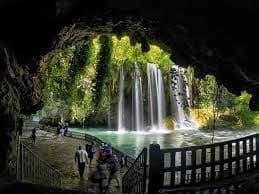
The Duden Waterfalls are one of the most visited sights around Antalya city center. Duden Waterfalls is a group of waterfalls, there are Upper Duden Waterfall and Lower Duden Waterfall, that are actually two separate natural attractions within the City of Antalya. The Upper Duden Waterfall is a series of small cascades, located in a beautiful national park Duden at a distance of 12 km from the Antalya city center. Upper Duden Waterfall is also called "Alexander Falls". It's said that Alexander the Great, who conquered Pamphylia between 334-333 BC, gave water to his horses while passing through this region. When visiting the upper falls within the park, don't miss climbing down a spiral staircase that leads into a cave behind the waterfalls. This experience affords fabulous views through a curtain of falling water.
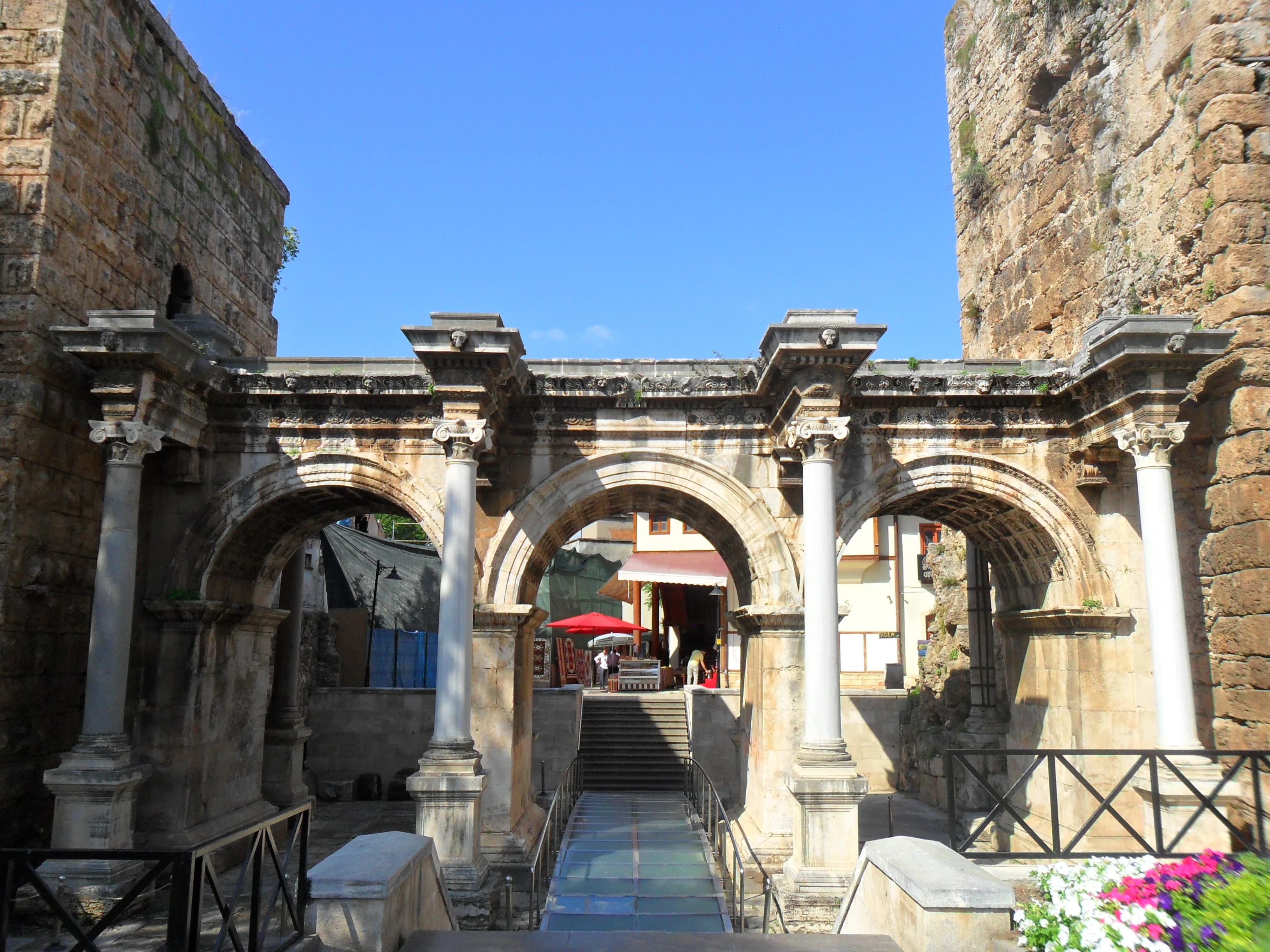
Hadrian's Gate is possibly the most famous historical structure in Antalya, the triple gate is a majestic entrance to the Kaleici or Old town, which was once the city's inner citadel. The ancient monument dates back to 130 AD and makes up part of the protective city walls. The name reflects a significant moment for the city when, in the 2nd century AD, the Roman Emperor Hadrian paid a visit to Antalya. A typical Roman triumphal arch, Hadrian’s Gate has three same-sized archways and has an overall height of around eight meters (26.2 feet) from the historic pavement to the very top of the gate’s entablature. The impressive Roman arches are just over 4 meters wide and 6 meters high, although with the thick stone frame the total height is about 8 meters. The arches are framed by 4 marble columns on either side with richly decorated floral cornices'. Interestingly the two towers which stand on either side of the gate are not from the same period. While the southern tower, the Tower of Julia Sancta, was built at a different time to the gate but still during the Roman era, Only the base of the northern tower is from Roman times; the majority is a reconstruction made by Seljuk Turks.
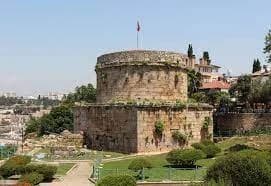
Hıdırlık Tower is one of these surviving monuments from the Roman period, that are situated in Antalya's Old Town. The 14 meter tall tower makes up part of the ancient inner citadels defensive walls which can still still be seen today in parts of the Old Town. The foundations of Hidirlik Tower date back to the 2nd century AD, when Antalya was under the rule of the Roman Empire while the upper floors were added during the Seljuk and Ottoman eras. The function of this structure still remains a mystery, the popular belief is that the tower was actually the tomb of an important person. This hypothesis is confirmed by the fragments of frescoes preserved inside the building. On the other hand, the specific location of the tower - on top of a cliff near the port - can indicate another function of this structure. There is a belief that it used to be a lighthouse and a looked-out point from which the ships approaching Antalya were observed. While it is not possible to enter the tower it is still worth a wander around its yellowing walls. The location is also an excellent sunset spot, affording spectacular views over the Mediterranean Sea.
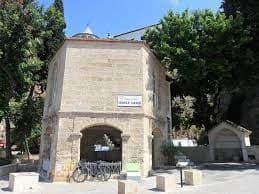
Iskele Mosque is a very small, charming mosque in the old Yacht Harbor area. Historical documents are not specific about its time of construction, except that it was renovated as part of the Inner Bailey restoration project. Situated near the marina, this eye-catching 19th century mosque was built of white stone with a short minaret and is supported by four columns.
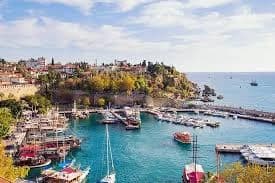
The port, located in the south of the city, is one of the busiest places in Antalya but it's almost inevitable to stroll by this part of the city if you choose to take a walk by the old quarter. The construction of the port is very closely linked to the foundation of the city of Antalya. In 860, the port was a naval base for the Arab conquests. When the Seljuks took over the city, the port became an increasingly important position for long-distance trade. It represents an ideal starting point for the western Mediterranean countries. The port brought great prosperity to the city. However, it later lost its high importance under Sultan Beyzit and remained meaningless until 1918. The peace treaty after the First World War gave the port a new importance. Nowadays the harbor is a very popular starting point for boat trips and an important landing place for cruise ships from all over the world.
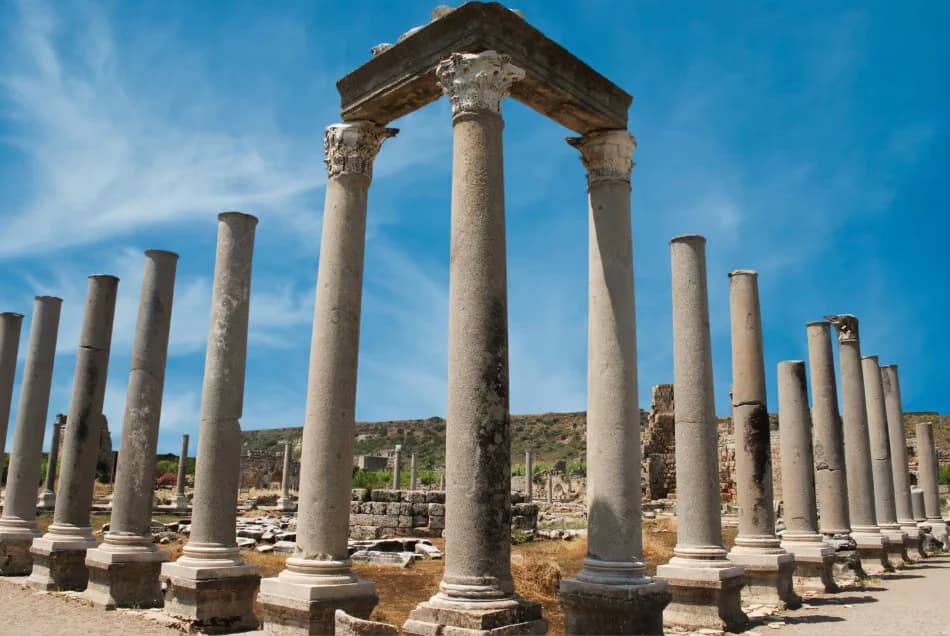
Perge, 15 km east of Antalya, is one of the Pamphylian cities and was believed to have been built in the 12th to 13th centuries BC. Later, Perge was invaded by Alexander the Great in 334 BC. The brightest era for this city came during the reign of the Romans between 2nd to 3rd century AD. Perge has been a popular Christian-tourist destination for years because when Saint Paul traveled the region in 46 AD, he preached his first sermon at the city after coming here from Antioch . All the remnants of the ancient city can be found in this area. The Greco-Roman Theater with fine marble reliefs and Stadium of Perge that could seat over 12000 people were excavated in 1946, are some of Perge’s best preserved sites, as well as monumental fountains, rectangular columned agoras, high towers, and wide stone streets lined with Greek columns. Dating back to 3rd-century BC, the walls of Perge are a symbol of its ancient past. The city is also home to the two towers and an ancient gate, which are all Hellenistic in origin. You can pass between the massive antique gates and stroll down the ruins of colonnaded boulevard to a nymphaeum to explore the ancient glory of Perge. Today, the archaeological site of Perge, included on the UNESCO tentative list in 2009, is one of the outstanding universal values of Turkey.
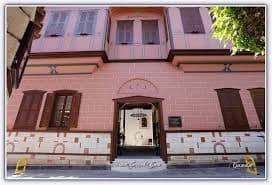
This small ethnography museum is housed in a lovingly restored Antalya mansion, which was bought by Suna and İnan Kıraç. The 2nd floor contains a series of life-size dioramas depicting some of the most important rituals and customs of Ottoman Antalya. More impressive is the collection of Çanakkale ceramics housed in the former Greek Orthodox church of Aya Yorgi (St George), just behind the main house, which has been fully restored and is worth a look in itself.
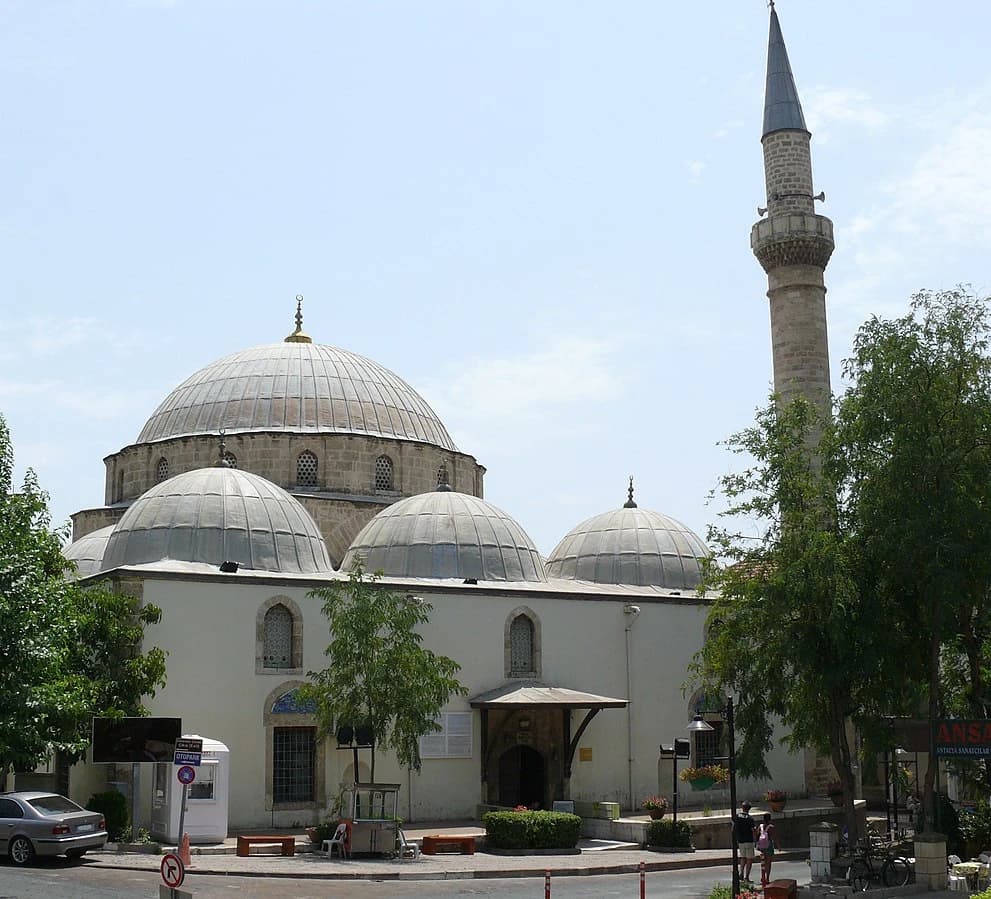
Tekeli Mehmet Paşa Mosque is a magnificent mosque situated in the charming cityscape of Antalya. The mosque dates back to the 18th Century, and it derives its name from Lala Tekeli Mehmed Pasha, who was once the Grand Vizier of the Turkish Empire. The mosque has a colossal dome, which rises on a high rim, supported by three semi domes, one each in the east, west, and south directions, as well as three domes on the northern side. Some sections of the mosque are intricately adorned with tiles which bear ornately written verses from the Quran.
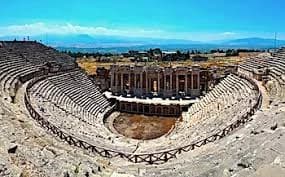
The Ancient City of Termessos, located 30 kilometers from Antalya, was built in a strategic point more than 1000 meters above sea level and the area's natural resources made that for years neither the Greeks or the Romans could conquer the Pisidians, the original inhabitants of this region. Protected by impressive stone walls and surrounded by rugged mountains and dense forests, Termessos is ideally located to defend from incoming attacks. Historians say that even the forces of Alexander the Great couldn't capture this fortified city. Today, it is one of the best-preserved ancient cities of Turkey and because of its natural and historical riches, the city has been included in a national park bearing its name, the Mount Güllük-Termessos National Park. Today the main sights include; the entrance to the Artemis-Hadrian temple and Hadrian propylaeum, gymnasium, sarcophagi, agora, theater, Temple of Zeus, necropolis and several tombs. Unfortunately little is known about the history of the ancient site; it was rediscovered by European explorers in the early 19th century, archaeologists arrived soon after, one of which was the notable British archaeologist Charles Fellowes, and excavations continued throughout the century.
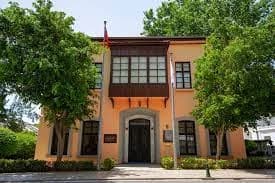
National Museum, dedicated to the visits of Mustafa Kemal Atatürk to the city, is located in a reconstructed two-storey building where Atatürk stayed during his official visits in 1930 and 1935. In 1984, the building was handed over to the Turkish Ministry of Culture and Tourism to be transformed into a museum. With the financial support of a local electricity distribution company, the house was rebuilt on the same location. In 1986, the museum opened to the public. On the first floor there are newspapers, photographs and documents, on the second floor there are two working rooms and bedrooms, as well as a collection of banknotes, coins and postage stamps issued since the proclamation of the republic. The main part of the museum is the room with Atatürk's personal belongings, which were brought from Anitkabir, the mausoleum in Ankara.
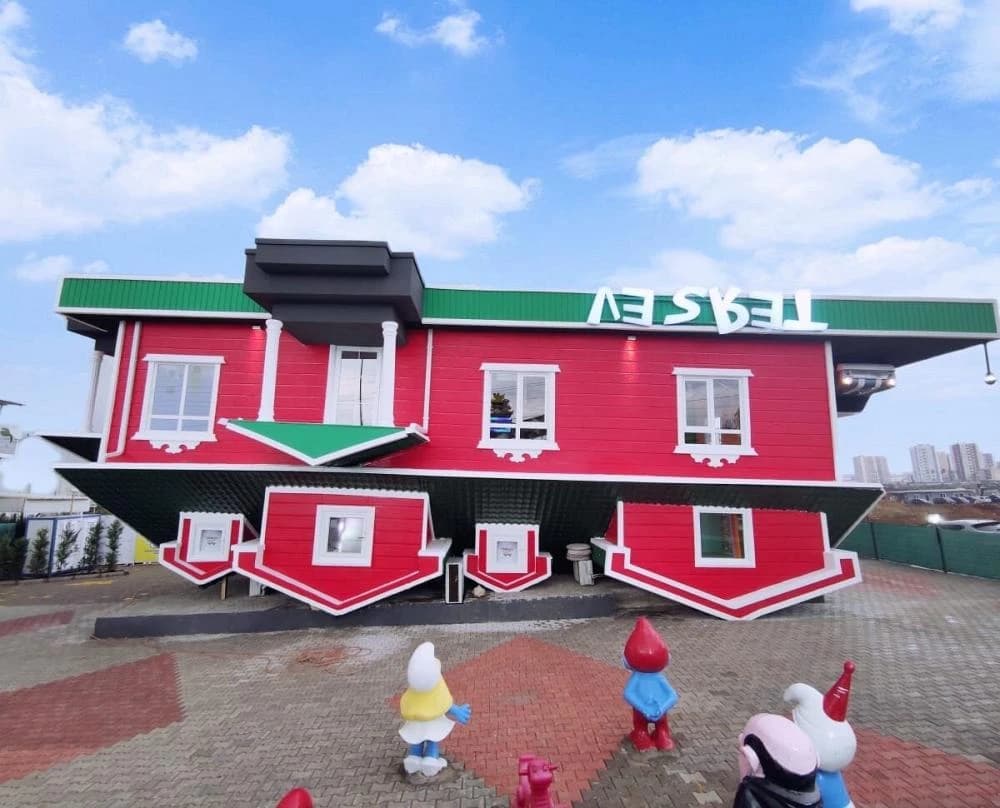
Antalya Upside Down House ... This is the one and only upside down house in Turkey. It is in Lara-Kundu region which is 20 km on the east of the city center.
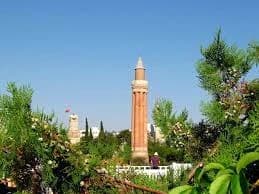
The Alaaddin Mosque, named after its builder but better known by its name Yivli Minare Mosque, is an Islamic place of worship in the center of the old city of Antalya. The mosque is famous for its minaret which was constructed on the orders of Alaaddin Keykubad I, the Seljuks Sultan who ruled between 1220 and 1237. The 38-meter high fluted minaret stands on a huge square stone base measuring 6.5 meters tall and 5.5 meters wide. The Minaret’s eight semi-circular grooved red brick shaft was originally decorated with dark blue and turquoise-colored tiles. The mosque itself has six domes resting on arches, which in turn are supported by 12 columns. The columns are recycled remains of ancient Roman structures. The mosque is one of the oldest multi-domed buildings in Anatolia. Besides the famous minaret and mosque, the Yivli Minaret complex includes other notable structures, such as a madrasa and a building once used as a lodge for the Mevlevi Dervishes. Two domed tombs are also located on the grounds: the tomb of Zincirkıran Mehmet Bey was built in 1377, and another was built in 1502 as a memorial for Ayşe Hatun who was the consort of Sultan Bayezid II, and mother of the next sultan Selim I. A former Islamic seminary, Atabey Aramgan Medresseh has been restored to function as a bazaar.
 local
localLanguages:
 English
 Türkçe
Profile verified
 local
localLanguages:
EnglishTürkçeProfile verified
 pro
proLanguages:
 Български
 Русский
Profile verified
 pro
proLanguages:
EnglishTürkçeProfile verified
 pro
proLanguages:
EnglishTürkçeProfile verified
 pro
proLanguages:
 Bahasa IndonesiaEnglish
Profile verified
 local
localLanguages:
EnglishTürkçeProfile verified
 local
localLanguages:
 RomânăEnglish
Profile verified
 pro
proLanguages:
EnglishProfile verified
 pro
proLanguages:
English العربية
Profile verified
 pro
proLanguages:
РусскийProfile verified
 local
localLanguages:
EnglishРусскийProfile verified
 pro
proLanguages:
 Kurdî / كوردیEnglish
Profile verified
 pro
proLanguages:
EnglishProfile verified
 pro
proLanguages:
 Norsk
Norsk Svenska
Profile verified
 local
localLanguages:
Kurdî / كوردیEnglishProfile verified
 pro
proLanguages:
EnglishProfile verified
 local
localLanguages:
English Deutsch
Profile verified
 local
localLanguages:
EnglishTürkçeProfile verified
 pro
proLanguages:
DeutschProfile verified
 local
localLanguages:
РусскийProfile verified
 local
localLanguages:
 Azərbaycanca / آذربايجان
 Қазақша
Profile verified
 pro
proLanguages:
РусскийProfile verified
 local
localLanguages:
English Español
Profile verified
 pro
proLanguages:
EnglishProfile verified
 pro
proLanguages:
EnglishTürkçeProfile verified
 pro
proLanguages:
EnglishTürkçeProfile verified
 pro
proLanguages:
EnglishProfile verified
 pro
proLanguages:
РусскийProfile verified
 pro
proLanguages:
EnglishTürkçeProfile verified
 local
localLanguages:
РусскийProfile verified
 local
localLanguages:
EnglishDeutschProfile verified
 local
localLanguages:
EnglishTürkçeProfile verified
 pro
proLanguages:
Български Polski
Profile verified
 local
localLanguages:
EnglishProfile verified
 pro
proLanguages:
EnglishTürkçeProfile verified
Languages:
EnglishDeutschProfile verified
 local
localLanguages:
EnglishالعربيةProfile verified
 local
localLanguages:
EnglishTürkçeProfile verified
 local
localLanguages:
EnglishProfile verified
Find private local guides worldwide. Connect with real people, real stories — not just scripted tours




Гид Хасан
02.12.2025
Откройте тайны античного Олимпоса — города, где пересекались философы, пираты и торговцы. Среди руин храма, театра и некрополя оживает история Ликийского союза. Камни хранят надписи, а тишина древних улиц позволяет услышать «голос прошлого».
Возможность посетить 2 достопремичателности из мировой истории и греческой мифологии
Find a personal guide in just 1 minute and create your dream itinerary!

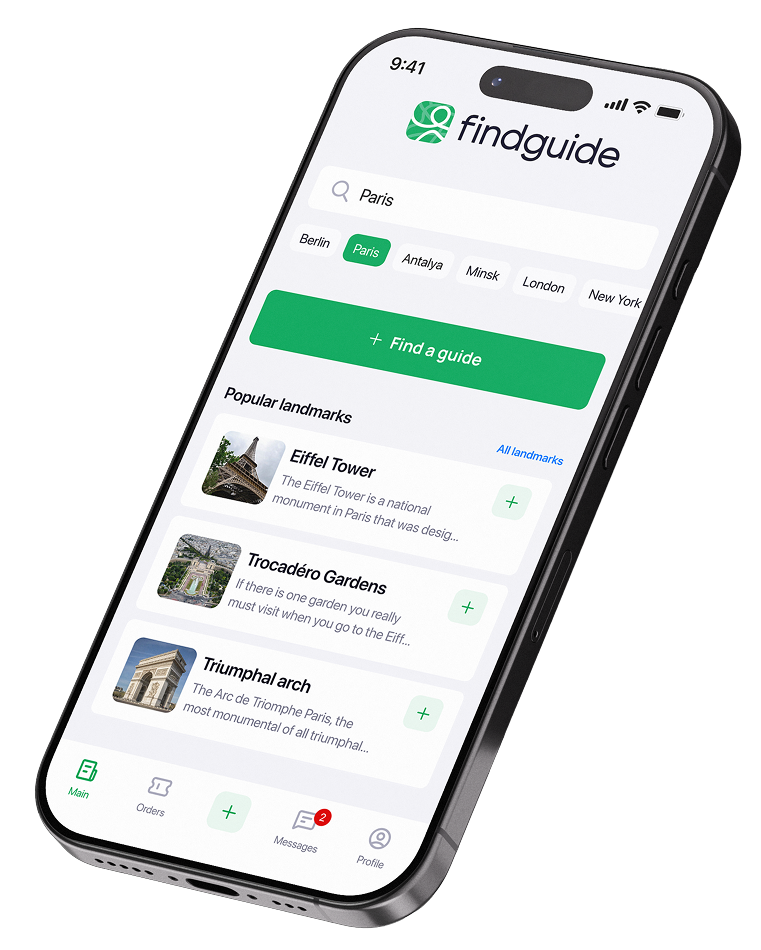
FindGuide is a platform for finding private and local guides around the world. You can choose a guide in advance who will show you the city from a local perspective, not just the standard tourist route.
Enter the city or country you're interested in into the search bar, choose a guide you like, and send them a request. All bookings are made directly on the platform.
We offer walking, food, historical, driving, private, and family tours in more than 100 destinations.
Yes, all guides go through moderation and verification. You can read reviews from other travelers, check the guide’s rating, and view their profile with photos and experience descriptions.
Tour prices vary depending on the destination, duration, and format. You see the cost upfront — no hidden fees.
Yes, the app is completely free for tourists. You can place your tour requests for local guides and access expert travel content totally free of charge.


